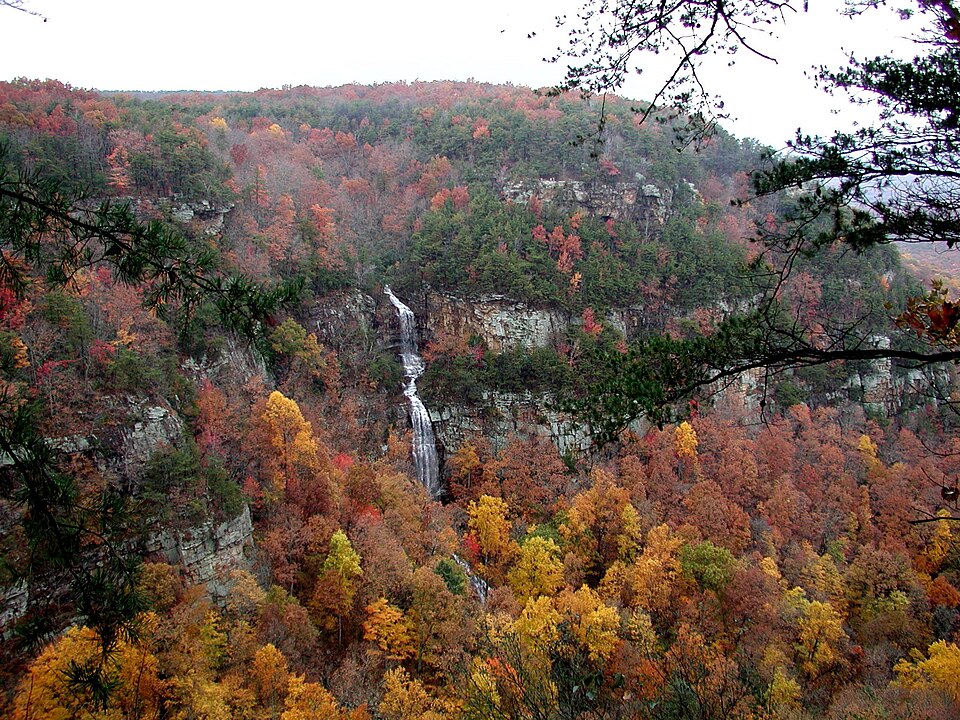
Close enough to manage in a single day yet distant enough to feel genuinely removed, Cloudland Canyon has become a favorite escape for North Atlanta residents seeking wide-open views, quieter trails, and a slower pace than the region’s more famous waterfalls. This guide covers what locals should know before planning a day trip.
What to Expect When You Visit Cloudland Canyon
Roughly two hours northwest of Cumming, Johns Creek, Duluth, Suwanee, and Roswell, the landscape begins to flatten and then drop away. Suburbs give way to open farmland, and eventually to the rising edge of Lookout Mountain. Here, carved slowly by Sitton Gulch Creek, Cloudland Canyon opens into one of the most expansive and quietly dramatic settings in Georgia’s state park system.
Unlike the immediate shock of Tallulah Gorge, Cloudland Canyon reveals itself gradually. The first impression often comes from the overlooks along the West Rim, where the land suddenly falls away into a broad, forested canyon. On clear days, the view stretches across layers of ridges fading into blue-gray distance, with no single focal point demanding attention. The scale is wide rather than vertical, inviting visitors to linger rather than gasp and move on.
Most visits begin near the main parking area and visitor facilities, where short paths lead directly to the overlooks. These rim-side trails are mostly level and accessible, making Cloudland Canyon appealing even for visitors who don’t plan to hike far. The emphasis here is on space and perspective—long views, open sky, and the feeling of standing at the edge of something unhurried.
For those who venture down into the canyon, the park’s defining experience lies below the rim. The trail descending into Sitton Gulch drops steadily, following the creek as it winds between steep, shaded walls. The air cools noticeably as elevation is lost, and the soundscape shifts from wind and birds to moving water and echoing footsteps.
At the base of the canyon, Cherokee Falls and Hemlock Falls provide a quieter reward than Georgia’s headline waterfalls. They are not massive, but they feel intimate and well-earned, tucked into mossy rock walls and framed by dense forest. After rain, the falls are fuller and more animated; during drier periods, they take on a softer, more reflective character.
The climb back out of the canyon is substantial and should not be underestimated. It’s steady, prolonged, and best approached at an unhurried pace. Many visitors choose to stop partway, using the shaded trail as a place to rest rather than rush. Cloudland Canyon tends to reward patience more than ambition.
When to Go
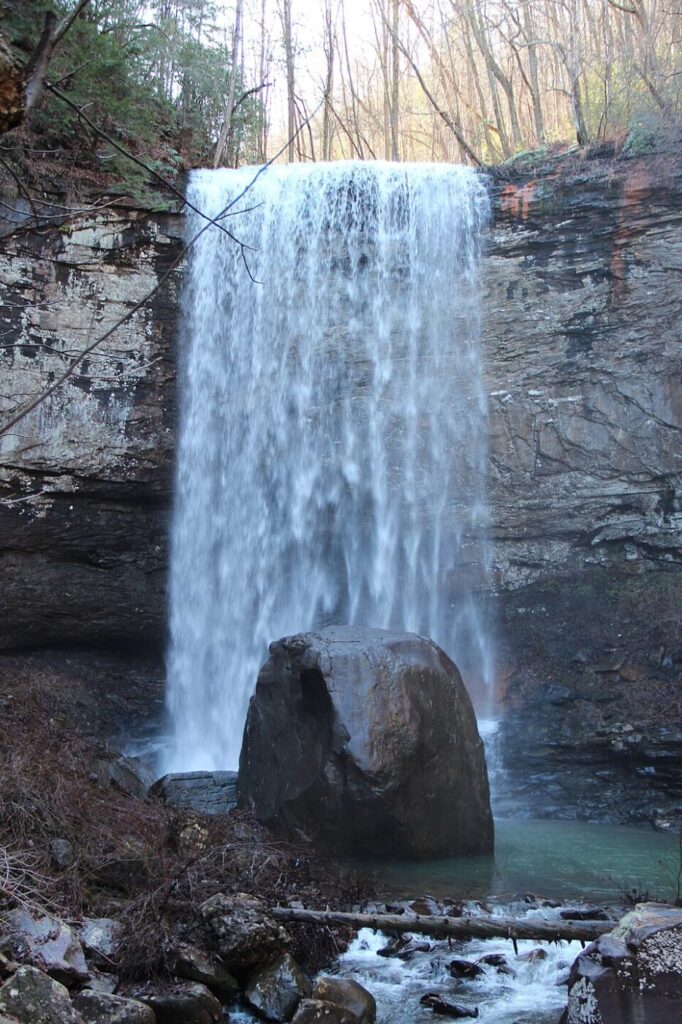
Cloudland Canyon changes noticeably with the seasons. Spring brings fresh growth and stronger water flow, making the canyon floor especially lush. Summer offers cooler temperatures along the rim compared to metro Atlanta, though the descent into the gulch can feel humid. Fall is the park’s most popular season, when hardwood forests light up in deep reds and golds and long-range views sharpen dramatically. Winter strips the trees bare, opening uninterrupted sightlines across the canyon and creating some of the park’s most striking scenery, especially after a light frost.
Because the park never feels crowded in the way some North Georgia destinations do, even peak seasons tend to retain a sense of calm—particularly on weekdays.
Just Beyond the Park
Cloudland Canyon sits near the small communities along Lookout Mountain, an area shaped by quiet roads, scattered overlooks, and a slower rhythm of life. Unlike destinations built around tourism centers, the surroundings here feel understated, reinforcing the sense that the landscape itself is the main attraction. It’s a place where natural scale takes precedence over spectacle, and where a day trip can feel longer and more restorative than expected.
Getting There
From most parts of North Atlanta, the drive to Cloudland Canyon State Park feels like a gradual unwinding rather than a single leap. The route generally heads northwest, moving away from the GA-400 corridor and across a mix of suburban edges, open farmland, and increasingly rural stretches of road. As you approach the western side of the state, the land begins to rise toward Lookout Mountain, and the sense of distance from metro Atlanta becomes more noticeable.
From Cumming, Johns Creek, Roswell, Suwanee, and Duluth, the trip typically takes just under two hours, depending on traffic and your exact starting point. Unlike drives that funnel quickly into North Georgia’s more crowded mountain towns, this route feels less compressed. Traffic thins out earlier, and the final approach is calm and scenic, with long views and fewer commercial interruptions.
The last miles into the park wind gently upward, passing through quiet wooded areas before reaching the entrance. Signage is clear, and parking areas are well organized once inside the park. Cell service can become spotty near the rim and along canyon trails, so it’s worth downloading directions in advance.
For North Atlanta residents, that balance is part of Cloudland Canyon’s appeal. It’s close enough to manage as a true day trip, yet far enough that the landscape, pace, and even the quality of silence feel distinctly different from home.
What to Bring
- Comfortable walking shoes or hiking boots
- A camera (phone or DSLR — the photo ops are endless)
- Water and snacks, especially if hiking
- A light jacket — mountain temperatures can be cooler than Atlanta’s
- Binoculars for wildlife spotting
What to Do at Cloudland Canyon (Detailed)
Most visits to Cloudland Canyon State Park revolve around a simple choice: stay on the rim and take in the views, or descend into the canyon and experience the landscape from within. Both approaches offer something distinct, and many visitors find that combining a little of each makes for the most satisfying day.
For a first impression, the West Rim overlooks are the natural starting point. A short, mostly level walk leads to broad viewing platforms perched above the canyon’s edge. From here, the scale of the landscape becomes clear. The canyon opens wide rather than deep, framed by layered ridgelines that seem to stretch endlessly on clear days. These overlooks are especially rewarding in the morning or late afternoon, when light moves slowly across the terrain and shadows give the canyon depth and texture. Even visitors with limited time or mobility can experience the park’s defining scenery from this vantage point.
Those looking for a more immersive experience usually head down into Sitton Gulch. The trail descends steadily, following the course of the creek as the air cools and the forest closes in. The shift is immediate. Sounds soften, temperatures drop, and the sense of exposure from the rim gives way to a sheltered, almost enclosed atmosphere. At the base of the canyon, Cherokee Falls and Hemlock Falls provide a quiet focal point. They aren’t overwhelming in size, but they feel intimate and well integrated into their surroundings, especially after rainfall when water movement is more pronounced.
Hiking at Cloudland Canyon tends to be less about conquering distances and more about pacing yourself. The descent into the gulch is manageable for most reasonably fit visitors, but the climb back out is long and gradual rather than steep and dramatic. Many hikers find that taking frequent pauses to rest and look back up the canyon becomes part of the experience rather than a delay.
Beyond hiking, the park encourages a slower kind of exploration. The rim areas invite lingering—sitting on benches, watching clouds move, or simply taking in the quiet. Wildlife sightings are common, particularly deer along the forest edges and birds moving through the canopy. With fewer crowds than some North Georgia destinations, the park often feels unhurried, even on weekends.
For visitors who want to extend their stay without committing to an overnight trip, Cloudland Canyon also works well as a place to pause. Picnic areas near the rim offer open views and a sense of space, making them ideal for a relaxed lunch before the drive back. Whether you spend your time walking, sitting, or simply looking, the park rewards attention more than ambition—an approach that fits neatly into a single, restorative day away from North Atlanta.
Planning Resources for Your Visit
Plan Your Park Visit
- Georgia State Parks (Official): Cloudland Canyon State Park — core park info, alerts, reservations
- Georgia State Parks: ParkPass info (daily + annual) — parking pass details
- Explore Georgia: Cloudland Canyon State Park overview — helpful high-level planning info
Maps & Trails
- Park Map (PDF): Cloudland Canyon State Park — useful for offline access
- AllTrails: Cloudland Canyon State Park — recent trail reports and conditions
- AllTrails: Waterfalls Trail (Sitton Gulch) — route to Cherokee & Hemlock Falls
Cabins, Camping, and Comfort Stops
- Cabins & Camping at Cloudland Canyon (Official) — cabins, walk-in campsites, backcountry info
- Georgia State Parks Lodging Overview — helpful for comparing overnight options
Before You Leave: Weather & Road Conditions
- National Weather Service: Rising Fawn, GA forecast — closest reliable forecast for the park
- 511 Georgia (Official): Real-time traffic & incidents — useful for I-75 and northwest Georgia routes
Nearby Stops to Extend the Day
Lookout Mountain Area (about 20–30 minutes)
- Rock City Gardens (Official) — iconic overlooks and easy walking paths
- Ruby Falls (Official) — underground waterfall experience
Chattanooga, TN (about 40–45 minutes)
- Visit Chattanooga (Official visitors site) — dining, riverwalk, and downtown stops
Tip for readers: Cell service can be limited near the canyon rim. Save the park map PDF and weather forecast to your phone before leaving North Atlanta.
Photo on top: By Ronmacal at English Wikipedia – Transferred from en.wikipedia to Commons., Public Domain