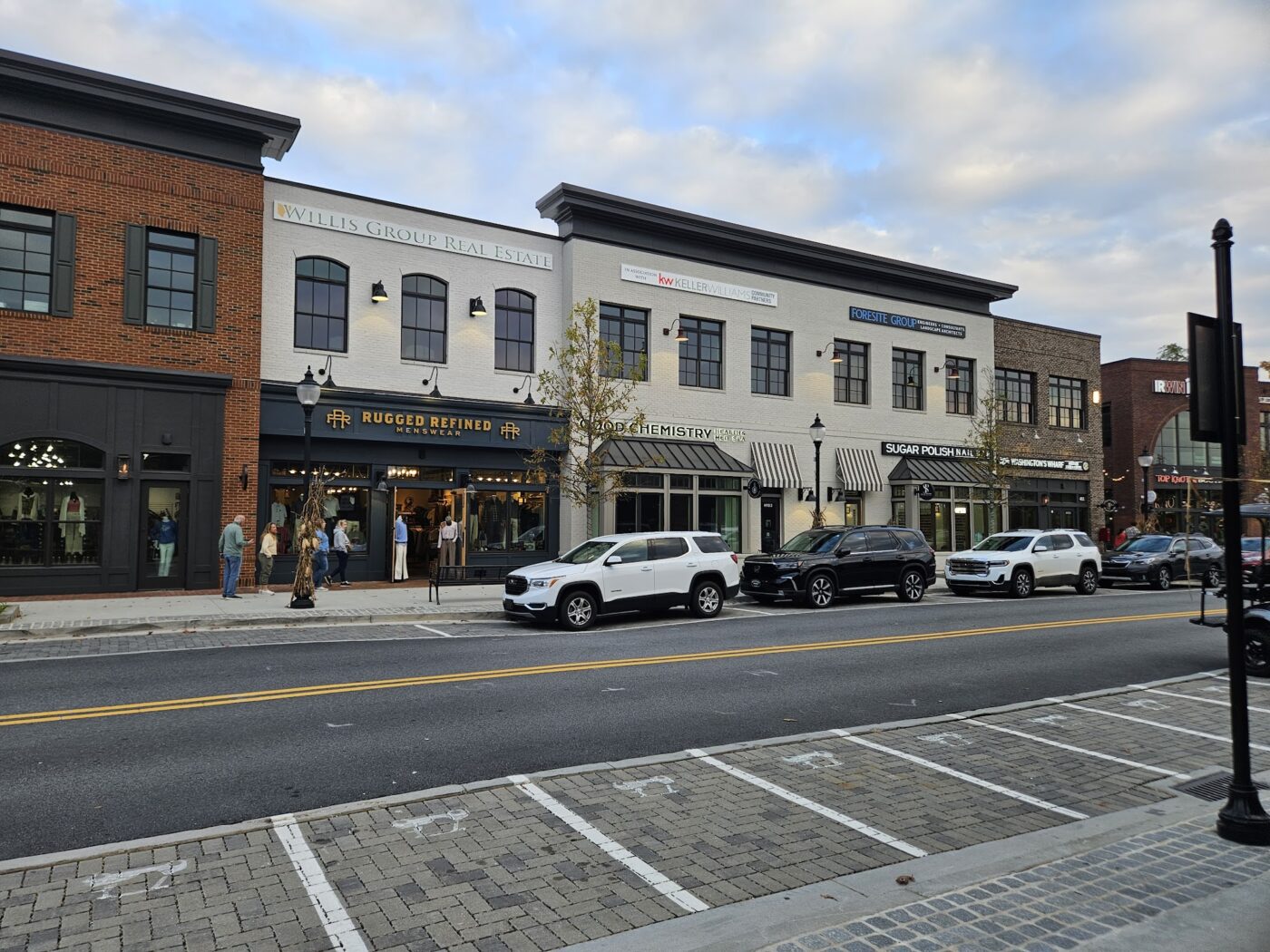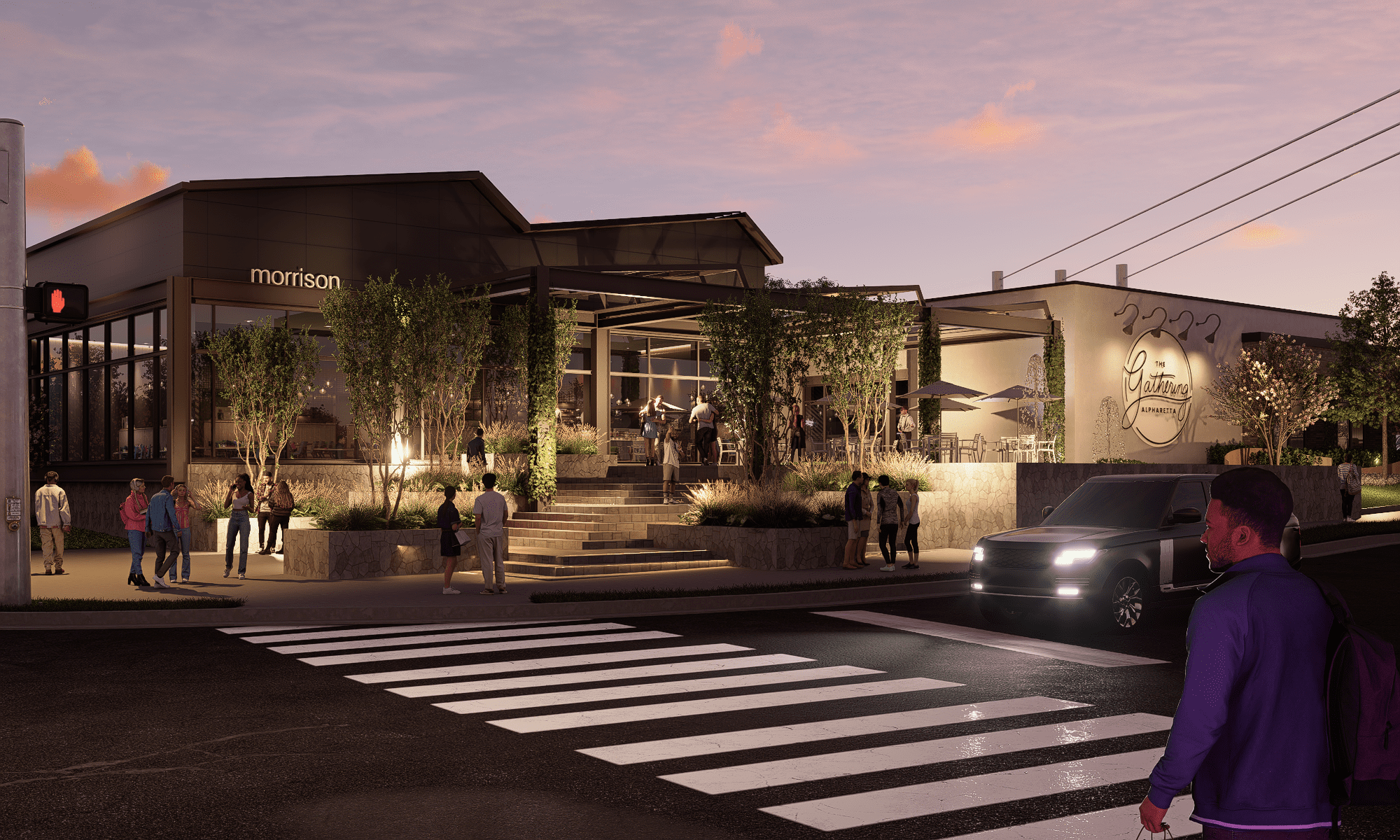
In North Atlanta, the word downtown has become elastic. It no longer means a courthouse square or a historic main street by default. Instead, it signals something more aspirational: walkability, shared space, restaurants that feel social rather than transactional, and a sense—however constructed—of a place where daily life can unfold beyond the car.
Nowhere is this evolution clearer than in the contrast between Alpharetta and Johns Creek. Both are affluent, highly educated North Atlanta cities. Both are investing heavily in placemaking. Yet their visions of what a downtown should be—and who it is for—could not be more different.
Alpharetta: A Downtown That Already Acts Like a City
Alpharetta’s downtown is not a single project. It is an ecosystem. The historic downtown core, Avalon, surrounding office towers, hotels, and residential buildings all bleed into one another, creating a place that feels active almost by default.
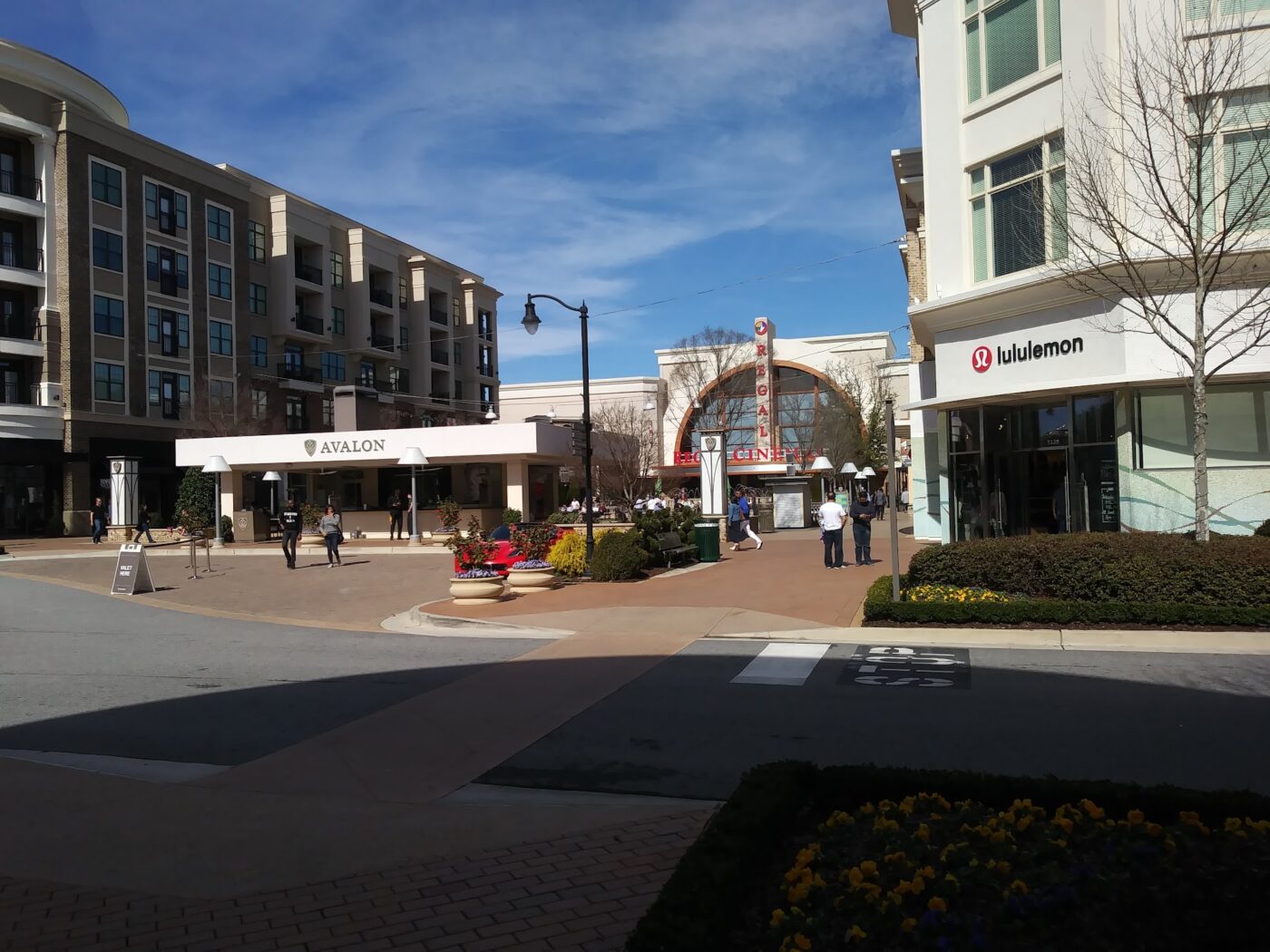
At the center of this gravity is Avalon, a privately developed district that redefined expectations for suburban mixed-use living in metro Atlanta. Avalon is dense by suburban standards, unapologetically polished, and designed to attract visitors from well beyond Alpharetta’s borders. On weekends, it does exactly that.
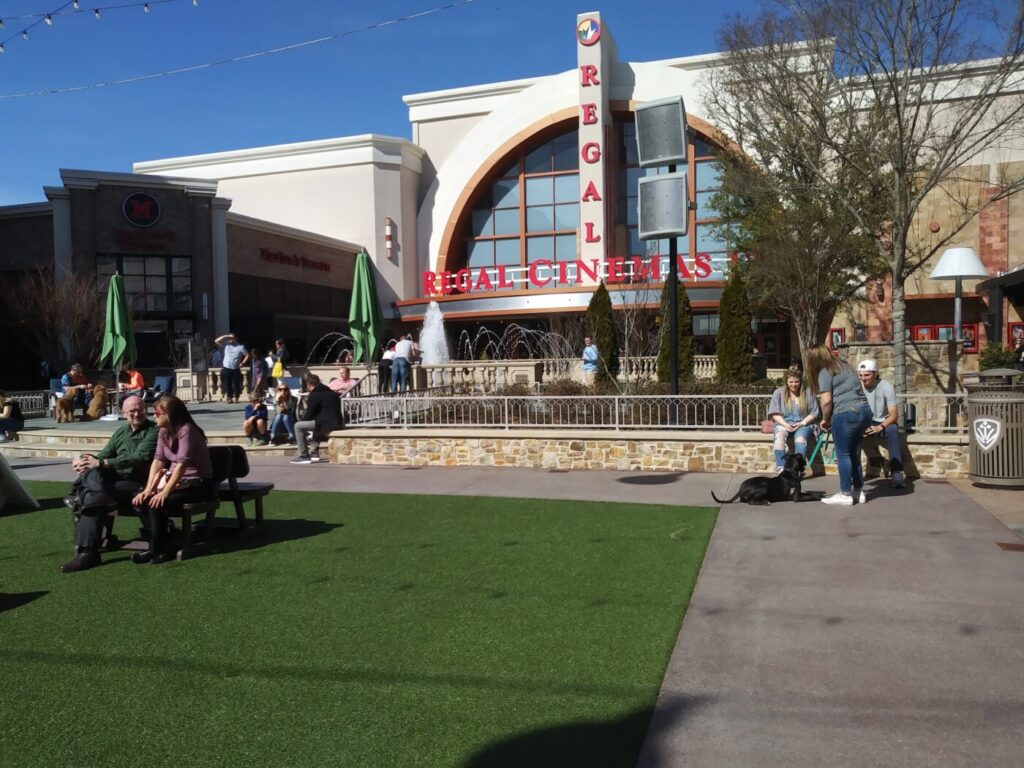
But what makes Alpharetta’s downtown distinctive is not Avalon alone. It is the way multiple nodes—historic Canton Street, the City Center area, hotels, offices, and residential density—create overlapping rhythms. Office workers spill into lunch spots. Families arrive in the evening. Visitors book weekend stays. Events are frequent, often large, and sometimes disruptive in the way real cities are disruptive.
Alpharetta’s downtown vision is outward-facing. It accepts traffic, crowds, and regional draw as the cost of relevance. It is a place that assumes constant motion—and is comfortable with the trade-offs that come with it.
Johns Creek: A Downtown Designed to Be Lived In First
Johns Creek arrives at the idea of downtown from the opposite direction.
For most of its existence, Johns Creek has been defined by neighborhoods rather than centers. Life here has been intentionally quiet, school-focused, and residential. Retail exists, but rarely as a destination. Restaurants are good, but scattered. There has never been a single place that felt like the city’s heart.
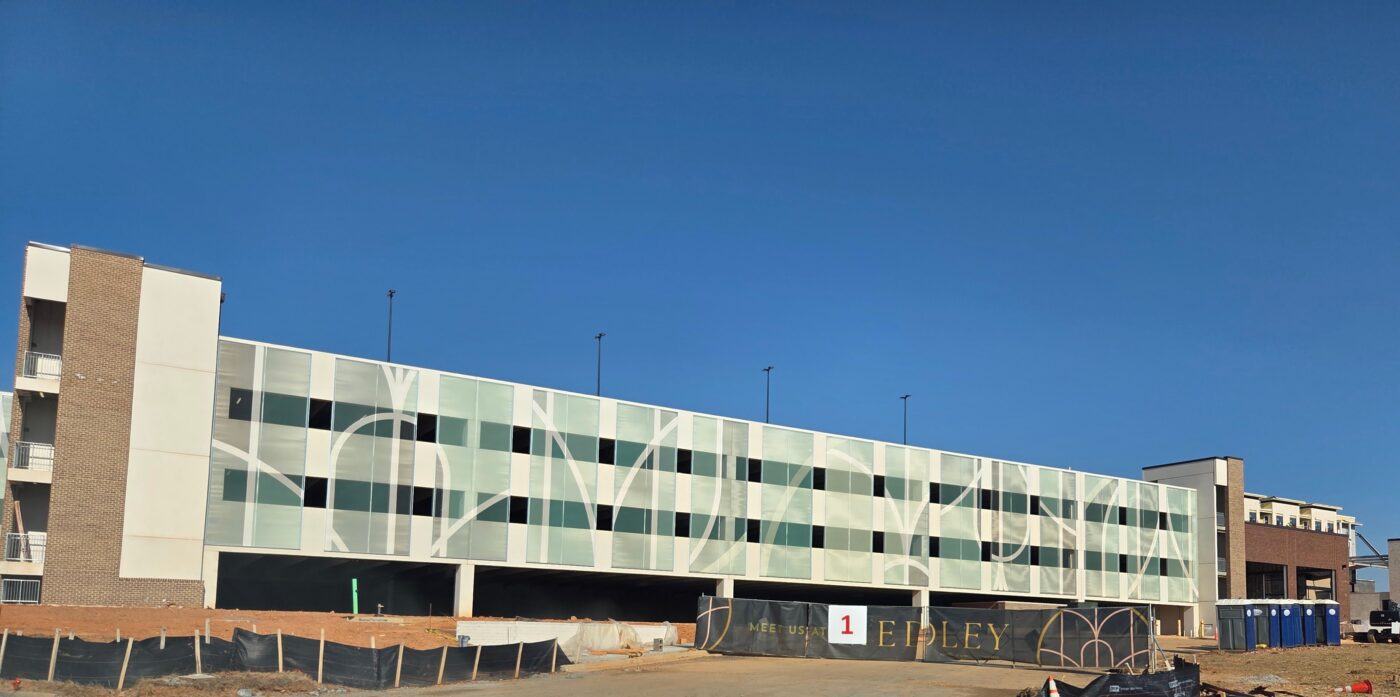
The Johns Creek Town Center plan—and its anchor, Medley—is an attempt to create that heart without turning the city into something it is not.
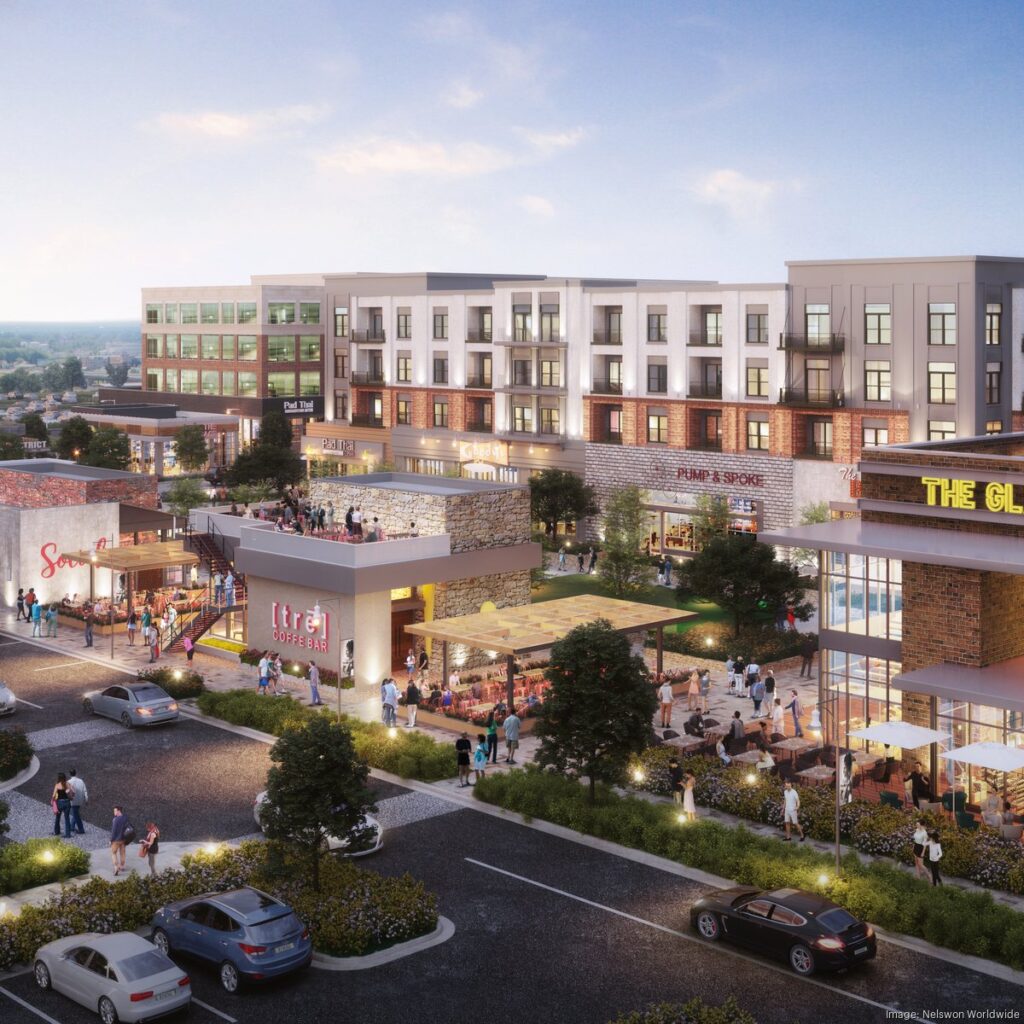
Rather than replicating Alpharetta’s regional pull, Johns Creek’s vision is inward-facing. The Town Center is designed primarily for residents, not tourists. Density exists, but it is moderated. Programming is intentional rather than constant. The emphasis is on daily use: walking after dinner, meeting neighbors for coffee, attending a small concert, running an errand without getting back in the car.
The inclusion of Creekside Park behind City Hall reinforces this philosophy. Public space here is not an accessory to retail; it is part of the civic fabric. The message is subtle but clear: this downtown exists to serve community life first, commerce second.
Two Philosophies of Density
Density is often discussed as a number—units per acre, buildings per block—but in practice it is experienced emotionally.
In Alpharetta, density feels energetic. Buildings are taller. Streets are busier. Parking is more visible. The environment encourages movement and consumption. Even casual visits feel like outings.
In Johns Creek, density is meant to feel absorbable. Apartments and townhomes are present, but framed as part of a broader landscape of green space, civic buildings, and lower-rise development. The goal is not to impress, but to integrate.
Neither approach is inherently better. They simply answer different questions.
Alpharetta asks: How do we compete regionally?
Johns Creek asks: How do we strengthen daily life locally?
Who Each Downtown Is Really For
These differences matter most at the human level.
Alpharetta’s downtown works exceptionally well for people who want activity baked into their routine—young professionals, empty nesters seeking energy, visitors, and residents who enjoy being at the center of things. It is a place where weekends are busy by design and where quiet is the exception, not the rule.
Johns Creek’s emerging downtown is likely to resonate more with families, long-time residents, and those who value calm alongside connection. It is not trying to replace neighborhood life; it is trying to complement it. The expectation is not constant excitement, but reliable presence.
This distinction will shape everything from tenant mix to event programming to how residents emotionally relate to the space.
Two Models, One Region
What’s notable is that these two visions are unfolding just miles apart, within the same regional economy. Together, they illustrate how North Atlanta is no longer chasing a single suburban ideal.
Instead, cities are choosing their personalities.
Alpharetta has embraced visibility, scale, and regional relevance. Johns Creek is carefully constructing intimacy, civic identity, and long-term livability. Both are responding to real demand—but from different constituencies.
As Medley and the Johns Creek Town Center continue to take shape, comparisons to Alpharetta will be inevitable. But understanding their differences makes one thing clear: Johns Creek is not trying to become Alpharetta.
It is trying to become something quieter—and, for many residents, something just right.
Updated 2026: Downtown development plans and tenant mixes continue to evolve across North Atlanta.