Exclusive sponsor
At Roswell’s Mimms Museum, the Story of Apple Gets Personal
Roswell's Mimms Museum introduces iNSPIRE, a new Apple exhibition featuring artifacts and interactive experiences that highlight 50 years of innovation and technology.

Major local stories and useful updates, once a week.
Daniel Shub’s first home computer had a practical job to do. His father brought it home for the family’s fabric business in Puerto Rico, where rolls of upholstery material were part of everyday life.
For Daniel, the machine offered other possibilities. He wanted to change its settings, understand how it worked and see what he could make it do.
Years later, walking through the Apple exhibition he helped design at Roswell’s Mimms Museum of Technology and Art, Shub is still interested in that moment when a person stops looking at a machine and starts doing something with it.
Here, that might mean becoming a dancing silhouette in an iPod advertisement, drawing on an iPad and watching the artwork join a larger display, or moving through a room where projections respond to the body.
“For me, it’s always been about connecting the humans to technology,” Shub told North Atlanta Star during an Oct. 15 visit.
The museum’s permanent exhibition, iNSPIRE: 50 Years of Innovation from Apple, opened April 1, 2026. It brings together more than 2,000 artifacts across 20,000 square feet. There are early computers, prototypes, software, advertising and objects that once belonged to the ordinary working life of a technology company.
A childhood computer, then a school yearbook
Shub grew up in Guaynabo, Puerto Rico, outside San Juan, with an older brother, a younger brother and a younger sister. His Jewish family’s history reaches through Europe, Cuba and the United States. His father was born in Cuba; the family later spent time in Texas before settling in Puerto Rico.
The computer that came home for work was a Windows machine. Shub remembers the early internet and AOL, and the pleasure of exploring settings and making the computer more his own.
School gave that curiosity a purpose. Working on the yearbook introduced him to page layout, design software and the challenge of organizing words and pictures so other people would want to look at them. That was also where his work with Macs began.
By high school, he was writing an application. Technology was becoming something he could build with, alongside his growing interest in visual communication.
Today, through DKS Design, Shub works on branding, websites, communications and interactive experiences. At Mimms, those disciplines meet in a physical space, with visitors deciding for themselves where to stop and what to explore.
Asked during the walk about the child at the beginning of his story, he offered a quick correction.
“I’m still a kid in my own life.”
Before the first computer, a world taking shape
The exhibition follows a chronology, but its opening reaches beyond product launches.
Shub described the entrance as a way of introducing the cultural energy around Apple’s beginnings: the late 1960s and early 1970s, experimentation and a changing world. Visitors encounter that background before moving deeper into the machines.
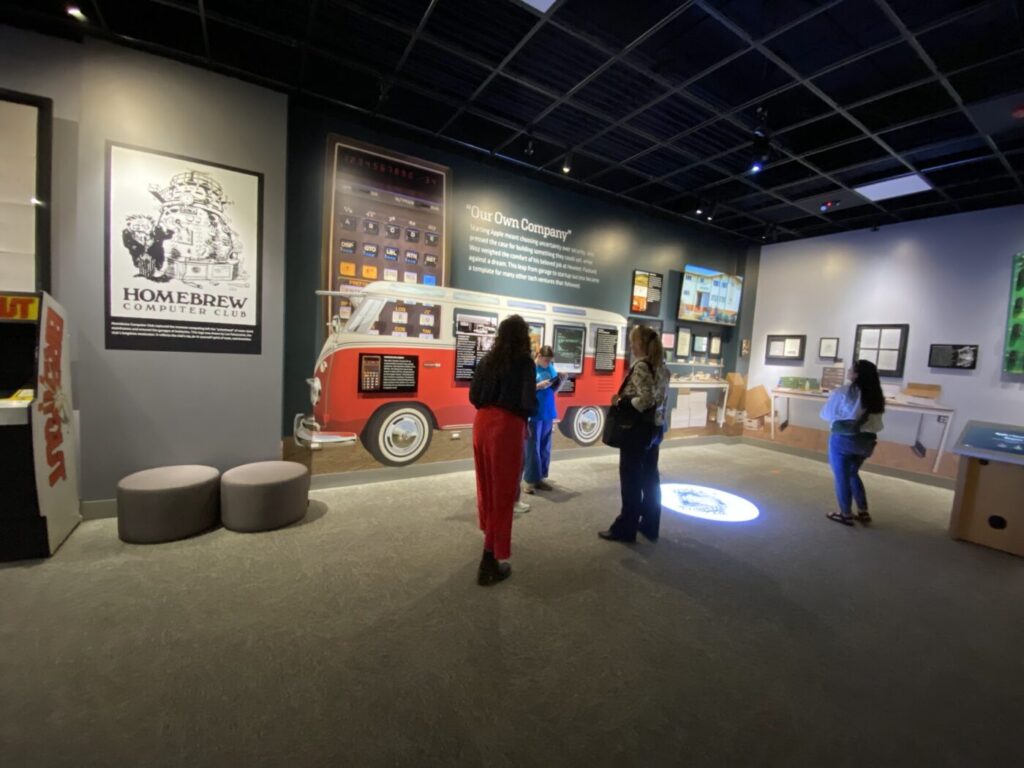
From there, the story advances through early commercial products, successive operating systems and the changing appearance of personal technology.
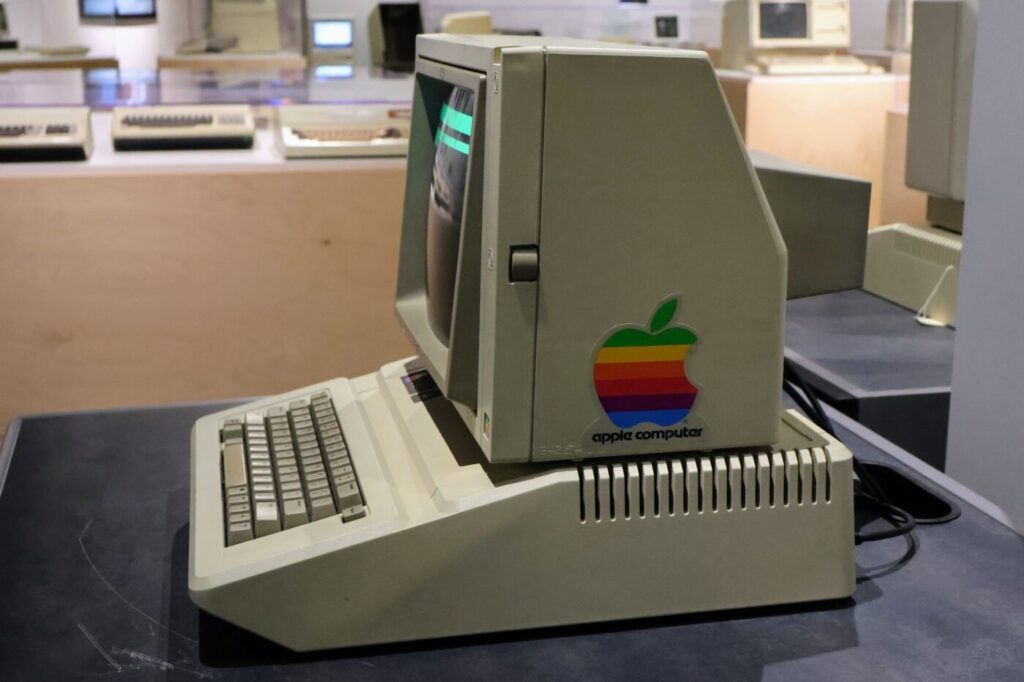
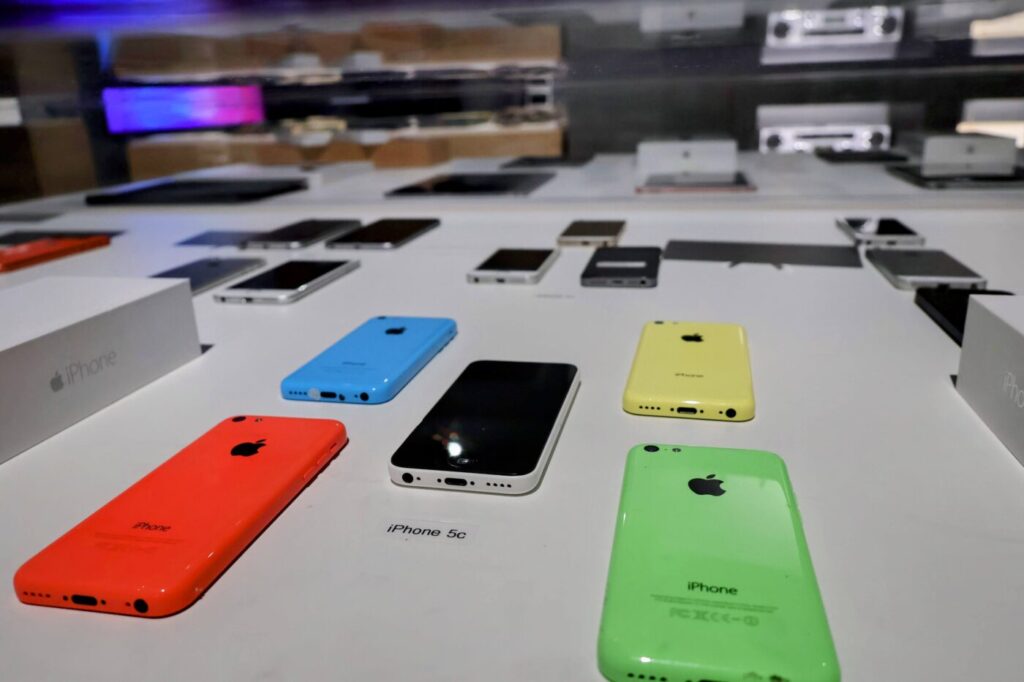
Objects that once seemed startlingly new become markers of time. A computer can recall a classroom. A familiar screen can bring back a first job. For a younger visitor, the same object may require an explanation of what people once needed it to do.
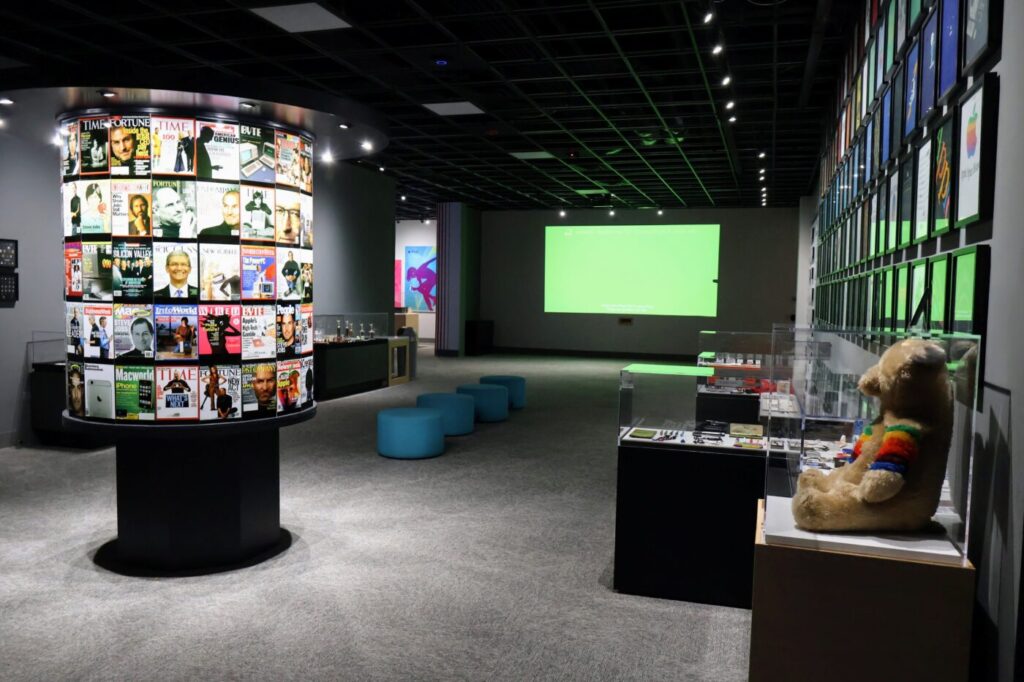
The exhibition also makes room for the things that surrounded the products: T-shirts, magazine covers, packaging and memorabilia. A column of magazine covers gives one room a center, gathering images of a company and its personalities as they appeared in public life.
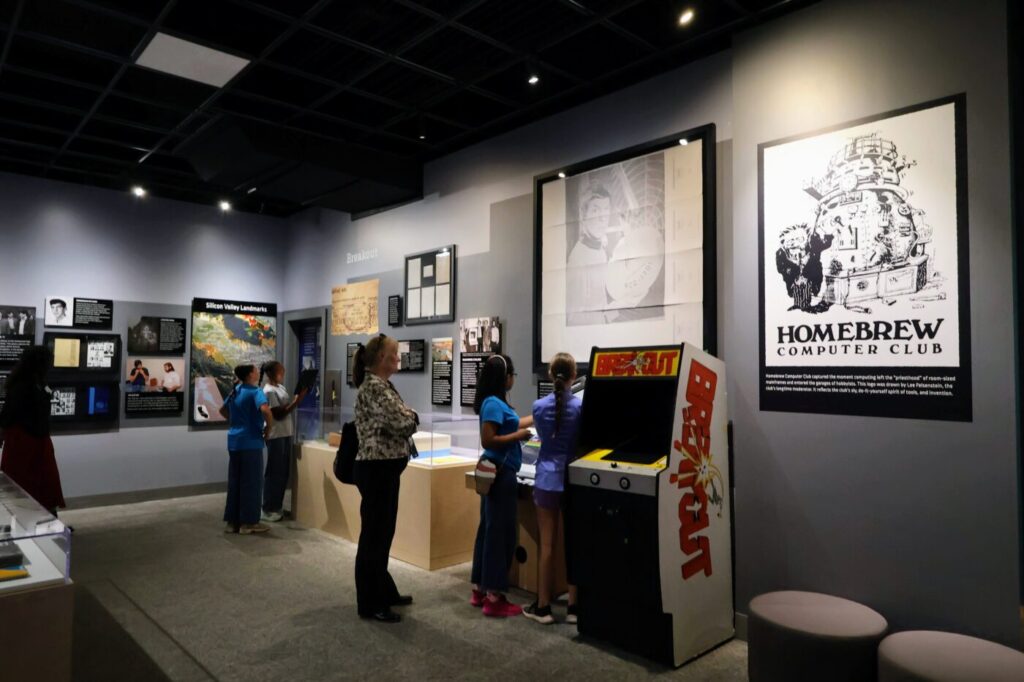
Nearby, a touchscreen chronology lets visitors explore Apple’s products, events and people. Shub said his team developed that experience from concept through execution.
“What story are you telling?” he asked as we walked. It is the question he returns to across his work.
Step into the music
As the exhibition moves into music, the relationship between visitor and display changes.
The iPod section traces the device’s development, then gives visitors a chance to enter the visual language of its advertising. Their movements become silhouettes, recalling the dancing figures that helped make the music player recognizable.
Shub demonstrated how the experience follows a person’s motion, turning a familiar campaign into something visitors can perform themselves.
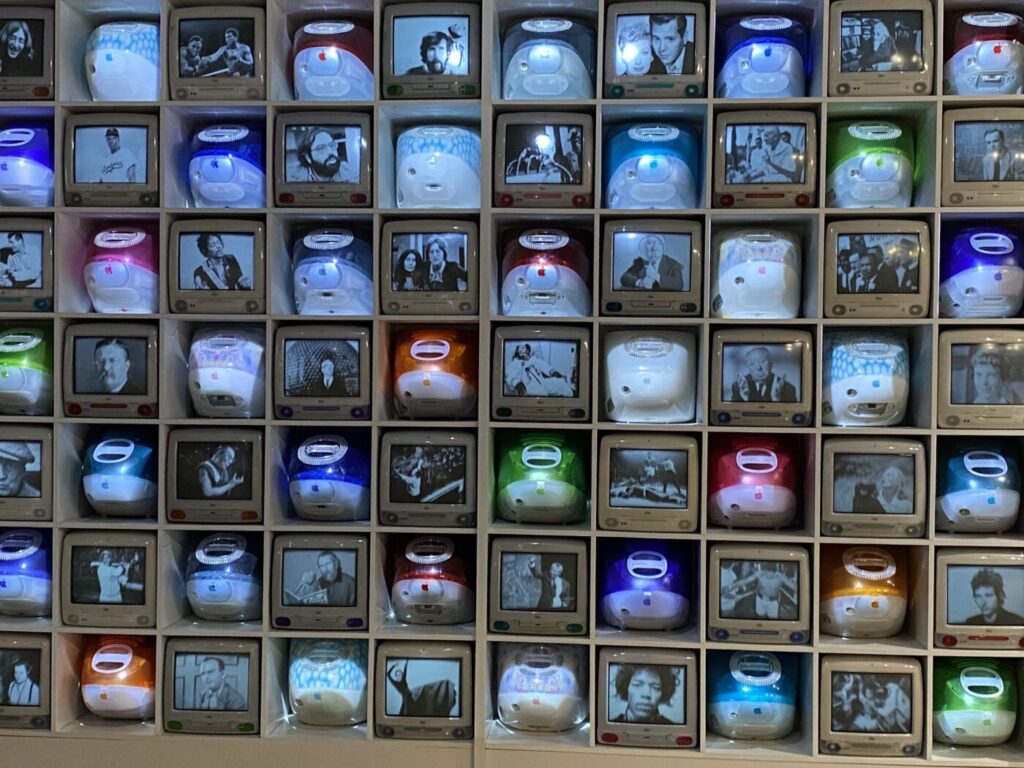
Elsewhere, a wall of colorful iMacs becomes a surface for coordinated projections. The computers remain recognizable as objects, while light and imagery give the arrangement another life.
There are games built around motion tracking, music experiences and a space where drawings made on an iPad become part of a larger artwork. Along the way, the exhibition follows changes in how people created, recorded, distributed and listened to music.
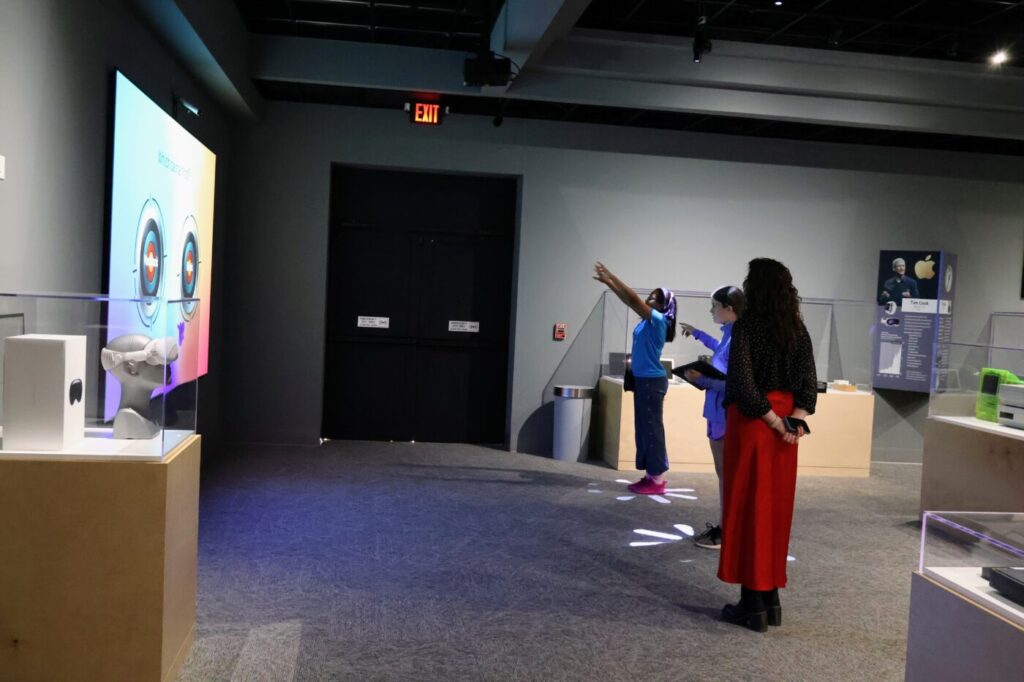
For Shub, these are opportunities to give visitors a role in the exhibition. Looking, moving, drawing and playing each offer a different way into its history.
The work behind those moments is less visible: software, cameras, projectors, displays and computers running out of sight. During the project, a room holding equipment for the installations became a working base for Shub.
A Scavenger Hunt Through Technology’s Past
During our visit, a group of middle school students was exploring the exhibition with iPads. Their activity offered a different view of the same design challenge: how to hold someone’s attention long enough for discovery to happen.
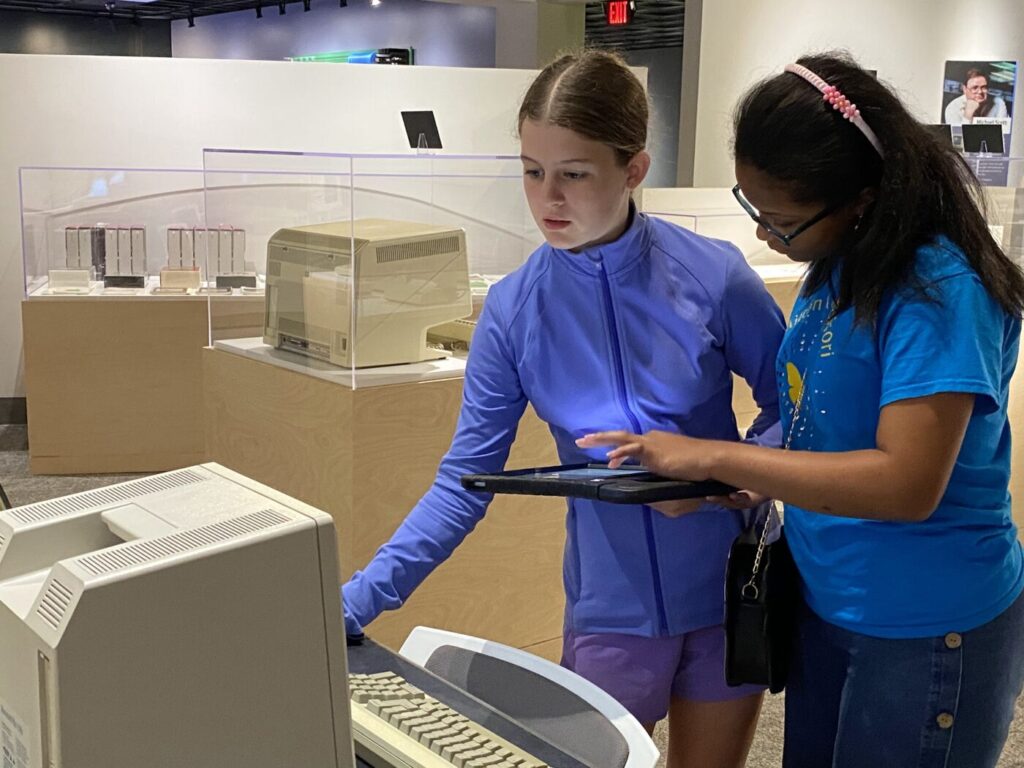
Becah Jubon, the museum’s education and public programs manager, explained that the tablets support a digital scavenger hunt. Students work through questions connected to particular areas of the exhibition, finding details, making choices and sometimes recording themselves.
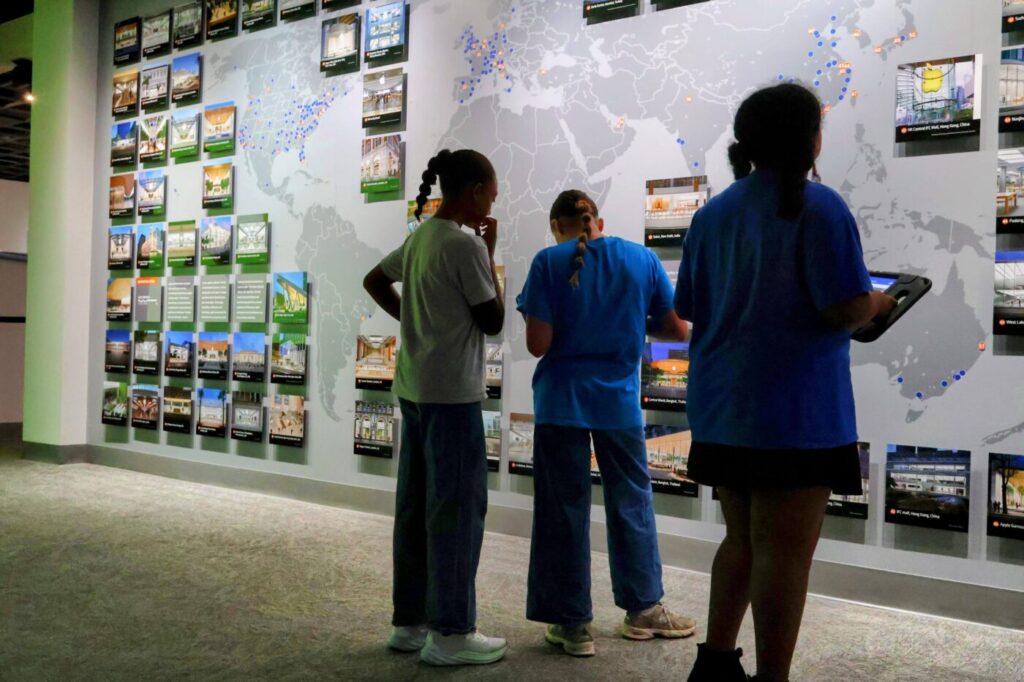
The museum now has 50 iPads, she said. She prefers students to work in groups of two or three, keeping the groups small enough for everyone to participate.
Using the Actionbound app, Jubon builds activities around photographs of the exhibits and questions suited to different ages or subjects. She has developed versions for elementary and high school students, along with digital design and marketing, and hopes to broaden the options.
Some prompts are playful: make a video at an interactive wall, or choose a place pictured in a display that you would like to visit. Others introduce geography or ask students to look more closely at the information around them.
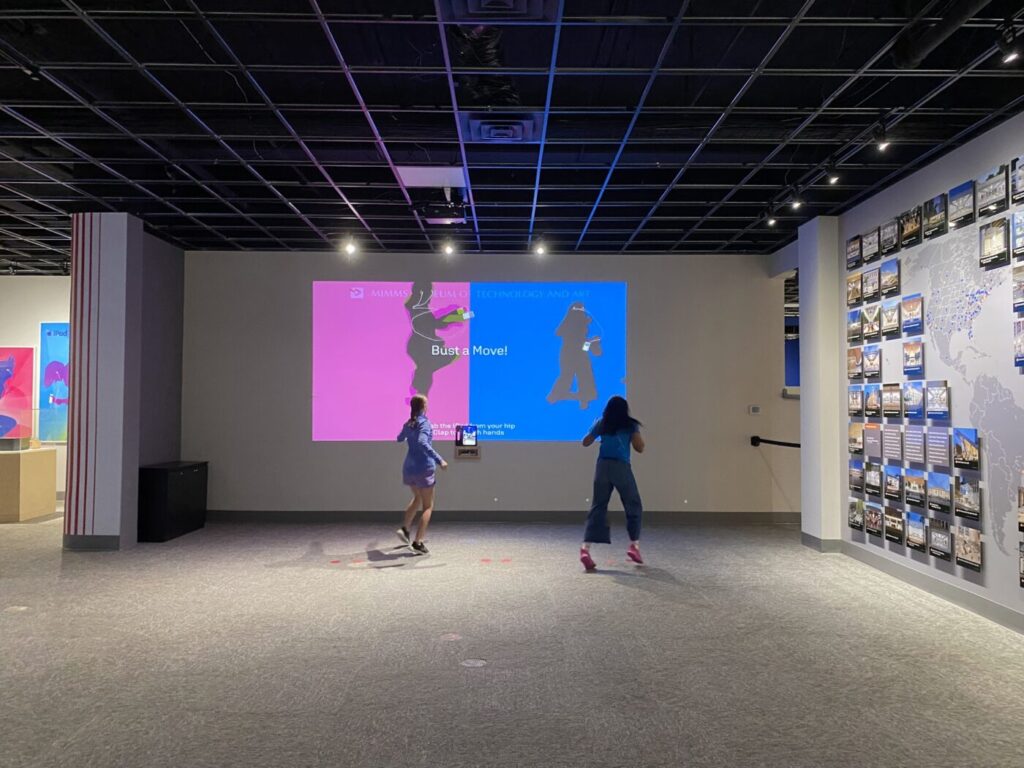
“You see a lot more engagement when they’re doing this kind of activity than when we do a traditional tour,” she said.
For students who spend much of the school day listening to adults, the chance to move at their own pace gives the visit a different rhythm. The tablet sends them back into the room to look for something.
What comes after nostalgia
The broader Mimms Museum, formerly the Computer Museum of America, places Apple’s story alongside supercomputing, space exploration, computing history and art. The institution opened in Roswell in 2019 and adopted its current name in 2025.
Within iNSPIRE, the latest technology is also helping interpret the past. One installation offers an AI-powered representation of Steve Jobs that responds to visitor questions. It is a contemporary simulation, another of the experiences Shub’s team helped develop.
That brings the conversation toward a question facing parents and designers alike: what should people do with the tools now arriving?
Shub compares the present stage of artificial intelligence with his early experience of the internet. He sees room for people to shape its uses, along with a responsibility to consider what children will learn from it.
He wants to keep working with history, education and interactive technology.
“We are part of what shapes it,” he said of technology, describing the influence of how people use and interact with it.
That thought reaches back to the Windows computer his father brought home for the fabric business. It arrived with a job already assigned. A curious child found other things to do.
At Mimms, the invitation is there again: move closer, try the controls, make something happen.
Mimms Museum of Technology and Art is at 5000 Commerce Parkway in Roswell. Regular hours are noon to 5 p.m. Wednesday through Sunday. Visit the museum’s website for admission information, school visits and special events.
Community Voice
A snapshot of reader views, not a scientific survey.
Explore Community Voice →About the Contributors



In North Atlanta

Roswell Film Festival Marks 10 Years With 29-Short Celebration
Lawrenceville’s New Music Series Opens Thursday With shelldhn

Music Milton Opens Second Season With Mozart Concert October 10

Roswell’s New iSmash Turns Breaking Things Into a Family Entertainment Business

An Artist Brings the Woods Inside a Webb Bridge Park Tunnel

As Bookstores Make a Comeback, an Alpharetta Owner Bets on Something Amazon Can’t Deliver
IN NORTH ATLANTA