Exclusive sponsor
Au and Thorne discuss lawsuit reform, jail spending and political compromise in Johns Creek
Major local stories and useful updates, once a week.
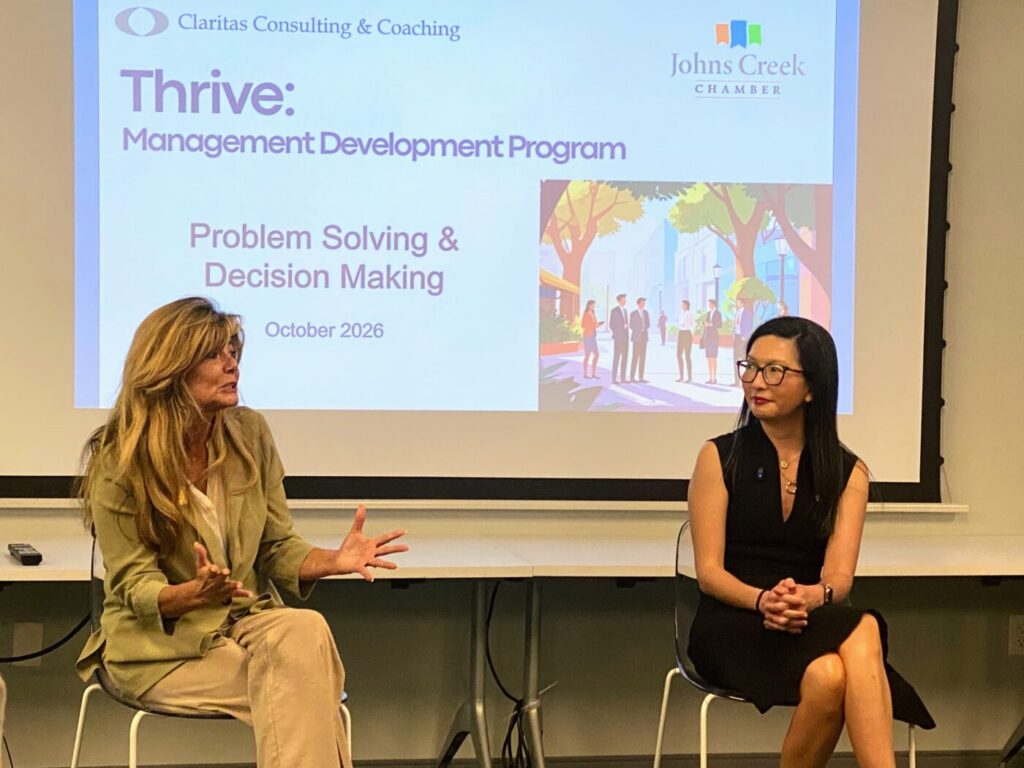
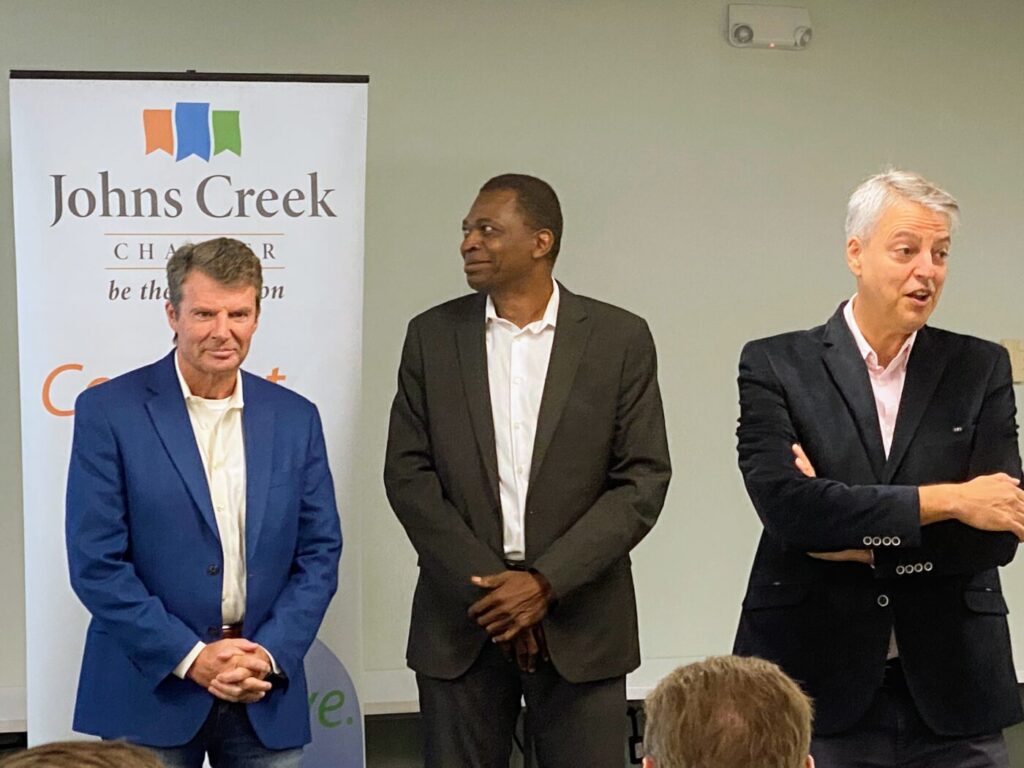
At an Oct. 16 Johns Creek Chamber of Commerce gathering, Au, a Democrat, and Thorne, a Republican, discussed how they approach that work, from decisions over lawsuit reform and jail spending to helping residents navigate government.
Both serve in the political minority on their governing bodies. Au needs Republican support to advance legislation in the Georgia House. Thorne must build support on Fulton County’s Democratic-majority commission. They described relationships that allow them to negotiate, disagree and sometimes support measures that put them at odds with their own parties.
Au explains her lawsuit reform vote
Asked about balancing party affiliation with the interests of her district, Au pointed to her support for Gov. Brian Kemp’s litigation reform legislation.
She described the measure as one of the most contentious bills of the legislative term, with pressure on lawmakers largely following party lines. Au said concerns from businesses and the district’s hospital community helped shape her decision to support it.
Her responsibility, she told the audience, was to represent her constituents rather than automatically follow her party.
Au was one of three House Democrats who supported the amended Senate Bill 68 in March 2025. The measure passed 91–82, reaching the 91 votes required for House passage.
Kemp signed the lawsuit reform package on April 21, 2025. It changed rules governing civil lawsuits, including liability for crimes committed on business properties, evidence of medical expenses and procedures for separating decisions about liability and damages. Supporters argued the changes would help control litigation and insurance costs.
Au framed her vote as an example of the choices lawmakers face when district concerns differ from the prevailing position within their party.
She also described cross-party cooperation as a practical requirement for Democrats in the Georgia House.
“I cannot pass any priority or do really anything without buy-in and teamwork and collaboration with the majority,” Au said.
That sometimes requires accepting that another lawmaker will receive public credit for a proposal, she added.
Thorne questions the cost of incarceration
Thorne identified the county’s jail debate as a major example of an issue that required her to study an unfamiliar system before deciding how to vote.
She said an earlier proposal for a roughly $2 billion jail raised concerns about its cost to taxpayers and whether a larger facility would address the reasons people remain incarcerated.
Thorne described visiting other jails and examining court operations, detention times and alternatives involving mental health and substance use treatment. She said she worked with people across party lines to explore approaches beyond building additional jail capacity.
Her argument focused on how the justice system operates: whether cases move efficiently, how long defendants remain in custody and whether some people could receive appropriate treatment through other programs.
The county has since advanced a different capital plan. On April 15, commissioners unanimously approved an inducement resolution for bonds not to exceed $1.3 billion for a special-purpose detention facility and renovations to the existing Rice Street Jail. The planned facility would accommodate detainees with mental and physical health needs, female detainees and other special populations.
Thorne also raised concerns about competing public safety funding requests, saying county officials and justice agencies need to work together on spending priorities.
Budget decisions force difficult choices
Au described the state budget as a statement of the government’s priorities, with funding decisions determining which proposals can proceed and which must wait.
She said she anticipated difficult discussions in the next budget cycle, pointing to competing demands and the approaching transition in state leadership.
Both officials described the frustration of pursuing changes that can be delayed by limited funding, political disagreements or the need to secure support from other decision-makers.
Thorne said relationships with Democratic commissioners had helped her work through county issues. She emphasized that her decisions affect residents throughout Fulton County, extending beyond the North Fulton communities she directly represents.
Au said private conversations between lawmakers can be considerably more civil than their public speeches suggest. Maintaining those working relationships, she said, is essential to getting legislation passed.
Knowing which government can act
The discussion also addressed a recurring problem in constituent services: residents often approach an elected official without knowing which government has authority over their concern.
Thorne said she receives requests involving roads and zoning that fall under city or state jurisdiction. In those cases, her office helps connect residents with the appropriate officials.
Au described a similar approach, using passport assistance as an example. Although passports are a federal responsibility, her office can help a resident reach congressional staff who handle those cases.
She said relationships across different levels of government allow her office to make those connections rather than simply turn someone away.
“Government is a team sport,” Au said.
Bringing younger residents into the process
An audience question about younger voters prompted Au to distinguish between exposure to political information and participation in government.
Young people encounter substantial amounts of political content, she said, but that does not necessarily translate into voting or confidence that their involvement can change an outcome.
Au described her office’s fellowship program as one way to make participation more accessible. Fellows help research legislation, review bill drafts and engage other students in the office’s work.
Thorne encouraged younger residents to examine issues beyond headlines and seek a fuller understanding of the decisions officials make.
The discussion closed with advice to residents seeking policy changes: contact elected officials early. By the time a proposal reaches a final vote, much of the research, negotiation and debate has already occurred.
Community Voice
A snapshot of reader views, not a scientific survey.
Explore Community Voice →About the Contributors


In North Atlanta

Dervish Plans 200-Seat Turkish Restaurant in Johns Creek

Johns Creek, Roswell and Milton Restaurants Make OpenTable’s Diners’ Choice List

At Read It Again, the Bookstore Comeback Is About Community

Why Johns Creek May Be Ready for Its Own Farmers Market
Johns Creek Students to Lead Fulton Commission Debate Monday

Persi Bite Brings Fast-Casual Persian Food to Johns Creek
IN NORTH ATLANTA