Birthright Citizenship: Should Being Born in America Be Enough?
In a guest essay, Mateo Mendez argues that a child’s citizenship should not depend on their parents’ immigration status.
Major local stories and useful updates, once a week.
Birthright citizenship has been debated a lot in recent years. One idea behind it is jus soli, or “right of the soil,” which means that citizenship can be based on where a person was born. Some people question whether children born in the United States should automatically become citizens if their parents are not U.S. citizens. I believe the Fourteenth Amendment should protect those children regardless of their parents’ immigration status.
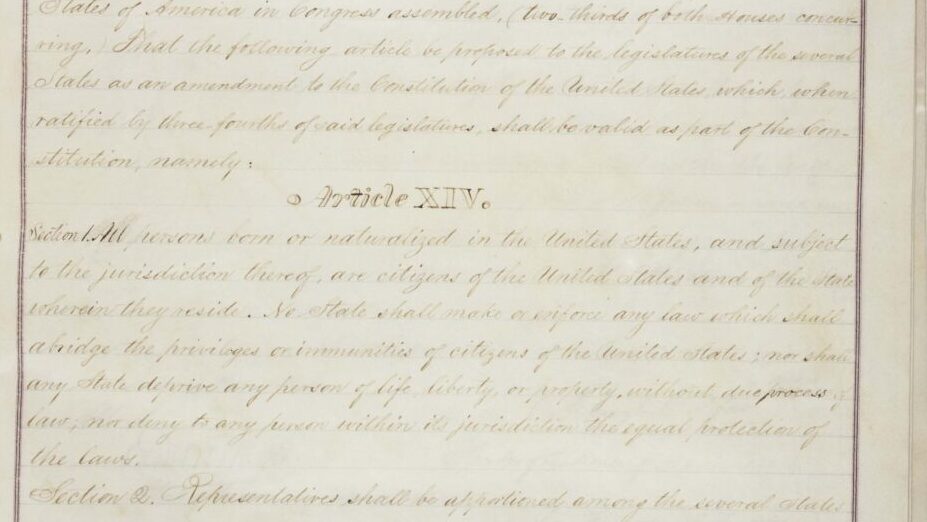
The Fourteenth Amendment was ratified in 1868. Section 1 begins: “All persons born or naturalized in the United States, and subject to the jurisdiction thereof, are citizens of the United States and of the State wherein they reside.” To me, that clause is the strongest reason to protect birthright citizenship. It makes citizenship a constitutional right, not something that should depend on whether a person’s parents are citizens.
My reason for supporting birthright citizenship is that a child is not responsible for their parents’ immigration status. Children cannot control where they are born or whether their parents immigrated. Citizenship gives people important rights and protections. It also gives us a clearer rule than asking about the immigration status of a child’s parents.
In 1898, the Supreme Court decided United States v. Wong Kim Ark. Wong was born in San Francisco to Chinese parents who lived in the United States. After a trip abroad, he was denied entry because officials did not consider him a U.S. citizen. The Supreme Court ruled that he was a citizen under the Fourteenth Amendment. His case shows why a person’s birthplace can matter more than their parents’ nationality.
Some people argue that children of immigrants might not have a strong connection to American customs because they grow up with their parents’ traditions. I don’t think the two are in conflict. You can be American and still keep your family’s heritage.
Birthright citizenship should remain protected for children born in the United States, even if their parents immigrated here. The Fourteenth Amendment and Wong Kim Ark’s case help explain why. A child’s citizenship should not be decided by their family’s background.
Editor’s note: Mateo Mendez wrote this guest essay for an AP U.S. Government and Politics project. On June 30, 2026, the Supreme Court ruled in Trump v. Barbara that the Fourteenth Amendment protects citizenship for children born in the United States to parents who are unlawfully or temporarily present.
In North Atlanta