 Exclusive sponsor
Federal Judge Blocks Border Construction Across Texas’ Big Bend
A federal judge has temporarily stopped border barrier work in Texas’ Big Bend area amid a lawsuit challenging construction waivers. The injunction covers national and state parks and nearby private lands while court processes unfold.
Get the week’s jobs, development, housing and growth stories from across the Sun Belt in one email.
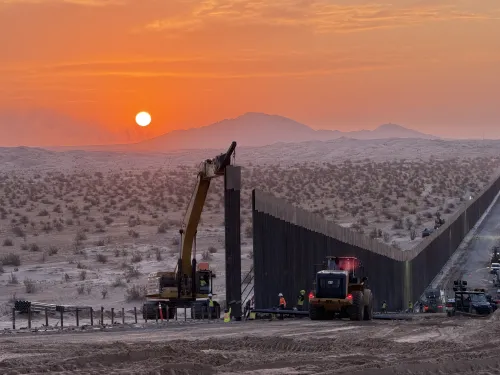
A federal judge has temporarily blocked border-barrier construction across Texas’ Big Bend region, stopping work inside Big Bend National Park and along surrounding stretches of the Rio Grande while a lawsuit over the project moves through court.
U.S. District Judge Kathleen Cardone issued the preliminary injunction Friday, preventing the federal government from building barriers, roads or related infrastructure or carrying out other ground-disturbing construction in the Big Bend Sector unless it complies with applicable laws.
The order reaches beyond the national park into a border sector stretching more than 500 miles across West Texas.
A construction pause is now a court order
Customs and Border Protection had already paused work inside Big Bend National Park in August after bulldozers began clearing land and the project drew opposition from residents, businesses, conservation groups and some Republican officials.
That administrative pause expired Sept. 30. The court order now prevents work from simply restarting while the legal challenge continues.
The government had also been considering reducing the scope of its plans inside the park. Current proposals have included vehicle barriers, patrol roads and surveillance infrastructure rather than the 30-foot steel wall planned for some private lands elsewhere in the region.
The larger federal border program includes steel barriers, roads, technology and other infrastructure and carries an estimated cost of about $46 billion.
Why Big Bend became different
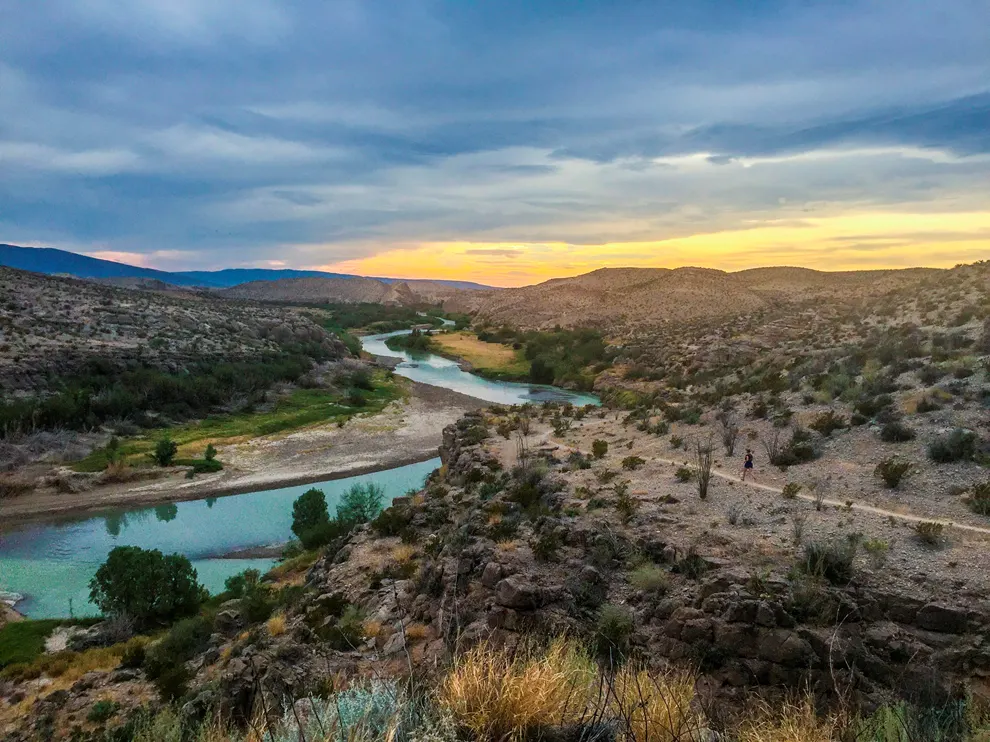
Big Bend is one of the most remote sections of the U.S.-Mexico border. The region includes Big Bend National Park, Big Bend Ranch State Park, private ranches and long stretches of rugged desert and river canyons. Unlike heavily developed border areas, much of the landscape itself makes vehicle travel difficult.
Opponents have argued that large-scale construction would permanently alter that terrain while providing limited additional security in a sector that handles a relatively small share of unauthorized crossings.
The lawsuit challenges federal waivers that allowed the government to bypass a broad group of environmental and cultural-protection laws to accelerate construction.
Cardone found that the plaintiffs were likely to succeed on at least one of their claims and could suffer serious, irreparable harm if construction continued.
Roads and barriers had already begun changing the landscape
The dispute is no longer about a project that exists only on paper.
Construction crews began clearing routes inside Big Bend National Park in August, including areas near Mariscal Mountain. Equipment and staging areas have also appeared elsewhere across the region.
Outside the parks, federal plans have included conventional 30-foot steel barriers on some private property, creating separate disputes over land access and ownership.
The court order now covers construction throughout the Big Bend Sector while the lawsuit proceeds, including the national and state parks and other proposed projects along the Rio Grande.
Customs and Border Protection said after the ruling that it remains confident in its authority to secure the border while protecting the region’s landscape and is working with the Justice Department on its next steps.
That could include an appeal. For now, however, the dispute has shifted. Federal officials are no longer deciding on their own whether and when construction resumes. A court now stands between the bulldozers and Big Bend.
Community Voice
A snapshot of reader views, not a scientific survey.
Explore Community Voice →About the Desk

Across the Sun Belt
A Tiny Texas Community Is Becoming a $1.2 Billion Data Center Hub
Livestock Trade Is Reopening as Texas Continues Fighting Screwworm
Tesla’s $10.1 Billion Solar Factory Plan Could Bring Nearly 10,000 Jobs to Texas
Texas Moves to End Sales Tax on Amazon, DoorDash and Other Platform Fees
A $3.2 Billion Texas Shipyard Breaks Ground With Up to 10,000 Jobs Planned