North Carolina Food Pantries Face Rising Demand as Families Struggle With Everyday Costs
Food distributors serving more than 700 North Carolina sites report sharply higher demand as household costs rise and federal food assistance changes.
Get the week’s jobs, development, housing and growth stories from across the Sun Belt in one email.
Based on reporting by Lynn Bonner, NC Newsline, November 23, 2026.
Thanksgiving preparations are underway across North Carolina, but food banks are facing a problem that extends far beyond the holiday: more families need help putting everyday meals on the table, including households where adults are working.
The Food Bank of Central and Eastern North Carolina supplies more than 700 food pantries, meal programs and other food-distribution sites. Across that network, the number of people seeking assistance has risen by an estimated 20% to 60% over the past year, food bank officials said Monday, November 23. The range reflects reports from sites in the network, not a statewide count of food insecurity.
Higher prices for housing, gasoline, groceries and other necessities are stretching household budgets. Some people are working multiple jobs yet still turn to food pantries for help after paying their bills.
A growing need as federal assistance changes
Food bank officials also point to changes in the Supplemental Nutrition Assistance Program, or SNAP. Federal legislation enacted last year expanded work requirements and narrowed eligibility for certain noncitizens. North Carolina counties face a larger share of the costs of administering the program, and states are scheduled to assume part of the benefit costs starting in October 2027, depending on their payment-error rates.
North Carolina’s SNAP enrollment declined 7.7% between August 2025 and August 2026, based on U.S. Department of Agriculture participation data. The decline is occurring alongside reports of growing demand at charitable food distributors.
Federal support for food banks has also changed. In early 2025, the USDA ended a program that reimbursed organizations for buying food from local farmers, reducing one source of food purchases for community distribution.
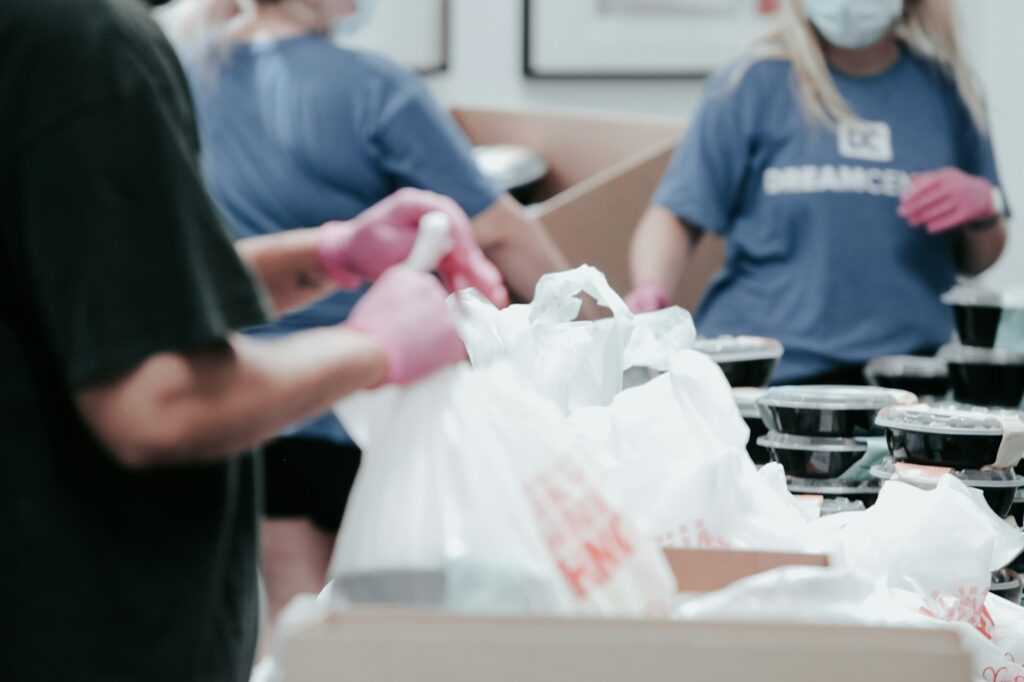
The combined pressures are being felt in central and eastern North Carolina, where the food bank’s partner organizations serve urban neighborhoods, suburban households and rural counties. Volunteers continue sorting donated food for distribution, but rising demand makes it harder for charitable support alone to cover the need.
More than a Thanksgiving food drive
At a November 23 event in Raleigh, U.S. Rep. Deborah Ross called attention to the effect of federal benefit changes on children, older adults and veterans. Food bank officials urged continued community support while warning that the scale of the need is difficult to sustain through donations alone.
The food bank is offering a year-end donation match, with each contributed dollar credited toward the equivalent of six meals through the end of 2026. Residents seeking food can find nearby distribution locations through the Food Bank of Central and Eastern North Carolina. Food availability and schedules vary by location.
The holiday season draws attention to food drives, but the growing lines at North Carolina pantries reflect a much longer challenge: families trying to maintain enough food throughout the year while the cost of living absorbs more of their income.
Original reporting: Lynn Bonner, NC Newsline. NC Newsline is part of States Newsroom, a nonprofit news network.
Community Voice
A snapshot of reader views, not a scientific survey.
Explore Community Voice →About the Desk

Across the Sun Belt

North Carolina’s Horizons Park Adds More Than Seven Miles of Trails

North Carolina’s First Buc-ee’s Is Bringing a $50 Million Interchange Overhaul With It
Buc-ee’s Eyes Second North Carolina Location Along I-95 in Rocky Mount
North Carolina Defense Contractor Plans $95 Million Factory, 423 New Jobs Near Charlotte

Chinese Auto Parts Manufacturer Picks North Carolina for First U.S. Factory, 300 Jobs

North Carolina Expands Parental Leave, Speeds Path to Permanent State Jobs
ACROSS THE SUN BELT