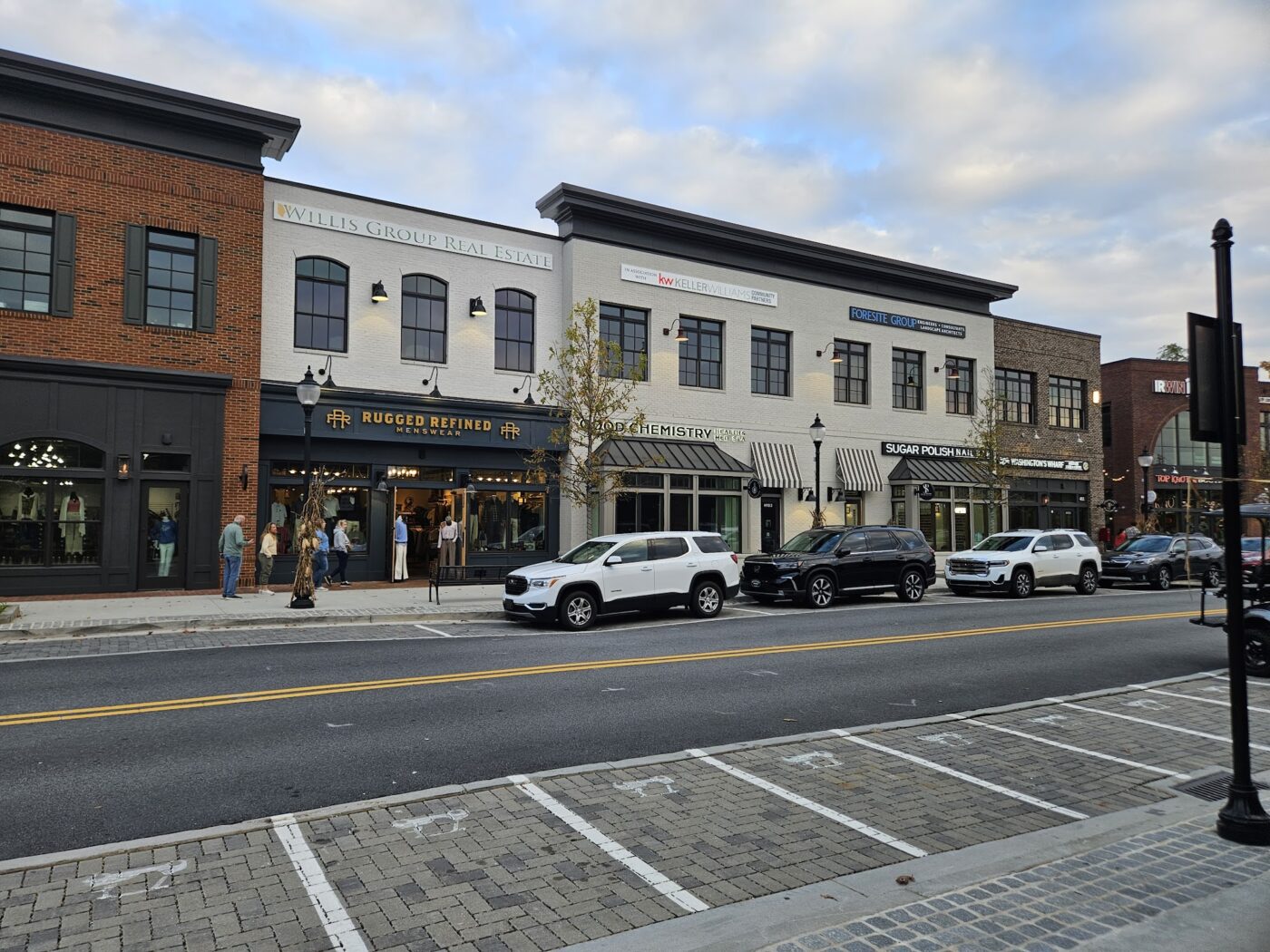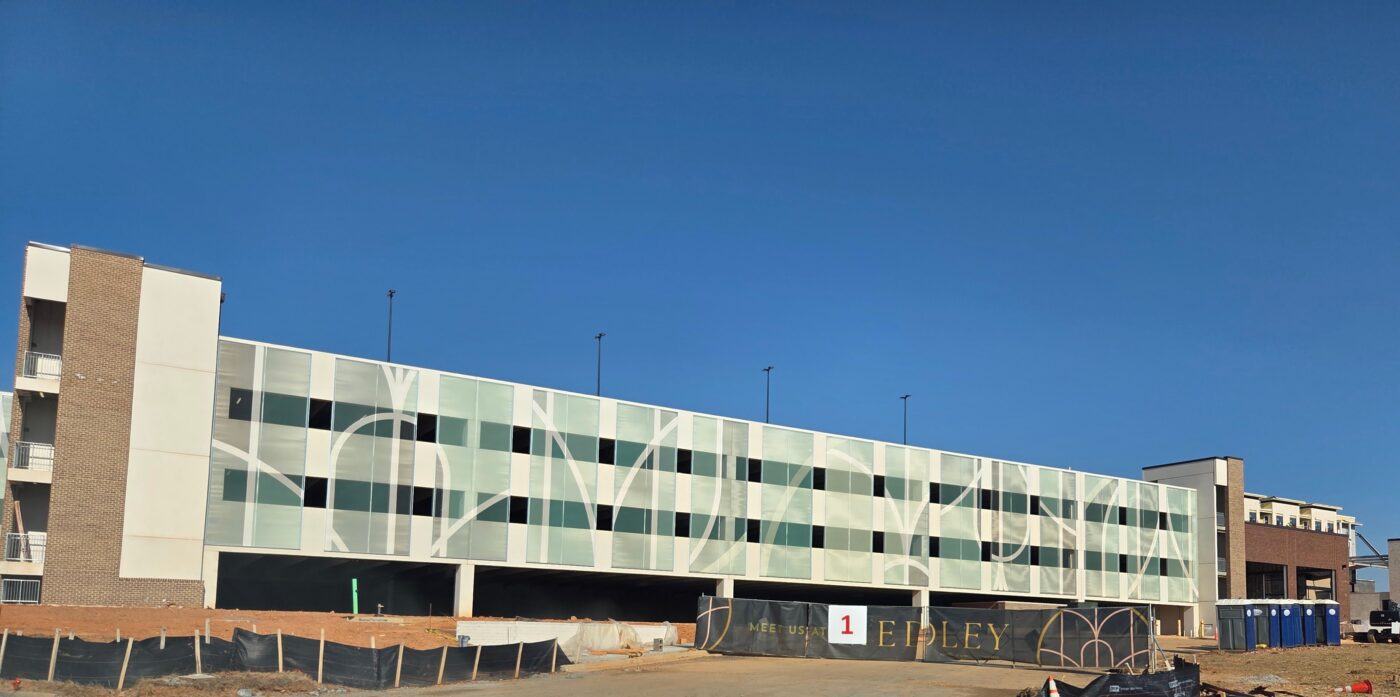
Peachtree Corners is often mentioned in the same breath as Duluth, Norcross, or Johns Creek—but it isn’t quite like any of them. It’s newer, more corporate in parts, quieter in others, and shaped less by a historic downtown than by office parks, neighborhoods, and the curve of the Chattahoochee River.
For many North Atlanta residents, Peachtree Corners feels familiar yet oddly undefined. This guide explains what the city actually is, how it works day to day, and who it’s best suited for.
Where Peachtree Corners Fits in North Atlanta
Peachtree Corners is located in western Gwinnett County, bordered by Norcross, Duluth, Berkeley Lake, and the Chattahoochee River. It sits just east of the Fulton County line, which makes it a practical option for people who work across county borders.
Unlike Alpharetta or Roswell, Peachtree Corners was not built around a historic town center. It incorporated as a city only in 2012. Before that, it functioned as a master-planned suburban business district—something that still defines it today.
A City Built Around Jobs, Not a Downtown
Peachtree Corners is one of Georgia’s largest employment centers outside Atlanta itself. The city is home to Technology Park, one of the largest office and employment centers in metro Atlanta outside the city itself. This area hosts a mix of technology, engineering, finance, logistics, and international firms—many with long-term roots in the community.
Notable employers with a presence in or near Peachtree Corners include:
- NCR – fintech and enterprise solutions
- Siemens – engineering and infrastructure
- Fiserv – payments and financial software
- Wipro – global IT and consulting
- Hapag-Lloyd – logistics and global shipping
In addition to large corporations, the area supports dozens of mid-sized firms, startups, and regional offices, particularly along Peachtree Parkway and Peachtree Industrial Boulevard.
This concentration of employers shapes the city in practical ways:
- Strong weekday daytime activity
- A steady professional population
- High demand for nearby housing and townhomes
- Less reliance on nightlife or tourism
For residents, this often translates into easier commutes, predictable workday rhythms, and a city designed around function rather than spectacle. Many people who live in Peachtree Corners either work locally or value being close to multiple job centers across Gwinnett and North Fulton.
Schools and Families
Peachtree Corners is part of Gwinnett County Public Schools, one of the largest districts in the country.
Families are drawn by:
- Consistent school quality
- A wide range of elementary and middle school options
- Access to magnet and specialty programs elsewhere in the county
Private schools and tutoring centers are nearby, especially toward Duluth and Johns Creek, making Peachtree Corners appealing to families who want flexibility without North Fulton prices.
Nearby Public School Examples
Peachtree Corners neighborhoods are zoned to several Gwinnett County Public Schools, depending on location within the city. Commonly referenced schools in and around Peachtree Corners include:
-
Peachtree Elementary School
Serves parts of central Peachtree Corners and is known locally for its established community and long-standing presence in the area. -
Stripling Elementary School
Located close to the Technology Park area, drawing families who live near office corridors and townhome developments. -
Pinckneyville Middle School
Serves a wide portion of western Gwinnett, including parts of Peachtree Corners. Families often cite its program variety and accessibility. -
Norcross High School
One of Gwinnett County’s larger high schools, offering a broad range of academic pathways, electives, athletics, and extracurriculars.
Because Gwinnett County allows students to apply to magnet and specialty programs countywide, Peachtree Corners families often look beyond their assigned high school. Options include STEM-focused, career academies, and thematic programs across the district: GCPS Choice Programs overview.
Private Schools and Supplemental Education Nearby
Peachtree Corners’ location makes it easy to access private schools and enrichment options in neighboring cities:
- Wesleyan School – a well-known private K–12 option located within the city
- Cornerstone Christian Academy – serving families in Duluth and western Gwinnett
- Atlanta International School – accessed by some families willing to commute for IB and multilingual programs
In addition, tutoring centers, test-prep services, and enrichment programs are concentrated along Peachtree Industrial Boulevard and toward Johns Creek, giving families flexibility to combine public schooling with outside academic support.
Read also: Preschools and Daycares in Alpharetta
Housing: What You Actually Find
Housing in Peachtree Corners is diverse, but rarely flashy. The city developed largely before the recent wave of luxury construction seen in parts of North Fulton, and that history still shapes its housing stock today.
Most residential areas consist of established single-family neighborhoods built between the 1970s and 1990s. These homes often sit on larger lots with mature trees and quieter streets. Interiors vary widely—from well-preserved originals to fully renovated homes—but buyers are typically drawn to the space, layouts, and neighborhood feel rather than brand-new finishes.
In and around the Technology Park and Peachtree Parkway corridors, townhome and condominium communities are common. These tend to attract professionals working nearby, downsizers, and buyers seeking lower-maintenance living without leaving a suburban environment.
New single-family construction is limited, as Peachtree Corners is largely built out. When new homes do appear, they are usually small infill projects rather than large developments. Buyers focused on new builds often expand their search to Johns Creek, Suwanee, or Forsyth County.
Typical Price Ranges
While prices vary by neighborhood, size, and condition, buyers can generally expect:
- Townhomes and condos: often starting in the mid-to-high $300,000s, with newer or larger units moving into the $400,000s and low $500,000s
- Single-family homes: commonly ranging from the mid $400,000s to the $700,000s, with renovated homes or larger lots pushing higher
- Premium properties: available, but less common than in Alpharetta or Johns Creek
Overall, home prices in Peachtree Corners tend to be lower than in Johns Creek and Alpharetta, while remaining higher than some nearby parts of Norcross. For many buyers, this creates a clear value proposition: solid housing, central location, and access to both Gwinnett and Fulton County employment—without paying North Fulton premium pricing.
Peachtree Corners tends to attract buyers who prioritize livability, commute efficiency, and long-term stability over prestige or trend-driven development.
Read also: How Property Taxes Work in Gwinnett County
The Town Green: The City’s Most Lived-In Public Space
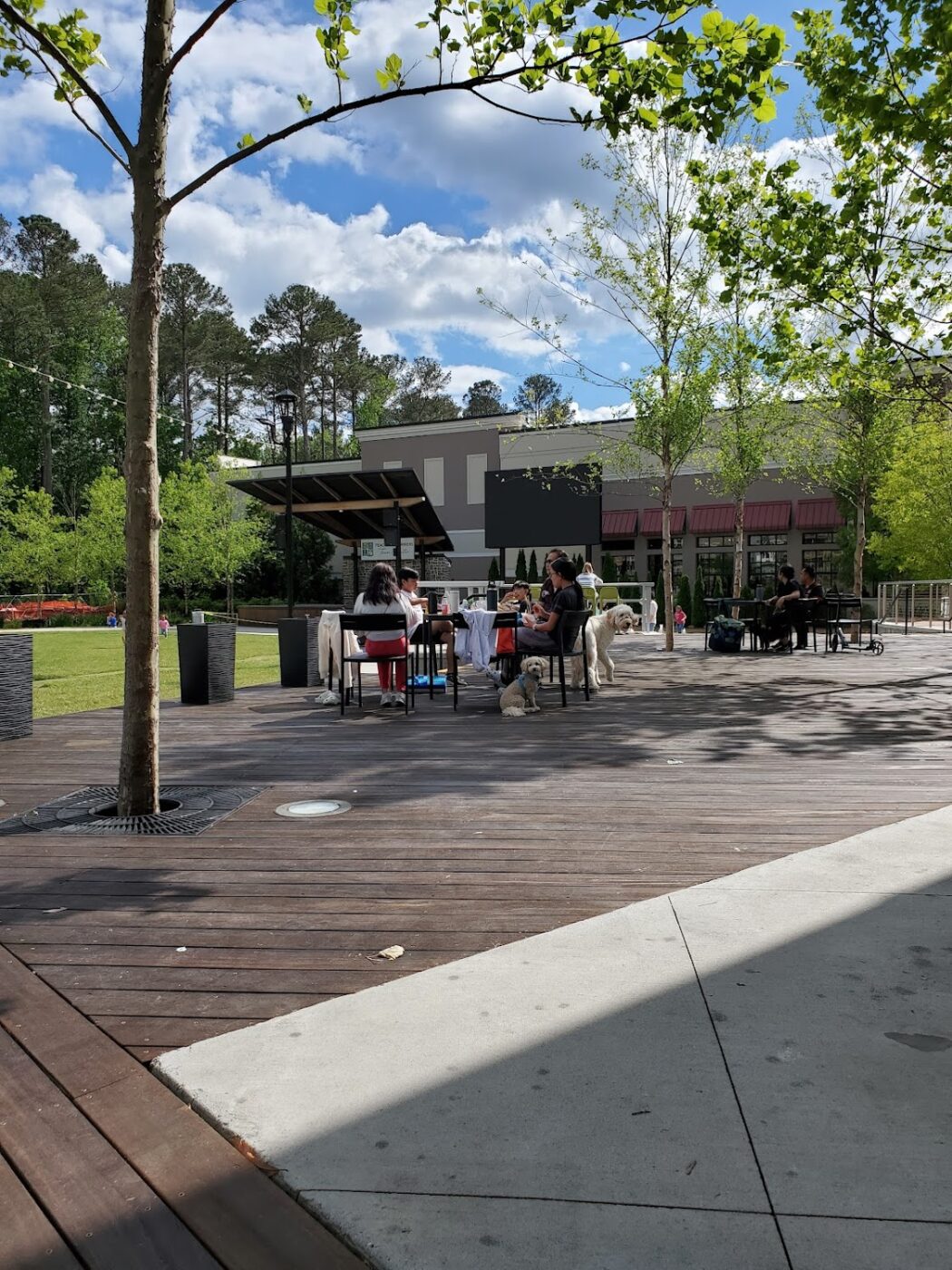
Directly across from The Forum is Peachtree Corners Town Green, a large, well-designed public park that quietly does a lot of work for the city’s identity.
The park includes:
- Wide open lawn areas
- Walking paths and shaded seating
- A splash pad and play areas for kids
- Space for concerts, movie nights, and community events
Unlike many suburban parks that feel tucked away, Town Green sits right at the center of daily life. Parents stop here after errands, office workers eat lunch nearby, and weekend events bring together residents who otherwise live in spread-out neighborhoods.
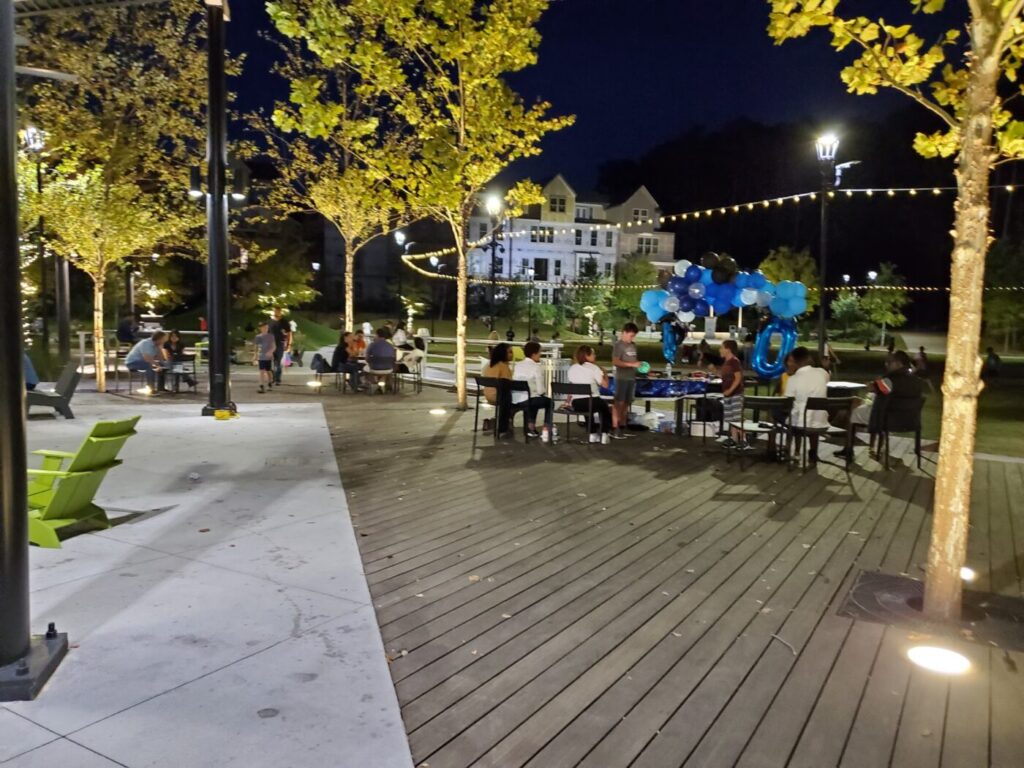
It’s also what gives Peachtree Corners something it otherwise lacks: a shared civic living room. Not a historic square, not a downtown strip—but a modern, functional gathering place that actually gets used.
For many residents, this park is the clearest signal that Peachtree Corners is more than office parks and neighborhoods—it’s a city that intentionally created space for community.
Nature and the Chattahoochee
One of Peachtree Corners’ most underrated features is its proximity to the Chattahoochee River, which forms the city’s western edge and quietly shapes daily life in several neighborhoods.
Unlike cities where green space is concentrated in one signature park, Peachtree Corners’ access to nature is more dispersed—and easier to miss if you’re only driving along Peachtree Parkway. River parks, trail access points, and wooded buffers are tucked just beyond residential streets and office corridors.
Residents benefit from:
- Nearby river trails and park access, often within a 5–10 minute drive
- Neighborhoods that back up to wooded areas, creating privacy and natural buffers
- Outdoor recreation that feels “hidden”, not crowded or heavily promoted
For walkers, runners, and families, this means nature is present without dominating the city’s layout. You don’t need to plan a full outing to enjoy it—short walks, quiet river views, and shaded paths are part of everyday routines.
This green edge gives parts of Peachtree Corners a surprisingly secluded feel, especially when compared to its more commercial zones and office parks. It’s one of the reasons longtime residents often describe the city as calmer than it looks on a map.
How Close Peachtree Corners Is to Everything Else
Peachtree Corners’ location also makes it easy to balance nature with access to nearby cities and destinations:
- Duluth: ~10 minutes
- Norcross: ~10 minutes
- Johns Creek: ~15 minutes
- Alpharetta: ~20–25 minutes
- Roswell: ~20 minutes
- Suwanee: ~20 minutes
- Cumming: ~30–35 minutes
For larger trips:
- Downtown Atlanta: ~25–30 minutes (outside peak rush hour)
- Atlanta Airport (ATL): ~35–45 minutes
- Lake Lanier: ~40 minutes
- North Georgia foothills: ~1–1.25 hours
This geography is part of Peachtree Corners’ appeal. Residents can enjoy river access and wooded surroundings while remaining well connected to North Fulton, Gwinnett, and Atlanta itself—without committing to a more rural lifestyle.
Why This Matters
Peachtree Corners doesn’t advertise itself as an outdoor destination, and that’s intentional. The Chattahoochee and surrounding green spaces act more like a quiet backdrop than a centerpiece—supporting daily life rather than defining it.
For residents who value greenery, and a sense of breathing room—without sacrificing access to jobs and neighboring cities—that balance is one of the city’s most quietly compelling features.
Who Peachtree Corners Is Best For
Peachtree Corners tends to work well for:
- Professionals who value proximity to work
- Families seeking stability and good schools
- Residents who prefer quiet evenings over nightlife
- People who want access to both Gwinnett and Fulton
It’s less ideal for:
- Those seeking walkable historic downtowns
- Nightlife-focused lifestyles
- People who want a strong “small-town” identity
Why It’s Often Misunderstood
Peachtree Corners doesn’t market itself loudly. It doesn’t have a postcard downtown or a single defining attraction. Instead, it functions smoothly in the background—serving residents who value predictability, access, and calm.
That subtlety is exactly why many people overlook it.
Bottom Line
Peachtree Corners isn’t trying to be Alpharetta, Roswell, or Duluth—and that’s the point. It’s a practical, modern city shaped by work, family life, and convenience rather than history or hype.
For the right resident, that balance is exactly what makes it appealing.
Important External Links (Official & Useful)
- City of Peachtree Corners (Official Website)
- Town Center + Town Green (City page)
- Special Events at Town Green (City page)
- The Forum on Peachtree Parkway (Official)
- Curiosity Lab at Peachtree Corners (Official)
- Gwinnett County Public Schools (GCPS)
- GCPS Choice Programs (Magnets & Specialty Programs)
- Peachtree Elementary School (GCPS)
- Stripling Elementary School (GCPS)
- Pinckneyville Middle School (GCPS)
- Norcross High School (GCPS)
- Wesleyan School
- Cornerstone Christian Academy
- Atlanta International School