 Exclusive sponsor
Forsyth vs. Fulton vs. Gwinnett County Property Taxes (2026 Comparison Guide)
Property taxes vary widely across Forsyth, Fulton, and Gwinnett counties in North Atlanta. Each county’s structures and rates impact bills, offering different benefits depending on location, schools, and home type.
Major local stories and useful updates, once a week.
Homebuyers moving around North Atlanta often notice that two similar homes can come with very different property tax bills—depending entirely on the county line they fall on.
This guide compares property taxes in Forsyth, Fulton, and Gwinnett counties as of 2026, focusing on how taxes are calculated, what typically drives higher bills, and which areas tend to be more predictable for long-term homeowners.
The Big Picture: What All Three Counties Have in Common
Across Georgia, property taxes follow the same basic structure:
- Homes are assessed at 40% of fair market value
- Taxes are based on millage rates set by counties, school districts, and cities
- Bills usually arrive once per year (late summer or fall)
- Homestead exemptions reduce taxable value for primary residences
The differences come from school funding levels, county services, and city taxes.
Forsyth County: Newer Homes, Strong Schools, Steady Increases
Forsyth County is known for rapid growth, newer developments, and consistently high-performing schools.
What to Expect
- School taxes make up the largest portion of the bill
- Home values often rise faster due to demand
- Annual reassessments are common in newer neighborhoods
Typical Homeowner Profile
- Families prioritizing school quality
- Buyers in master-planned or newly built communities
- Residents in or near Cumming
Tax Feel (Relative)
- Not the cheapest, but predictable
- Bills tend to rise gradually rather than jump unexpectedly
For a deeper look at how assessments, exemptions, and billing work locally, see our full Forsyth County property tax guide.
Fulton County: Wide Range, Higher Ceiling
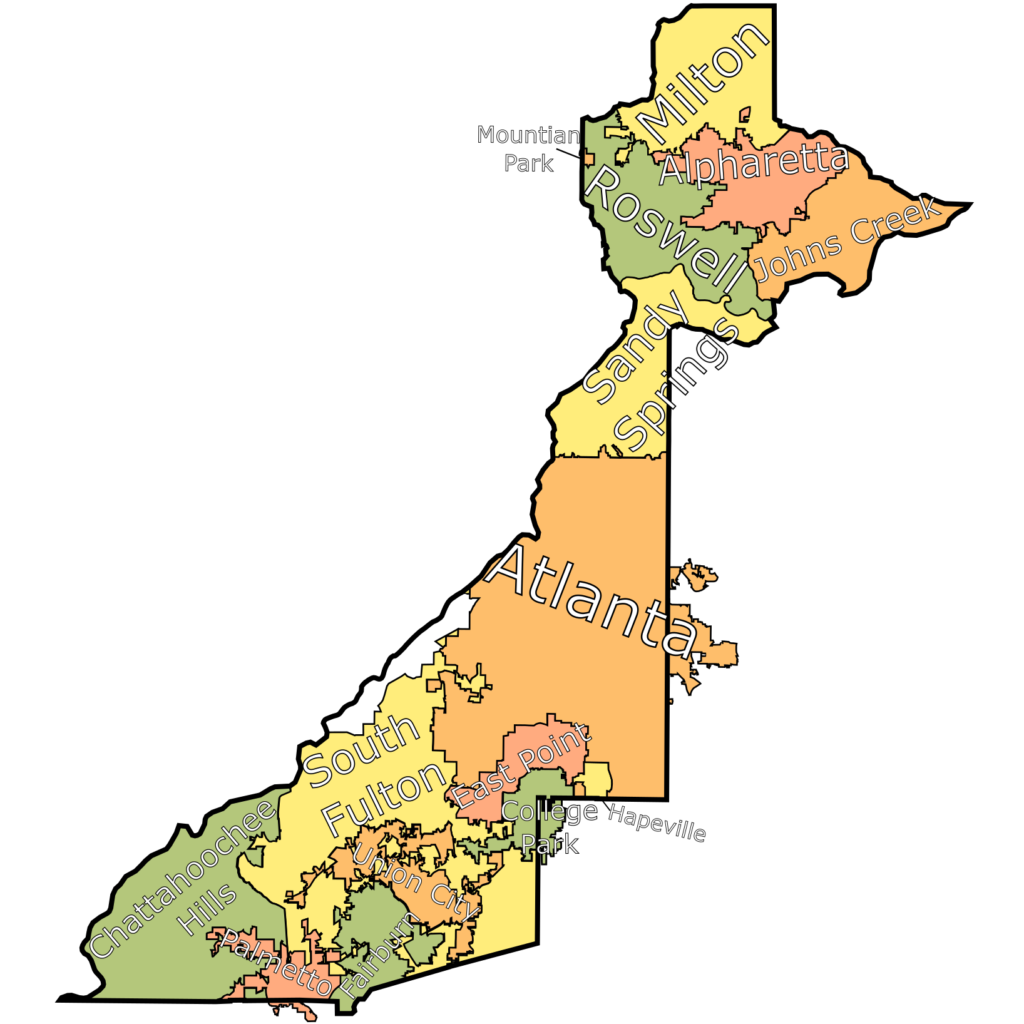
Fulton County is the most complex of the three. Taxes vary dramatically depending on whether a home is in Atlanta, a smaller city, or unincorporated areas.
What to Expect
- City taxes can significantly increase bills
- Millage rates are often higher than neighboring counties
- Appeals are common due to sharp valuation changes
Typical Homeowner Profile
- Buyers in Alpharetta, Milton, Roswell, or Atlanta
- Condo and townhome owners in incorporated cities
- Residents trading location for higher tax costs
Tax Feel (Relative)
- Highest potential tax burden
- Most variation from one neighborhood to another
Gwinnett County: Larger Base, Moderate Rates
Gwinnett County balances a large population with a broad tax base, which can help stabilize rates.
What to Expect
- Generally moderate millage rates
- Fewer extreme year-to-year swings
- School taxes still dominate, but spread across more residents
Typical Homeowner Profile
- Buyers seeking value and diversity
- Families in Johns Creek, Duluth, or Suwanee
- Long-term homeowners looking for consistency
Tax Feel (Relative)
- Often middle-of-the-road
- Fewer surprises compared to Fulton
Side-by-Side Snapshot (High-Level)
| Factor | Forsyth | Fulton | Gwinnett |
|---|---|---|---|
| School Tax Impact | High | High | High |
| City Taxes | Limited | Common | Common |
| Bill Predictability | High | Low–Medium | Medium–High |
| Appeals Frequency | Moderate | High | Moderate |
| New Construction Effect | Strong | Moderate | Moderate |
Why Two Similar Homes Can Have Different Tax Bills
A $600,000 home can generate very different taxes based on:
- County millage rates
- Whether the home is inside city limits
- School district funding
- Homestead exemption status
This is why buyers comparing homes in Forsyth vs. Fulton—or Johns Creek vs. Alpharetta—should always look beyond list price.
Which County Is “Best” for Property Taxes?
There’s no universal winner—only trade-offs.
- Forsyth County favors predictability and schools
- Fulton County offers location but at a higher cost ceiling
- Gwinnett County provides balance and broader affordability
For many North Atlanta buyers, the deciding factor is not taxes alone, but how taxes align with schools, commute, and long-term plans.
Smart Tips Before You Buy
- Ask for the previous year’s tax bill, not estimates
- Confirm whether the home qualifies for a homestead exemption
- Check if city taxes apply
- Budget for reassessments after purchase
- Understand that new construction is often reassessed upward
Why This Comparison Matters in North Atlanta
County lines in North Atlanta can sit just minutes apart—but the financial impact lasts for years. Understanding how Forsyth, Fulton, and Gwinnett differ helps buyers make informed decisions instead of reacting to their first tax bill.
Community Voice
A snapshot of reader views, not a scientific survey.
Explore Community Voice →About the Author


In North Atlanta

Forsyth and Fulton Set New Graduation Records

More North Atlanta Residents Are Working, Yet Unemployment Rose
When Is Fall Break in North Atlanta Schools? The Three Districts Chose Different Weeks

North Atlanta’s Vanishing Farmland Has a New Line of Defense

What North Atlanta Should Know Today. Saturday, Sept. 12, 2026

When Are 2026 Property Taxes Due in North Atlanta?
IN NORTH ATLANTA