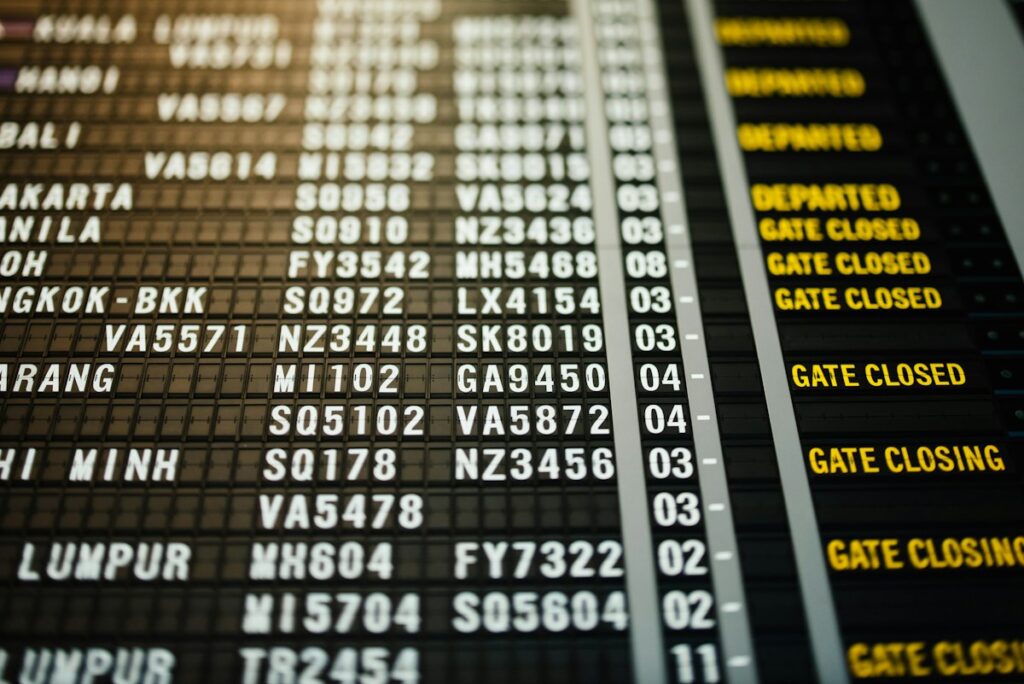
After the Nationwide FAA Ground Stop, Flights Resume but Travelers Face Weekend Disruptions
Flights resumed after a nationwide FAA air traffic control failure, but delays and cancellations continue. Travelers at Atlanta and other hubs should check flight status and understand refund options.
Major local stories and useful updates, once a week.
Flights began departing again Friday night after a nationwide air traffic control communications failure grounded planes across the United States for hours. By Saturday morning, the ground stop had ended, but the disruption was far from over for passengers whose aircraft and flight crews were left out of position.
Major connections through Atlanta, Dallas-Fort Worth, Houston, Orlando and other airports were vulnerable to continuing cancellations and delays. Travelers with weekend plans should check their flight’s status directly with the airline before leaving for the airport, even if their trip is scheduled many hours after the original outage.
The Federal Aviation Administration issued the nationwide ground stop on November 13 after communications problems affected multiple air traffic control centers. The agency subsequently lifted the restriction and resumed departures following testing, but restoring a complex national flight network takes longer than restarting takeoffs.
What caused the shutdown?
Federal transportation officials traced the immediate instability to aging communications infrastructure that became overloaded, disrupting the reliability of radar and voice information used by controllers. The failure did not eliminate all communications, but it created enough uncertainty that officials stopped most departures as a safety precaution.
In a Transportation Department briefing, officials explained that the disruption involved intermittent telecommunications outages across air traffic facilities. The technical investigation is continuing, and officials have not identified evidence of a cyberattack.
The national stop lasted for hours Friday. Thousands of flights were delayed or canceled, and some aircraft already airborne were diverted. The Associated Press reported that airlines expected the consequences to continue into Saturday as crews and aircraft returned to their schedules.
If your flight was canceled, you can choose a refund
Passengers whose flights are canceled have a clear federal right: they may decline alternative transportation and receive a refund to the original form of payment. That protection applies even when the airline was not responsible for the cancellation.
The U.S. Department of Transportation’s refund rules also cover significant flight changes. For U.S. domestic itineraries, a departure or arrival moved three hours or more from the original schedule is considered a significant change; for international itineraries, the threshold is six hours. A traveler who does not accept the changed trip, rebooking or credit is entitled to a refund.
Accepting the alternative flight and traveling on it generally means the traveler is not also entitled to a ticket refund under those rules. Airlines may offer vouchers or travel credits, but passengers who qualify for a refund do not have to accept those instead.
When a refund is due, payment by credit card must generally be returned within seven business days; other payment methods generally have a 20-calendar-day deadline under the federal rules. Passengers should keep their booking confirmation, cancellation notice and any communication about alternative flights.
What about hotels, meals and other expenses?
A canceled flight does not automatically create a federal right to reimbursement for hotels, meals or missed activities. Those extras often depend on whether the airline caused the disruption and what it has pledged in its customer-service policy. The FAA communications outage was outside the airlines’ direct control.
Travelers may still ask their airlines about rebooking and any goodwill accommodation. They should also review any travel insurance or credit-card trip-delay coverage, including exclusions and required receipts.
What travelers should do Saturday
Check the airline’s app or website for changes before traveling to the airport. If a connection is affected, look at the full itinerary rather than the first flight alone. Anyone who still needs to travel should respond promptly to rebooking offers, since available seats on later flights can fill quickly during a nationwide recovery.
Passengers who no longer wish to travel should review the refund option before accepting a voucher or replacement flight. For official rights and complaint guidance, the Transportation Department’s consumer refund page remains the starting point.
The broader concern will outlast the weekend: an aging national air traffic network experienced a failure severe enough to interrupt departures coast to coast. How quickly the system can be modernized, and how safely old and new technologies can operate together, now matters to every airport that depends on it.
Community Voice
A snapshot of reader views, not a scientific survey.
Explore Community Voice →About the Author

In North Atlanta

Weekend Getaway Guide: Hendersonville, North Carolina

The Outer Banks 2026: A Refined Coastal Escape for North Atlanta Travelers

Where to Stay in Downtown Alpharetta for a Walkable Weekend
Best Beaches to Get Away From North Atlanta – Easy coastal escapes within a day’s drive

Five Fall Weekends Within Driving Distance of North Atlanta

Weekend Getaway Guide: Brevard, North Carolina
IN NORTH ATLANTA