 Exclusive sponsor
Barnes & Noble Is Opening Bookstores Again — and the Sun Belt Is Helping Drive the Comeback
Barnes & Noble is opening more stores in fast-growing Sun Belt markets such as Texas and Florida. The chain now emphasizes local control of inventories and store designs, helping it adapt to changing customer needs and revive physical bookstores amid strong local demand.

Get the week’s jobs, development, housing and growth stories from across the Sun Belt in one email.
Barnes & Noble spent years closing bookstores. On Wednesday, it will open two more.
New stores in San Antonio and Orlando will bring the chain to 720 locations nationwide, up from fewer than 600 as recently as 2023. Barnes & Noble expects to open 60 new stores during 2026.
It is an unexpected comeback for a business once treated as one of the clearest casualties of Amazon and online shopping. And a striking part of that comeback is unfolding across the Sun Belt.
Texas is getting nine new Barnes & Noble stores this year. Florida is getting five. New locations have also appeared or are planned in fast-growing markets across Georgia and other Southern states.
The expansion suggests that physical bookstores may have found a new place in the retail landscape — not by competing with the internet on speed, but by offering something the internet cannot: a place to wander.
Two openings in one day
Barnes & Noble will open a new store Wednesday at Huebner Oaks in San Antonio, with more than 20,000 square feet of books, toys, games, magazines and gifts, along with a café. The store is taking over a former Bed Bath & Beyond space beside Trader Joe’s.
The opening gives San Antonio six Barnes & Noble locations. It is the company’s third new Texas store of 2026, with six more planned in the state before the end of the year.
Several hundred miles east, another Barnes & Noble will open the same morning at Vineland Pointe in Orlando.
That store also exceeds 20,000 square feet and includes a café. It will be the fifth Barnes & Noble in Orlando and the second to open in the area this year, following a June opening in Lake Nona.
Barnes & Noble says its existing Orlando stores have reached record sales this year. The two openings will push the company to a milestone that would have seemed improbable only a few years ago: 720 bookstores, and still growing.
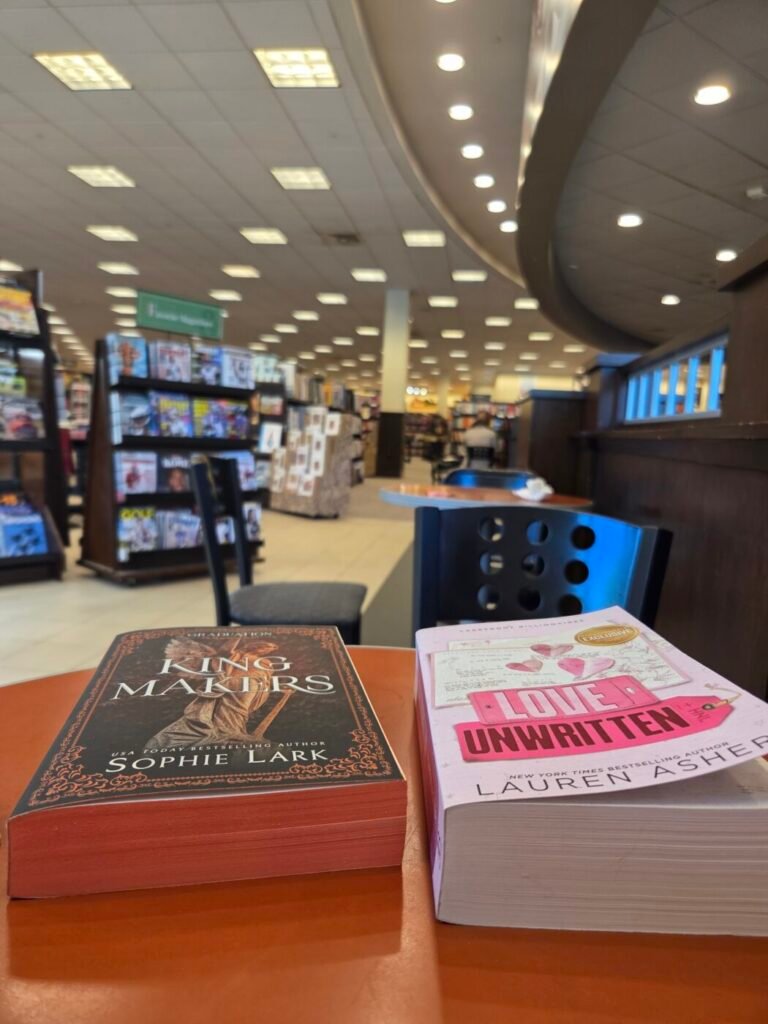
A chain that stopped acting like one
One of the biggest changes happened inside the stores. For years, Barnes & Noble operated much like a traditional national retailer. Stores carried similar books, followed centralized merchandising decisions and presented customers with a largely uniform experience.
That strategy has been reversed. Since James Daunt took over as chief executive in 2019, individual booksellers and store managers have been given much more control over what they stock and how they arrange their stores.
A Barnes & Noble in Orlando does not have to look exactly like one in San Antonio. Managers can give more shelf space to books their own customers are actually buying, change displays and respond to local interests.
The idea sounds closer to independent bookselling than conventional big-box retail. It has also been accompanied by tighter inventory management. Barnes & Noble once returned roughly 20% to 25% of the books it received from publishers. Daunt has said that figure is now about 8%.
The company is also favoring somewhat smaller, more efficient stores as it expands. The result is a national chain increasingly trying to feel like a collection of local bookstores.
The comeback extends beyond Barnes & Noble
Something else has happened at the same time. Independent bookstores are growing too.
The American Booksellers Association reached 3,417 member store locations this year, more than 500 above the previous year and nearly triple its count a decade ago.
That is difficult to reconcile with the old assumption that online retail would steadily eliminate physical bookstores.
Amazon permanently changed the book business. E-books and audiobooks created entirely new ways to read. A shopper looking for a particular title can order it in seconds without leaving home.
Yet readers continue to walk into bookstores. Part of the explanation may be that books behave differently from many other retail products. A customer buying detergent usually knows what detergent is needed. A bookstore customer may walk in without knowing what book he or she will leave with.
Browsing is part of the purchase. So are recommendations, displays, children’s sections, author events and simply seeing hundreds of books that an algorithm might never have chosen to show.
Empty big boxes have become an opportunity
Barnes & Noble’s resurgence is also benefiting from the wreckage left by other retailers.
The new San Antonio bookstore is replacing a Bed Bath & Beyond. In Atlanta, the Barnes & Noble that opened in July at the Edgewood Retail District took over a former Office Depot.
Similar conversions have appeared around the country as shopping centers search for tenants to replace chains that closed stores or disappeared entirely.
That gives Barnes & Noble something it struggled to find during earlier periods of expansion: large, established retail spaces that can be converted into bookstores without necessarily building from the ground up.
The irony is difficult to miss. A business that once appeared destined to join the list of disappearing big-box retailers is now filling some of the spaces they left behind.
Why the Sun Belt works
The Sun Belt gives Barnes & Noble another advantage: new customers keep arriving.
Texas, Florida, Georgia and the Carolinas have spent years adding residents, subdivisions and shopping districts. New households eventually require more than houses. They create demand for supermarkets, restaurants, medical offices, gyms — and, apparently, bookstores.
Orlando shows how quickly that can happen. Barnes & Noble opened its Lake Nona store in June in one of the city’s major growth areas. Three months later, it is adding another Orlando location at Vineland Pointe.
Texas offers an even larger expansion opportunity. The Huebner Oaks store is only the third Barnes & Noble opening in the state this year. Six more are planned before 2027.
The company is following both established metropolitan markets and communities that have gained enough population to support stores of their own.
That is much the same pattern visible in grocery, restaurant and entertainment expansion throughout the Sun Belt. First come the rooftops. Then comes everything people want around them.
The comeback is reaching North Atlanta, too
Metro Atlanta is becoming part of the expansion. Barnes & Noble returned to Atlanta’s Edgewood Retail District in July with a new 15,000-square-foot store in the former Office Depot space. The company also plans to enter Toco Hills and is relocating its Peachtree Corners bookstore to a new space within The Forum.
That Peachtree Corners move puts the national comeback directly inside North Atlanta Star’s coverage area, where Barnes & Noble already has established stores at Mansell Crossings in Alpharetta and The Collection at Forsyth in South Forsyth. Another store operates at Mall of Georgia in Buford.
The geography fits the broader strategy. North Atlanta has the same ingredients drawing retailers elsewhere in the Sun Belt: population growth, affluent households, heavily traveled shopping corridors and suburban centers looking for businesses that give people a reason to stay rather than simply pick something up and leave.
A bookstore can do that particularly well. Customers browse. Children sit with books. People stop for coffee. Readers come back for new releases or events. For a shopping center, that kind of time spent on the property has value beyond the books themselves.
A different kind of retail comeback
Barnes & Noble is still a chain with hundreds of stores, and its revival does not mean the economics of bookselling have suddenly become easy.
Independent bookstores continue to operate with thin margins, and publishers face their own challenges. Barnes & Noble itself went through years of falling store counts before its current expansion.
But Wednesday’s openings provide a useful measure of how dramatically its position has changed.
In 2019, when Barnes & Noble was acquired by Elliott Investment Management for $475 million, it had 627 stores. The count subsequently fell below 600. Now it is reaching 720.
The comeback has not been built on trying to make bookstores more like websites. It has largely moved in the opposite direction: more local decisions, more browsing, more emphasis on the individual store.
And across the fast-growing Sun Belt, more actual places to walk through a door and buy a book.
If you’ve been following growth and change around here, these stories are worth a look too.
Community Voice
A snapshot of reader views, not a scientific survey.
Explore Community Voice →About the Desk

Across the Sun Belt
Gas Prices Near $4.50 as Sun Belt Drivers Face a Costly Fall

Sun Belt Home Prices Are Softening, but Mortgage Rates Are Taking Back the Savings

The Next Sun Belt Highway May Carry Power, Water and Data Alongside Cars

The Sun Belt Is Adding Jobs. Many Displaced Workers Are Returning for Less

From Copper to Fiber: Tennessee Plant Begins $100 Million Expansion