Exclusive sponsor
Florida Faces Long Recovery After Hurricane Isaias as Thousands Remain Without Power and Emergency Aid Opens
Days after Hurricane Isaias hit Florida's Gulf Coast, power restoration is progressing while emergency food distribution and support services expand across affected counties.
Get the week’s jobs, development, housing and growth stories from across the Sun Belt in one email.
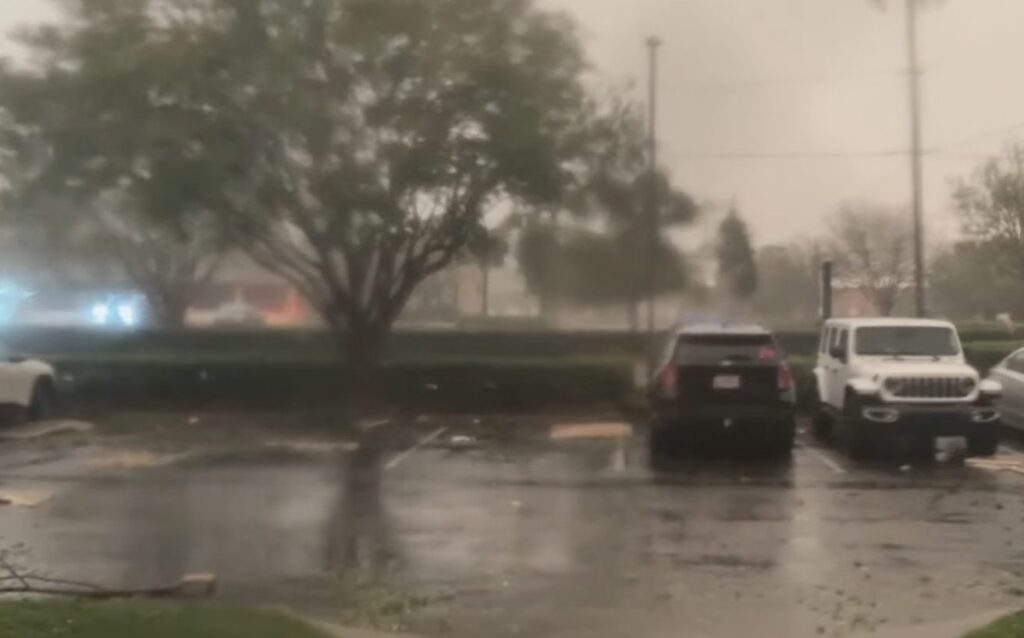
Four days after Hurricane Isaias struck Florida's Gulf Coast, thousands of homes and businesses remain without electricity, emergency food distribution continues across the Panhandle, and residents are beginning the costly process of repairing damaged properties.
More than 149,000 Florida customers were still without power Monday, Oct. 12, with the largest outages concentrated in Escambia, Santa Rosa and Walton counties. By Monday night, Florida Power & Light had restored electricity to more than 85% of its customers affected by the hurricane, although the hardest-hit communities were still awaiting repairs.
The storm, which made landfall near Destin on Friday, Oct. 9, as a Category 2 hurricane with sustained winds of 105 mph, has been linked to four deaths across the Southeast. Damaging winds, flooding and fallen trees disrupted transportation, businesses and essential services across northwest Florida and neighboring Alabama.
The National Hurricane Center recorded wind gusts reaching 116 mph near Santa Rosa Sound and 100 mph near Pensacola. Water levels at Panama City Beach rose approximately 5.6 feet above the average high tide level.
For residents returning to damaged homes, the immediate concerns now extend beyond the hurricane itself. Spoiled food, unsafe drinking water, roof damage, lost business income and insurance claims are becoming central parts of the recovery.
Power Restoration Advances, but Hardest-Hit Counties Still Wait
Escambia County reported 67,573 customers without electricity Monday, followed by Santa Rosa County with 47,443 and Walton County with 17,218, based on outage figures reported by Reuters.
Restoration crews have made substantial progress since the storm.
By 10 p.m. Central time Monday, Florida Power & Light had restored more than 380,000 outages, representing more than 85% of the customers affected across its service territory.
The company reported that restoration was essentially complete in six of eight affected counties. Crews remained concentrated in Escambia and Santa Rosa, where extensive tree damage and damaged electrical equipment complicated repairs.
Nearly 17,000 restoration workers from 29 states have been deployed, supported by helicopters and drones assessing damaged lines and equipment.
The utility expects to essentially complete restoration in Escambia and Santa Rosa by the end of Tuesday, Oct. 13.
That does not necessarily mean every property will have electricity by Tuesday night. Homes with damaged electrical connections may need repairs by licensed electricians before power can safely be restored.
FPL has also opened customer relief stations providing water, ice and information about restoration. Customers whose electrical equipment was damaged may qualify for assistance through the utility's Care to Share program.
Emergency Food Distribution Expands Across Four Counties
Florida has opened emergency distribution sites in Escambia, Santa Rosa, Walton and Washington counties to provide drinking water, shelf-stable food and other essential supplies.
The state's Hurricane Isaias recovery page maintains a list of distribution locations, including the Brownsville Community Center in Pensacola and several sites in Milton, Navarre, Gulf Breeze and Santa Rosa Beach.
Nonprofit organizations are also providing prepared meals in communities where cooking remains difficult because of outages or storm damage.
The Salvation Army, Mercy Chefs and Operation BBQ Relief are among the organizations operating feeding locations across affected counties.
The recovery effort includes assistance for residents who need more than food and water. Florida has established a comfort center at 150 East Pond Street in Century, offering showers, laundry facilities, cooling areas, restrooms and device charging.
Walmart and the Walmart Foundation have committed $1 million in funding and supplies, with participating locations providing meals, showers, laundry services and other support.
For households still without electricity, safe food storage remains a concern. Federal food safety guidance warns that an unopened refrigerator generally keeps food cold for about four hours during an outage. A full freezer can maintain safe temperatures for approximately 48 hours if its door remains closed.
Food Replacement Benefits Available Through October 19
Florida residents who already receive Supplemental Nutrition Assistance Program benefits and lost food because of Hurricane Isaias may qualify for replacement benefits.
The state has established Monday, Oct. 19, 2026, as the application deadline.
Eligibility extends to existing SNAP recipients in 14 counties, including Escambia, Santa Rosa, Okaloosa, Walton, Bay, Washington, Holmes and Jackson.
Qualified households may receive replacement benefits up to the amount of their previously approved monthly SNAP benefit.
Documentation requirements vary by county.
Households in nine heavily affected counties, including Escambia, Santa Rosa, Okaloosa and Walton, do not need to submit separate documentation verifying food loss. Residents in Franklin, Gadsden, Gulf, Jefferson and Leon counties must provide evidence of a power outage lasting at least four hours.
Applications are available through the Florida Department of Children and Families' Hurricane Isaias page, using the MyACCESS portal.
The replacement program is for existing SNAP recipients who lost food during the disaster. It is not a general food reimbursement program for all affected households.
$10 Million Loan Program Opens for Florida Businesses
Florida has also launched a $10 million emergency bridge loan program to assist businesses dealing with property damage or financial losses caused by Isaias.
The program offers short-term, zero-interest loans intended to help businesses operate while waiting for insurance payments or longer-term financing.
Eligible businesses, including sole proprietors, can apply for loans of up to $100,000. Agricultural and aquaculture businesses may qualify for up to $150,000.
The loans are not grants and must be repaid.
The Florida Small Business Emergency Bridge Loan Program is accepting applications through Nov. 25, 2026, or until available funding is exhausted.
Businesses in 30 designated counties may qualify, including those in the western Panhandle and several other areas covered by the state's emergency response.
The program could be especially important for smaller employers facing a combination of property damage, interrupted operations, employee absences and lost revenue.
The extent of those disruptions is beginning to emerge.
Florida's Department of Business and Professional Regulation visited 254 licensed businesses on Oct. 11, concentrating on coastal areas from Mexico Beach westward. Inspectors found 87 locations completely closed, with Okaloosa County appearing to have experienced particularly significant business disruption.
Those inspections represent only a limited sample, not a statewide estimate of business closures.
FloridaCommerce has also activated a business damage assessment survey through FloridaDisaster.biz, allowing employers to report physical damage and economic losses.
Insurance Assistance Centers Open in Pensacola and Destin
Insurance claims are another major part of the recovery.
Florida opened two insurance assistance hubs Monday, Oct. 12, where homeowners and business owners can receive help navigating the claims process and meet representatives from participating insurance companies.
The Pensacola center is at the University of West Florida, 11000 University Parkway, Parking Lot B.
The Destin center is at Morgan Sports Complex, 4200 Indian Bayou Trail.
The state listed operating hours generally from 9 a.m. to 4 p.m.
Residents are encouraged to bring identification, insurance information and photographs or other documentation of storm damage.
Representatives may be able to help initiate claims and, in some cases, issue payments.
The Florida Department of Financial Services also provides insurance assistance by telephone at 1-877-693-5236.
Homeowners seeking repairs should verify that contractors hold the appropriate licenses before signing agreements or paying deposits. Florida has expedited contractor licensing activity to support reconstruction, while warning residents about unlicensed operators and post-disaster fraud.
Water Safety and Flooding Remain Concerns
Although electricity is returning to many areas, other hazards continue.
As of Monday's state recovery update, boil-water notices remained in effect in portions of seven counties: Escambia, Holmes, Jackson, Santa Rosa, Suwannee, Walton and Washington.
Residents should follow their local water utility's instructions until notices are officially lifted.
Emergency personnel also continue monitoring floodwater, damaged roads and debris.
Florida's transportation department reported that all state-owned bridges had been inspected and reopened, although localized road restrictions and dangerous conditions remained possible.
Approximately 93% of traffic signals in storm-affected areas were operational Monday, with some running on temporary generator power.
The state's highway department continues publishing road conditions through FL511.
The danger from a hurricane does not necessarily end when the strongest winds subside.
Floodwater can conceal damaged pavement and electrical hazards, while generators operated indoors or too close to buildings can produce deadly carbon monoxide.
The Centers for Disease Control and Prevention advises operating generators outdoors, at least 20 feet from doors, windows and vents, with working carbon monoxide detectors inside homes.
The Recovery Will Last Beyond Power Restoration
The return of electricity is an important early milestone, but it is only one measure of recovery.
Florida has deployed thousands of National Guard members and other emergency personnel for road clearance, search-and-rescue operations, supply distribution and damage assessment.
State agencies are also working to restore access to medical care, support displaced residents and reconnect businesses with essential services.
All commercial airports and seaports were reported operational Monday, although travelers were advised to check directly for possible schedule disruptions.
Residents who need food, housing, health care or other essential services can contact Florida's 211 assistance network. Free disaster-related civil legal assistance is also available at 833-513-2940.
The overall cost of Hurricane Isaias is not yet established. Damage assessments are continuing, and the full number of homes requiring major repairs, businesses facing prolonged closure and households displaced by flooding has not been determined.
For the Florida Panhandle, the next phase will be measured not only by how quickly electricity returns but by how many residents can safely move back into their homes, how quickly businesses reopen and whether financial assistance arrives before temporary losses become permanent ones.
Community Voice
A snapshot of reader views, not a scientific survey.
Explore Community Voice →About the Author

Across the Sun Belt
Whole Foods Raises Average Store Pay Above $21 as Retail Competition for Workers Intensifies

Charlotte Is Turning a Nearly Empty Office Tower Into 399 Apartments and a W Hotel

Tropical Storm Isaias Could Become First Hurricane of 2026 Before Gulf Coast Landfall
The Ensign GroupEnsign Enters Florida With Nine Nursing Facilities Across the State
Gas Prices Near $4.50 as Sun Belt Drivers Face a Costly Fall