Whole Foods Raises Average Store Pay Above $21 as Retail Competition for Workers Intensifies
Whole Foods is raising average store wages above $21 an hour and expanding benefits for hourly employees, including part-timers. This move aims to attract and retain workers amid growing competition in the grocery industry.
Jobs, development, business, housing and growth stories from across the Sun Belt.

Whole Foods Market is giving every hourly store employee a pay increase this month and expanding benefits for tens of thousands of workers, including part-timers, in one of the grocery chain’s largest workforce investments in years.
The Amazon-owned grocer says it will spend more than $230 million over the coming year on higher wages and benefits for its more than 100,000 U.S. employees.
The first change arrives Sept. 28, when every hourly store worker will receive additional compensation. Whole Foods says the investment will push its average store wage above $21 an hour. When the value of benefits employees choose is included, the company puts average total compensation above $29 an hour.
The raises arrive as retailers compete not only over hourly wages, but over something that can be even harder for workers to replace: affordable health coverage, paid family leave and benefits for employees who do not work full time.
Part-time workers are getting a larger package
Beginning Jan. 1, 2027, nearly 20,000 Whole Foods employees working at least 20 hours a week will become eligible for dental and vision coverage as well as company-paid basic life insurance.
Full-time employees will gain access to Amazon health plans, including options beginning at $5 a week. Some plans will include $5 primary-care and behavioral-health visits, along with access to One Medical.
Whole Foods says the value of benefits available to an eligible full-time worker will rise by more than 75%.
Parental leave will expand as well, with eligible birthing parents receiving as much as 20 weeks of fully paid leave and supporting or adoptive parents receiving up to six weeks.
Hourly employees will also receive Amazon Prime memberships and access to lower-cost prescriptions through Amazon Pharmacy while keeping the 20% Whole Foods employee discount.
Later in 2027, Whole Foods employees are scheduled to become eligible for Amazon’s Career Choice education program, which prepays tuition for college, professional certificates and job-training programs.
Raises will no longer depend entirely on performance reviews
Whole Foods is also changing the way frontline employees move up the wage ladder.
Instead of relying on its previous performance-review model, hourly store workers will receive predictable annual increases as they spend more time in their roles.
That could matter almost as much as the size of the initial raise.
Retail and grocery employees often face uncertainty about how quickly their wages will grow after they are hired. A structured pay progression gives workers a clearer idea of what staying another year may be worth.
Whole Foods promoted more than 12,700 store employees in 2025 and says it expects to create thousands of additional leadership positions over the next several years.
Grocery companies are fighting for workers while customers watch prices
The investment comes at an interesting moment for the supermarket business.
Consumers remain highly sensitive to grocery prices. Kroger this week lowered its annual sales forecast as shoppers pulled back, while other major retailers have also emphasized value and discounts as households become more selective about spending.
At the same time, supermarkets still need large numbers of people to stock shelves, prepare food, work counters and keep stores operating seven days a week.
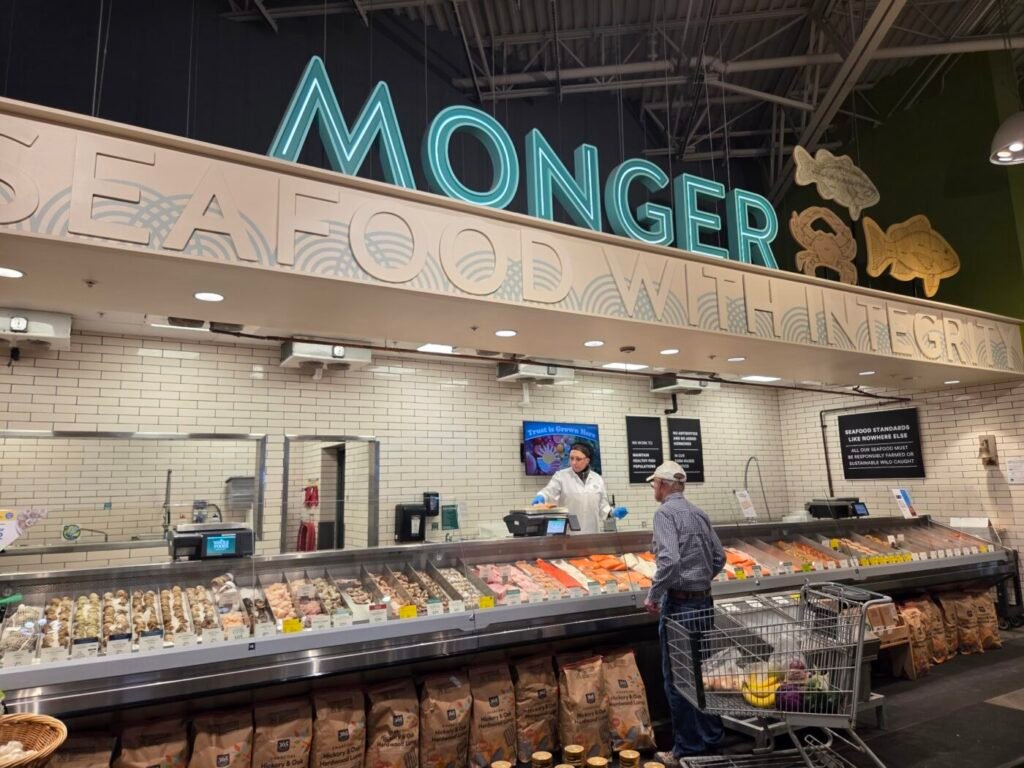
For workers, that means the competition between chains is increasingly moving beyond the hourly number printed on a job listing.
Health insurance for someone working 20 or 25 hours a week, predictable annual raises, parental leave or prepaid tuition can influence whether an employee stays at one retailer or moves to another.

Whole Foods is making that calculation while continuing to expand. The Austin-based company now has more than 550 locations and says more than 100 additional stores are in development.
That growth will require more workers.
Amazon is bringing Whole Foods closer into its benefits system
The changes also mark another step in the gradual integration of Whole Foods into Amazon.
Amazon bought Whole Foods in 2017, but the grocery chain retained many of its own workplace systems and benefits. Over the past year, Amazon has been moving corporate grocery employees toward a common compensation and benefits structure.
The new package extends that convergence much further into Whole Foods stores.
For employees, the practical result is a mix of Whole Foods benefits — including the store discount — with programs that already exist across Amazon, including Prime membership, Amazon health plans and Career Choice.
For the broader retail industry, the more important question is what happens next.
An average wage above $21 an hour at a national grocery chain is notable. Making dental, vision and life insurance available to employees working as little as 20 hours a week could prove even more consequential if competing retailers respond.
In a labor market where grocery stores sell many of the same products at increasingly similar prices, the next competition may be over who can offer the better job.
About the Author

Notice an update, correction, or detail we should include? Tell the editor. Seen something new around you? Send us a local tip.