Exclusive sponsor
What Parents Should Teach a Teen Driver Before Handing Over the Keys
Passing the road test doesn’t mean teens are ready to drive solo. Parents should help teens practice routes, understand traffic signals, and avoid distractions. Safety in school parking lots and busy local roads is key, along with following Georgia’s driving laws and preparing for challenging conditions.
Major local stories and useful updates, once a week.
A Milton driving instructor and mother of four discusses school parking lots, busy North Atlanta roads, cellphones and the difference between passing the road test and being ready to drive alone.
Passing the road test is an important milestone. It does not necessarily mean a teenager is prepared for every situation awaiting outside the testing area.
New drivers in North Atlanta may quickly find themselves navigating crowded school entrances, sudden lane changes on Peachtree Parkway, complicated intersections along State Bridge Road and impatient traffic near GA-400.
Dahlia Trujillo understands that transition as both an instructor and a parent. A scientist by training, she worked as a chemist and laboratory scientist before staying home to raise four children. She later became a substitute teacher and an after-school art instructor.
She also taught all four of her children to drive.
“Definitely my toughest task out of all my mom duties,” Trujillo said.
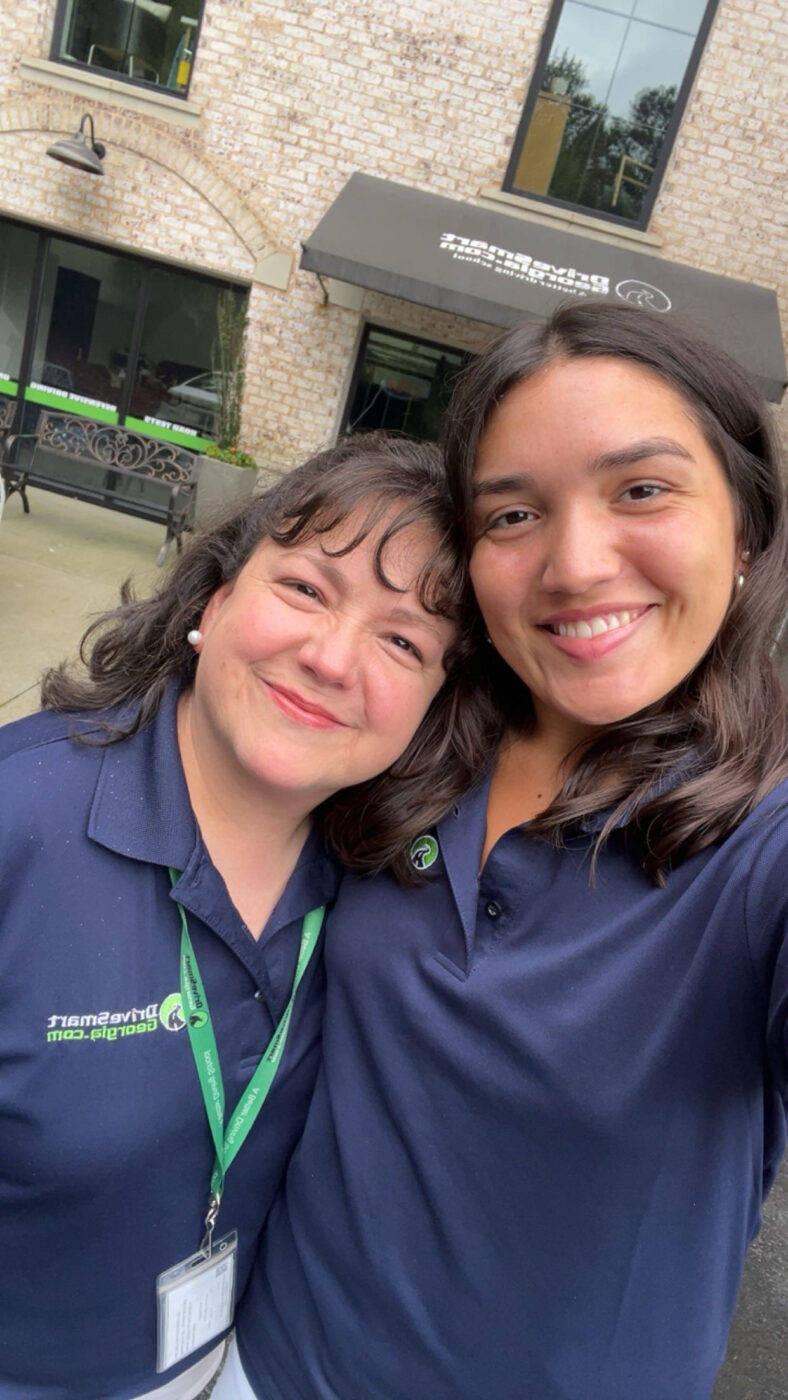
After her youngest left for college, Trujillo began looking for weekend work to help fill the sudden quiet at home. She joined Drive Smart Georgia’s Cumming location as an instructor in July 2024 and now manages the company’s Milton location on Mayfield Road. She is also a road examiner, instructor trainer and backup teacher for its driver-education and risk-reduction programs.
North Atlanta Star asked Trujillo what families should know before a newly licensed teenager begins driving alone. Her responses have been edited and condensed for clarity.
A teenager has passed the road test. How can a parent decide whether the teen is truly ready to drive to school alone?
The student should practice the route to school with a parent or guardian enough times to become comfortable and familiar with it.
Parents should make sure the teen understands yielding and right-of-way rules, can make safe lane changes, has good general parking skills and maintains awareness of what is happening around the vehicle.
Maturity matters, too. Passing the test establishes that the teen met the state’s standard on that particular drive. Parents still need to decide whether their child is prepared to handle the route alone.
What mistakes do newly licensed drivers make most often?
Inadequate mirror and blind-spot checks are among our biggest challenges as instructors.
Many teenagers learn in vehicles equipped with blind-spot monitoring and become accustomed to waiting for a light or warning. We discourage depending entirely on that technology. Sensors can be obstructed or malfunction, and electronic assistance does not replace checking the mirrors and looking over the shoulder.
Another common problem is failing to notice hazards early enough. We teach students to scan about 10 to 12 seconds down the road. Beginning drivers often concentrate on what is only four to six seconds ahead of them.
Looking farther ahead gives the driver time to identify a potential danger, predict what may happen, decide what to do and execute the decision safely.
And, of course, there is distraction. I regularly see young drivers looking at phones while moving and while waiting at intersections.
What should teenagers practice before regularly driving roads such as Peachtree Parkway, State Bridge Road or McGinnis Ferry Road?
Lots of practice, particularly with lane changes.
We teach a process called SMOG: signal, mirrors, over the shoulder and go when safe. With the congestion on these roads, students must be able to perform each step without panicking or rushing.
Teenagers also need to learn to predict what surrounding drivers may do. When you activate a turn signal, for example, a driver in the next lane may slow down and let you enter—or speed up and close the space. The student needs to wait, observe and then make a safe decision.
Right turns on red also require more awareness than many new drivers realize. Students often look only to the left, where they expect traffic to originate, and forget to check for pedestrians or vehicles approaching from other directions, including possible U-turning traffic.
Georgia allows a right turn on red unless a sign prohibits it, but the driver must first come to a complete stop and yield to traffic and pedestrians before proceeding.
Teens also need to understand the difference between a flashing yellow arrow, a green arrow and a solid green light. Parents should not assume a new driver understands every signal simply because the student passed the test.
Where are the greatest risks around a high school?
The student parking lot.
You have many new and inexperienced drivers arriving at approximately the same time and leaving together in the afternoon. Add tiredness, stress, passengers, pedestrians and general distraction, and the parking lot becomes a hot spot for minor crashes.
I am the parent of four children who drove to high school. Three of the four had something happen to their cars in the high-school parking lot.
Parents should practice entering the school, locating the student parking area, backing out, watching for pedestrians and leaving during a busy period—not only when the lot is empty.
What household rules should parents establish for the first semester of driving?
Start with the phone. Have the student activate Do Not Disturb or Driving Focus before leaving and keep the phone out of reach until the vehicle is parked.
Parents may also want to establish an earlier driving curfew than the law requires, particularly while the teenager is gaining experience at night. National Safety Council data shows that fatal crashes overall tend to peak between 8 p.m. and midnight during the spring and summer.
An earlier family curfew allows a new driver to gain experience gradually as daylight fades rather than beginning with the most difficult nighttime conditions.
The rules should be clear before the teen takes the keys. Parents should not wait for the first frightening incident to decide what is permitted.
What about an older teenager driving younger siblings to school?
Parents should establish rules for the younger children, too.
That may mean no fighting, yelling, horseplay or other behavior that diverts the driver’s attention. The family should also limit additional passengers and establish zero tolerance for cellphone use behind the wheel.
Driving siblings is a responsibility, not simply a convenience. Everyone in the vehicle needs to understand that.
What can parents do to prevent phone use, including at red lights and in slow school traffic?
Driving Focus or Do Not Disturb is a good starting point. Families that need stronger controls can consider parental-control software or monitored phones that limit access while the vehicle is moving.
The important thing is to establish that a red light or traffic backup is not permission to pick up the phone. Georgia’s hands-free law prohibits drivers from holding or supporting a phone while operating a vehicle.
Parents also need to model the same behavior. It is difficult to convince a teenager that a phone can wait if the parent routinely checks messages behind the wheel.
How should a new driver prepare for heavy rain, darkness or sudden low visibility?
Leave home at least 10 to 15 minutes earlier than usual.
That extra time reduces the temptation to speed or make an aggressive decision because the teen is worried about being late. It also provides time to deal with congestion or crashes caused by bad weather.
Parents should practice driving with the teen in rain and darkness before the teenager must face those conditions alone.
Which Georgia Class D restrictions are most commonly misunderstood?
Passenger limits, the midnight curfew and the upgrade to a full Class C license.
During the first six months after a Class D license is issued, only immediate family members may ride with the driver. Georgia defines that group as parents, stepparents, grandparents, siblings, stepsiblings, children and anyone who lives at the driver’s residence.
During the second six months, the driver may carry only one passenger younger than 21 who is not an immediate family member. After the first year, the limit increases to three passengers younger than 21 who are not immediate family members.
Class D drivers may not drive between midnight and 5 a.m. There are no exceptions for returning from work, an athletic event or another school activity.
Turning 18 does not automatically convert the physical license to an unrestricted Class C license. An eligible driver must apply for the upgrade through the Georgia Department of Driver Services.
Parents can review the complete restrictions on the Georgia DDS teen-driving page.
What should a teenager know about crashes and breakdowns before driving alone?
Families should discuss these situations in advance, including where the insurance information is stored, whom the teenager should call and which roadside-assistance service the family uses. Put important telephone numbers and instructions in the glove compartment rather than assuming the teen can find everything on a phone.
The teen should know not to leave the scene of a crash and not to stand in an unsafe location near moving traffic.
Georgia DDS instructs drivers involved in a crash to stop in a safe place and notify law enforcement when someone is injured or killed or when apparent property damage exceeds $500. A mechanical breakdown does not automatically require a 911 call, but the teen should call 911 whenever there is an injury, immediate danger or a vehicle obstructing traffic.
The goal is to make sure the teenager does not have to invent a plan while frightened and alone.
“Everyone here is dedicated to teaching kids safe driving habits,” Trujillo said. “Our mission is to save lives.”
Community Voice
A snapshot of reader views, not a scientific survey.
Explore Community Voice →About the Author


In North Atlanta

What North Atlanta’s College Bills Teach Before Class Begins

At School of Rock Dunwoody, a Second Act Begins With a Band

For Georgia Students, UGA and Georgia Tech Have Become Much Harder to Enter

School Capacity in North Atlanta. Is There Enough Room for the Next Generation?

Preschools and Daycares in Alpharetta and Johns Creek: What Parents Should Know
Gwinnett Parents Get Five Chances to Speak With New Superintendent
IN NORTH ATLANTA