The Next Sun Belt Highway May Carry Power, Water and Data Alongside Cars
The federal government proposes using highway corridors to carry utilities like power and broadband, aiming to support the Sun Belt’s fast growth and infrastructure challenges. The plan is still under review with key questions on public control, affordability, and environmental impact.
Get the week’s jobs, development, housing and growth stories from across the Sun Belt in one email.

 Exclusive sponsor
A highway is usually understood as a way to move people and freight. The federal government is now asking whether it can become something more: a shared corridor for the power lines, fiber-optic cables and water infrastructure that fast-growing regions need to keep building.
The idea is called America’s Great Corridors of Commerce. Under the proposal, state transportation departments and railroads could lease land within or beside their existing rights-of-way to private “corridor managers,” which would develop and operate utility infrastructure along those routes.
That could mean an underground conduit beneath a highway carrying several utilities at once, or power and communications infrastructure placed within the outer edge of an existing transportation corridor. The theory is simple: dig once, use land the public already controls and avoid the years of property acquisition that can slow major infrastructure projects.
For the Sun Belt, the idea arrives at an unusually consequential moment. The region is adding residents, factories, warehouses and data-intensive businesses while facing increasingly visible limits in electric transmission, water systems, broadband capacity and the ability of local governments to build infrastructure quickly enough.
The proposal is still only a proposal. No Sun Belt highway, railroad or state has been selected. The Transportation Department is seeking public comment through Sept. 12, and its formal notice says the agency may later issue a separate request for corridor proposals. That distinction matters. There is no federal map yet and no awarded project.
Still, the question it raises is worth taking seriously: Could the roads that helped the Sun Belt grow become the backbone of its next phase of growth?
A different way to build the essentials
The Transportation Department says the program would allow rights-of-way owners to partner with private companies that would design, build, finance, operate and maintain utility channels. Those companies could then lease space to electric utilities, telecommunications providers and others, with revenue shared under agreements negotiated by the public owner.
The potential concessions would be long ones—typically 30 to 50 years, according to the department’s request for information. The agency argues that lease revenue could help pay for repairs and upgrades to roads, bridges, rail lines and tunnels.
That is a striking departure from the usual approach to transportation infrastructure. A state highway department ordinarily maintains a road; a utility builds its own line; a local government negotiates separately over water, broadband and industrial development. The federal proposal imagines one corridor manager coordinating several systems at once.
In practical terms, it could make an industrial site beside an interstate more attractive because it is already close to electricity, fiber and water. It could give a growing metro area a more direct route to add transmission capacity. It could help a rural community reach broadband infrastructure without creating an entirely new path across private land.
The Transportation Department is pitching that arrangement as a way to reduce costs and shorten permitting timelines while helping utilities serve new manufacturing, data centers and other high-demand users. In its announcement, the department said it expects to support up to five initial priority corridors with technical assistance, financing guidance and permit coordination.
But a useful headline should not be confused with an assured result. Building in an existing right-of-way may reduce some costs, but it does not erase the complicated work of engineering, utility coordination, construction safety, maintenance access or the question of who ultimately pays.
Why the Sun Belt has so much at stake
The proposal’s underlying premise fits a familiar Sun Belt tension. The region has become one of the country’s principal places to live, retire, manufacture and build. Yet the systems that make growth possible are often less visible than a new subdivision or factory: substations, transmission lines, water pipes, fiber connections and road capacity.
A new plant may be announced with a jobs figure and a ribbon-cutting date. The transmission upgrade needed to power it can take much longer. A fast-growing county may approve thousands of homes, then confront difficult questions about water capacity, school access and the cost of expanding roads.
Existing highway and railroad corridors could offer a less disruptive route through that bottleneck. The federal notice says the program is intended to support electric transmission, water pipelines, fiber-optic lines and rural broadband, while also encouraging businesses that need substantial utility capacity to locate near designated corridors.
That may be especially attractive in places where land acquisition is expensive, suburban development is dense and residents are understandably wary of new infrastructure arriving near homes. A corridor that already carries traffic, noise and freight may be easier to adapt than an entirely new route across farms, neighborhoods or open land.
It could also reshape the economics of land near major roads. The Transportation Department argues that sites close to highways and rail lines could become more suitable for data centers, advanced manufacturing and distribution operations if utilities are available nearby, while land farther from those corridors could be freed for residential or mixed-use development.
That is not automatically a benefit for every community. It depends on what gets built, where the revenue goes and whether local residents gain more reliable service or simply live beside infrastructure built mainly for large industrial users.
The difficult questions are not side issues
The agency’s own request for information reads partly as an acknowledgement of how much remains unsettled. It asks for public input on construction and operating safety, financing, community acceptance, environmental review, revenue-sharing, interstate coordination and long-term liability.
Those are not technical footnotes. They are the story.
The first question is public control. State transportation departments and railroads would remain the rights-of-way owners, but a private manager could hold a decades-long role in developing the corridor and collecting leases. The contracts would need clear rules about maintenance, emergency repairs, pricing, revenue sharing and what happens if projected utility demand does not materialize.
The second is affordability. The department says shared infrastructure could lower utility costs by reducing the need for scattered upgrades and repeated land acquisition. That may be true in some places. But the program does not guarantee lower household electric or water bills. A corridor could be financially useful to an industrial customer while offering little immediate relief to nearby families unless rate structures and public benefits are addressed directly.
The third is environmental review. The proposal emphasizes the possible use of categorical exclusions for projects largely contained within an existing right-of-way. That can be sensible when work has limited effects. It should not become shorthand for treating every project beside a highway as consequence-free. Underground construction, water crossings, drainage, habitat, noise, traffic management and the cumulative impact of several utilities in one corridor still require close scrutiny.
Finally, there is the question of fairness between places. A multistate corridor connecting large manufacturing centers may promise the greatest commercial return. It may also attract the first attention. The program should not become a system in which the public right-of-way is used to serve only the most powerful customers while smaller communities wait for basic broadband, resilient water systems or grid upgrades.
An early test of the Sun Belt’s next growth model
The Transportation Department says it intends to prioritize longer multistate corridors with regional significance. That could put the Sun Belt at the center of the eventual competition, because its growth is often regional rather than confined to one city or county.
But the most important fact for now is the least dramatic one: the federal government has not chosen anything. It is collecting ideas and testing a model.
That makes this the right time to ask the questions that tend to arrive too late—after a route is selected, a contract is signed or a community learns that a major project is headed its way.
The next generation of Sun Belt growth will depend on more than homes, jobs and interchanges. It will depend on whether the systems underneath and beside those projects can be built fast enough, paid for fairly and managed in the public interest.
A highway may never be just a highway again. The question is whether the public will have an equal say in what else it becomes.
If you’ve been following growth and change around here, these stories are worth a look too.
About the Desk

Across the Sun Belt
How 4.5 Million Border Migrants Reshaped the Sun Belt’s Population Map

Phoenix Can Survive the Colorado River Cuts. The Water Fix Won’t Be Cheap

Sprouts Is Following Sun Belt Growth Into the Next Ring of Suburbs
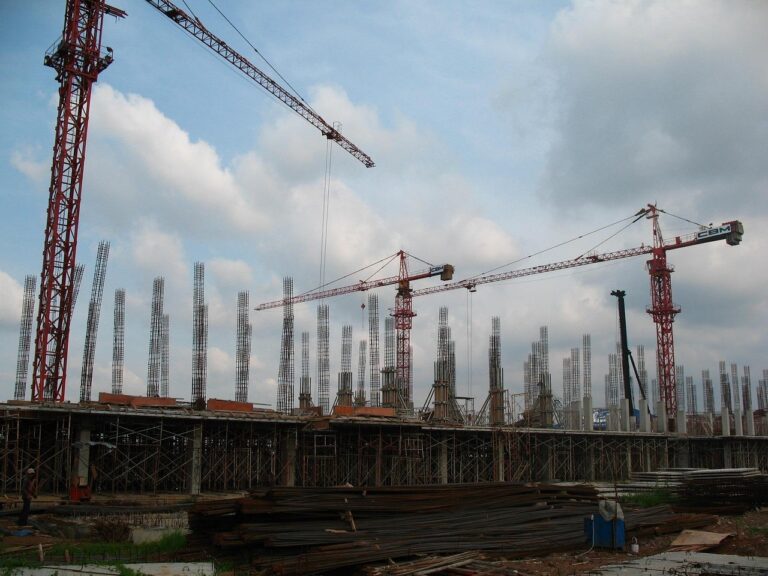
South Texas Businesses Struggle to Find Workers as Immigration Arrests Surge
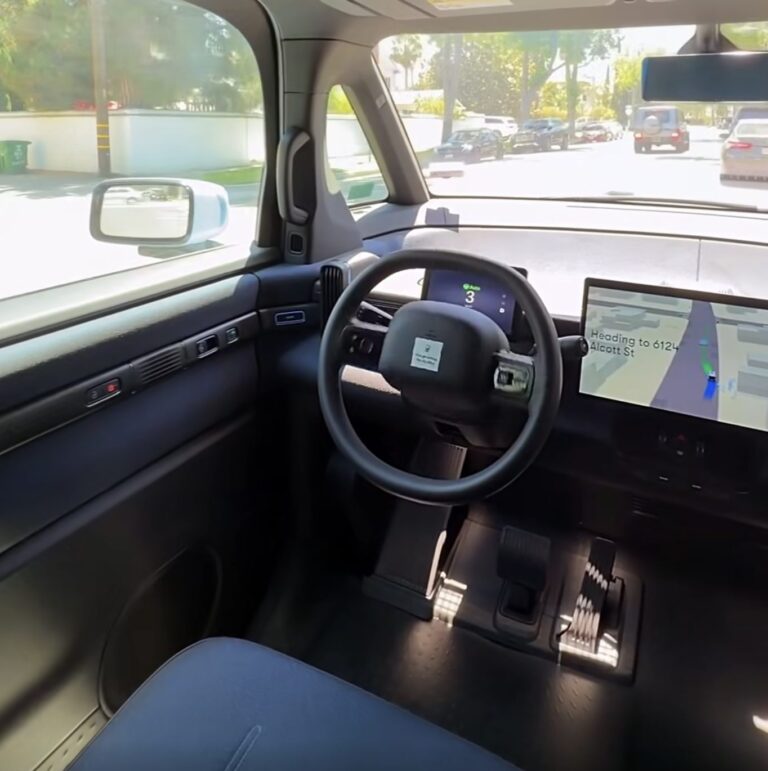
Waymo’s Texas Robotaxi Fleet Grew 49% in Three Weeks

The Sun Belt’s Battery Belt Is Losing Jobs as EV Factory Plans Shrink and Shift
Community Voice
A snapshot of reader views, not a scientific survey.
Explore Community Voice →