Georgia’s Turtle Season Is Underway, From Sawnee Mountain to the Barrier Islands
Georgia’s turtle season is in full swing, with sea turtles nesting on coastal beaches and freshwater turtles visible at local nature centers. Conservation efforts focus on monitoring nesting, rehabilitation, and protecting habitats amid threats from development and roads.
Get major local stories and development updates.
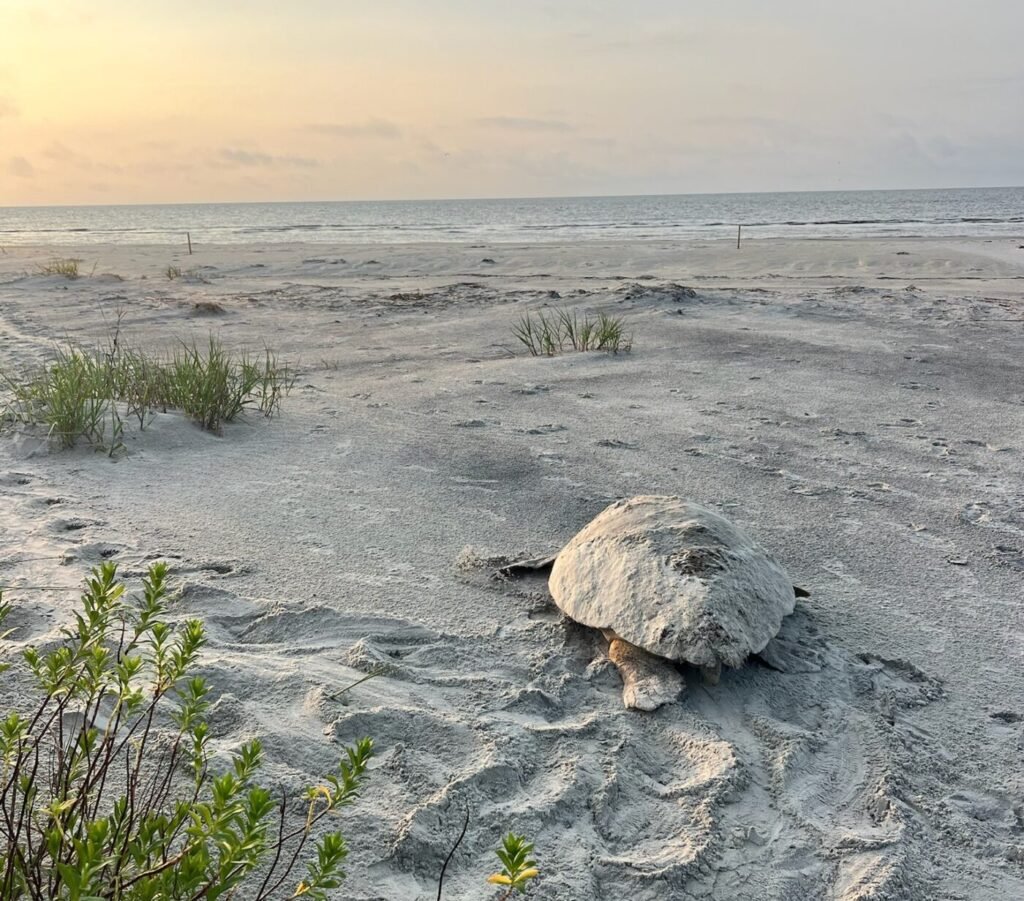
Photo: A loggerhead sea turtle makes its way across a Georgia beach during nesting season, when adult females come ashore to lay eggs before hatchlings emerge later in the summer. Courtesy of Georgia Sea Turtle Center Facebook page.
Early summer in Georgia unmistakably belongs to turtles.
Along the coast, loggerhead sea turtles are moving out of the Atlantic and onto dark barrier-island beaches, digging nests in the sand under the cover of night. Farther inland, freshwater turtles are basking on logs and pond edges, box turtles are moving through wooded ground, and nature centers across North Georgia are turning that seasonal activity into a close-up lesson in wildlife, patience and habitat.
For families in Johns Creek, Cumming, Alpharetta, Roswell and Suwanee, turtle season is not only something happening hours away on Jekyll Island or Cumberland Island. It is also visible much closer to home, at Sawnee Mountain Preserve, Autrey Mill Nature Preserve and the Chattahoochee Nature Center, where native turtles help tell a larger Georgia story about conservation, roads, water quality, development and the fragile line between human convenience and animal survival.
A Coastal Season That Begins Before Most Families Notice
Georgia’s sea turtle nesting season begins in May and runs through the heart of summer, with early June serving as one of the most important windows for adult nesting activity. Hatchlings usually do not appear until later in the summer, but the adult females are already arriving on beaches, leaving tracks in the sand and nests that will be monitored by trained patrols.
Loggerheads are the main nesting species on Georgia’s barrier islands. Other sea turtles, including green, leatherback, Kemp’s ridley and hawksbill turtles, may use Georgia waters for foraging or transit, but loggerheads are the species most closely tied to the state’s nesting beaches.
For visitors, a June trip to the coast is less about seeing baby turtles racing toward the surf and more about understanding the work that happens before that moment: night walks, dawn patrols, nest marking, predator protection and strict limits on beach lighting.

Jekyll Island is the state’s most accessible center for that experience. The Georgia Sea Turtle Center combines rehabilitation, public education and seasonal beach programs, including evening turtle walks and guided ecology walks designed to show visitors how nesting is monitored without turning the beach into a spectacle. Tybee Island offers a similar public education role through the Tybee Island Marine Science Center, where turtle talks and guided beach programs connect the nesting season to daily coastal habits.
The most important beaches, however, are often the least convenient ones. Cumberland Island, Ossabaw, Blackbeard and Sapelo Island serve as critical nesting sanctuaries, with limited access and intensive management. On these islands, success depends less on tourism and more on daily conservation work: tracking nests, limiting predator damage, relocating vulnerable nests when needed and keeping human disturbance low.
The Hidden Rescue Network Behind Georgia Turtle Releases
Georgia’s turtle story does not begin only on Georgia beaches.
Each year, cold-stunned sea turtles are rescued in the Northeast, especially around Cape Cod Bay, after sudden drops in water temperature leave juvenile turtles unable to migrate south. Once the animals become lethargic and strand on cold beaches, they may be dehydrated, injured, hypothermic or suffering from pneumonia.
A large rescue pipeline moves some of those turtles through emergency triage, air transport and long-term rehabilitation. Volunteers retrieve stranded turtles from freezing beaches. Aquariums and marine centers stabilize them. Volunteer pilots help fly them south when northern facilities are full. Georgia facilities then become part of the recovery chain.

That is why Jekyll Island sometimes becomes the final chapter in a journey that began hundreds of miles away. In April 2024, Georgia hosted its largest single sea turtle release on record, with 34 rehabilitated turtles returned to the ocean off the coast. In March 2025, eight rehabilitated loggerheads that had been rescued from Cape Cod were released from Jekyll Island after treatment, with some fitted with satellite tracking transmitters to follow their post-release movements.
For Georgia residents, those releases offer a rare glimpse of conservation as logistics. It is not only field biology or beach patrols. It is transport, veterinary care, interstate coordination, tagging, data collection and timing the release for warmer coastal waters.
What the Nesting Numbers Show
Georgia’s loggerhead recovery has been one of the state’s major long-term conservation stories, but the numbers still move in cycles.
Statewide nesting surveys began in 1989, when Georgia documented 675 loggerhead nests. By 2022, the state reached a record 4,071 nests. The following years declined, with 3,431 nests in 2023 and 2,490 nests in 2024. That drop did not mean the recovery had failed. Sea turtle nesting naturally fluctuates because individual females do not nest every year, and storms, predators and beach conditions can sharply affect annual results.
The federal recovery goal for Georgia is 2,800 nests, and the 2024 total fell below that benchmark. The 2026 season began on schedule, with the first nests found May 1 on St. Catherines Island and Cumberland Island National Seashore, followed by more nests in mid-May as the season moved toward its summer peak.
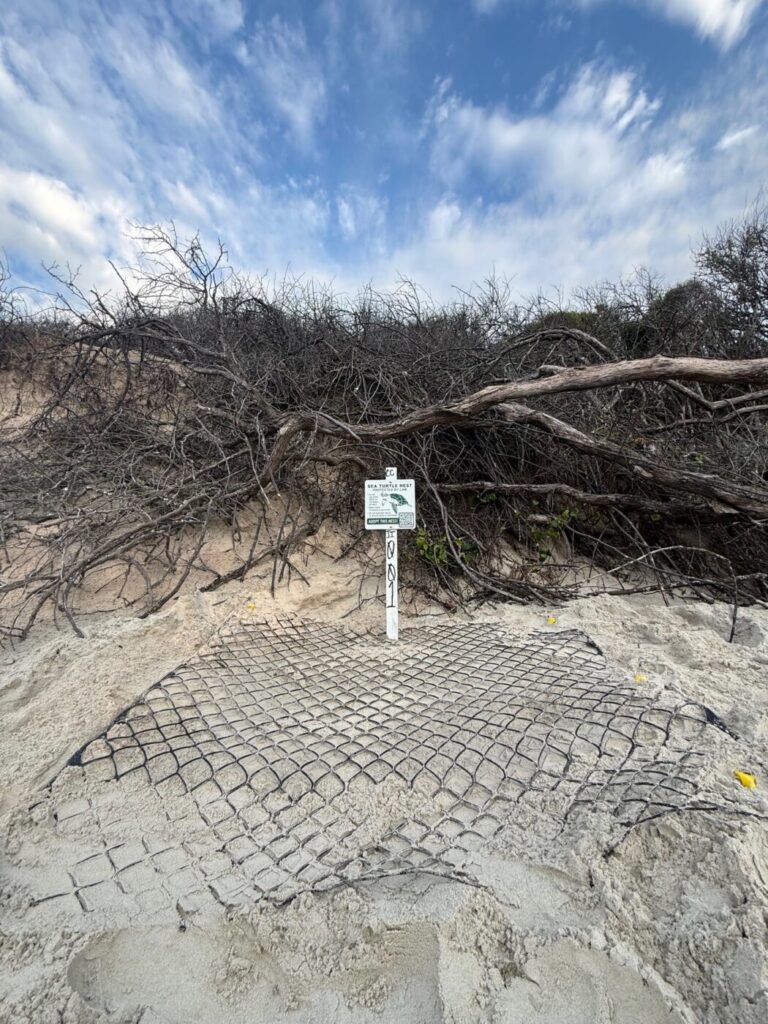
Behind those numbers is one of Georgia’s most important wildlife science projects. Field teams collect one egg from each documented nest for genetic research. Those samples allow researchers to identify individual nesting females and track nesting patterns, site loyalty and reproductive output across Georgia and neighboring coastal states. It is a quiet form of science, but it tells biologists far more than a single season count ever could.
Where North Atlanta Families Can See Turtles Close to Home
For most North Atlanta families, the nearest turtle encounter is not on the coast. It is at a pond, wetland boardwalk, nature preserve or wooded trail.
In South Forsyth, Sawnee Mountain Preserve offers one of the easiest local connections. Its visitor center includes live animal exhibits, and its outdoor pond area provides a simple place to watch turtles basking. For families in Cumming and the GA-400 corridor, it is a close-to-home reminder that turtle conservation is not only a coastal issue.
In Johns Creek, Autrey Mill Nature Preserve & Heritage Center includes a turtle sanctuary and outdoor animal exhibits, making it one of the most relevant local sites for children learning about reptiles and habitat. It also places turtle education inside a suburban landscape, where wooded preserves sit only minutes from subdivisions, schools and traffic.

In Roswell, the Chattahoochee Nature Center connects turtles to the river system that defines much of North Atlanta’s natural geography. Its wetlands, pond ecosystem and watershed exhibits help families understand how freshwater turtles rely on clean water, connected habitat and protected edges along creeks, ponds and river corridors.
Elachee Nature Science Center in Gainesville and Dauset Trails Nature Center south of metro Atlanta offer broader Georgia context, with live reptile exhibits, woodland trails and freshwater turtle viewing. They are farther from the center of North Atlanta, but they show how widespread the state’s turtle education network has become.
The Suburban Threats Are Not Abstract
Roads cut through habitat. Ponds are altered. Streams carry more runoff. Development fragments the wooded corridors turtles use to move between feeding, nesting and overwintering areas. Vehicle strikes are a serious threat, especially when turtles cross roads during warm-weather movement or nesting activity.
Poaching is another concern. Georgia has tightened rules on freshwater turtle possession and harvest because demand for turtles in the pet and food trades has placed pressure on wild populations. For slow-growing reptiles, removing adults from the wild can cause long-term damage.
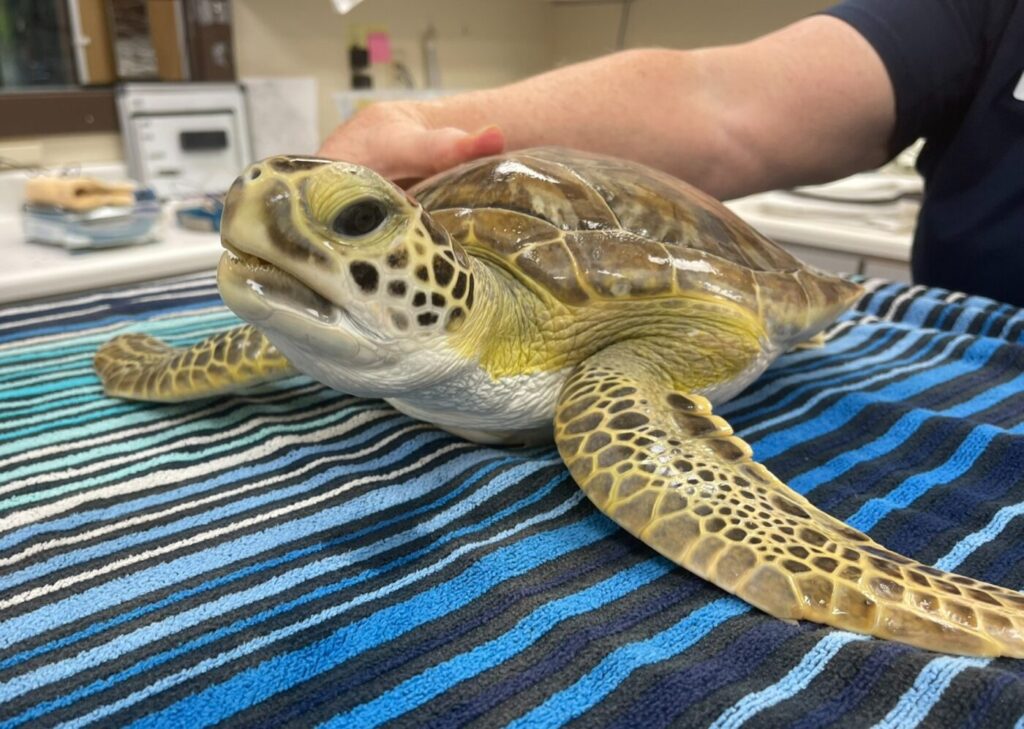
The issue is especially serious for rare species such as the bog turtle in North Georgia’s mountain wetlands and the Suwannee alligator snapping turtle in the southern part of the state. These are not everyday backyard sightings, but they help explain why turtle protections cannot be treated casually. Many turtle species mature slowly, reproduce unevenly and depend on very specific habitat conditions.
What Residents Can Do This Summer
The most important turtle protection rules are simple, but they require consistency.
On the coast, beachfront lighting should be turned off, shielded or redirected during turtle season. White flashlights, flash photography and bright beach lighting can disorient nesting females and hatchlings. Beach equipment should be removed by sunset, holes should be filled and sandcastles should be flattened so turtles do not become trapped or blocked.
Boaters should slow down in shallow estuarine areas, tidal creeks and near inlets. Sea turtles and large freshwater turtles surface to breathe, and vessel strikes remain a major source of injury and mortality.
In North Atlanta, residents can help by watching for turtles on roads, especially near ponds, creeks and wooded areas. If it is safe to do so, a turtle crossing the road can be moved in the direction it was already headed, never relocated to a distant site. Around homes and neighborhoods, preserving pond edges, reducing chemical runoff and supporting local nature centers all contribute to the larger conservation picture.
Residents who want to support the work more directly can also contribute to the Georgia Sea Turtle Center on Jekyll Island, where admission, supporter memberships and donations help offset the cost of rehabilitation and care. The center offers general admission, supporter options and symbolic adoption programs tied to its conservation work, giving Georgia families a practical way to help beyond a single beach visit.
Turtle season in Georgia is easy to overlook because it does not announce itself loudly. It happens at night on quiet beaches, on sunlit pond logs, along wooded trails and sometimes in the middle of a suburban road where a small animal is trying to get from one patch of habitat to another.
For North Atlanta, that is part of the lesson. Conservation is not only something that happens on a remote island or inside a rescue facility. It also happens in the choices made by families, drivers, boaters, homeowners, visitors and supporters across the state.
Where to Stay on Jekyll Island
For North Atlanta families turning a sea turtle visit into a weekend trip, Jekyll Island has several practical lodging options close to the beach, bike paths and the Georgia Sea Turtle Center. The historic Jekyll Island Club Resort is the classic choice for visitors who want old-Georgia character near the island’s historic district, while The Westin Jekyll Island Beach Resort offers a more modern beachfront stay in Beach Village. Jekyll Ocean Club is a higher-end, all-suite oceanfront option connected to the Jekyll Island Club family of properties.
Families looking for a straightforward beach stay can also consider Holiday Inn Resort Jekyll Island, Hampton Inn & Suites Jekyll Island, Courtyard & Residence Inn by Marriott, Home2 Suites by Hilton Jekyll Island, Beachview Club Hotel, Days Inn & Suites or Villas by the Sea Resort & Conference Center. For a turtle-focused trip, the best base is usually a place that makes it easy to reach the Georgia Sea Turtle Center, the beach and the island’s bike paths without turning the weekend into a driving loop.
More worth reading from around here.
Follow this story
Keep me updated
North Atlanta Star will email you when an editor approves a follow-up to Georgia’s Turtle Season Is Underway, From Sawnee Mountain to the Barrier Islands.
Story updates only. No newsletter signup.
About the Author


In North Atlanta

Roswell Area Park Pond Reopens After $3.1 Million Restoration
Why Your Neighborhood Stormwater Pond Isn’t Just Scenery
North Atlanta Weekend Guide: Festivals, Dogs, Live Music and the First Feel of Fall

Dervish Plans 200-Seat Turkish Restaurant in Johns Creek

Dumpling Master Opens at Peachtree Corners Town Center

ANDRITZ Is Hiring Engineers and Project Leaders in Alpharetta
IN NORTH ATLANTA