 Exclusive sponsor
Gwinnett Tech Leaders Say the Four-Year Degree Is No Longer the Automatic First Choice
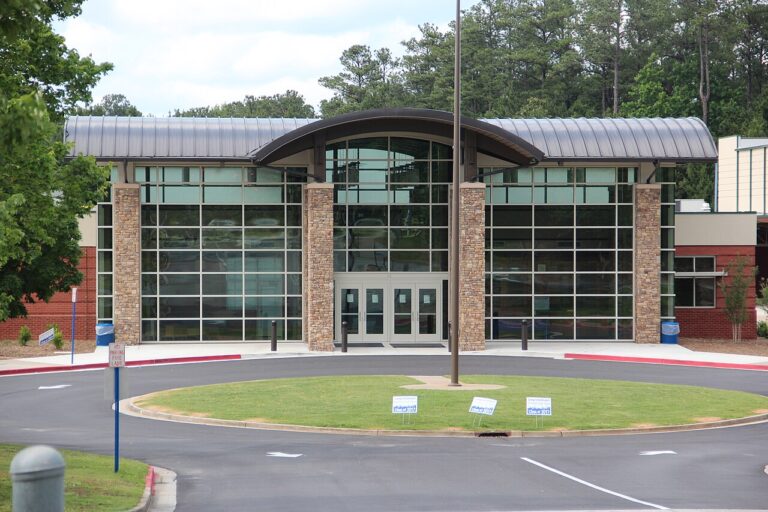
At Gwinnett Technical College’s Alpharetta-North Fulton campus, a growing number of students select technical education as their first choice. Career readiness, cost, and flexible credentials are reshaping education decisions beyond traditional four-year degrees.

Major local stories and useful updates, once a week.
For many families, the question after high school used to sound simple: Which four-year college? Dr. Kohle Paul and Rebecca Alexander say that is changing.
Paul, Gwinnett Technical College’s vice president of student affairs, and Alexander, its vice president of academic affairs, told North Atlanta Star that students are looking more closely at cost, career outcomes and how quickly an education can lead to work. Technical education, they said, is increasingly being chosen as a first destination rather than a fallback.
That shift is already visible in Gwinnett Tech’s own enrollment. In its 2026 new-student survey, 76% of respondents said Gwinnett Tech was their first-choice college. The college is also seeing continued growth among students with no previous college experience.
For Paul and Alexander, that changes the familiar college debate. The question is becoming less “Do I go to college?” and more “What kind of education makes sense for the career I want?”
Families are doing the math
Cost is increasingly part of that decision. Paul and Alexander said students consistently rank career preparation and cost of attendance among the major reasons they choose Gwinnett Tech. Parents are also paying closer attention to how much an education costs compared with the employment opportunities available afterward.
That does not mean the bachelor’s degree has lost its value. Instead, the two administrators see more students considering whether they need four years of college immediately — or at all.
A student who wants to become a nurse or computer programmer can begin with an associate degree and enter the workforce sooner. If that student later wants a bachelor’s degree, transfer pathways remain available.

For careers such as welding or HVAC, a bachelor’s degree may not be necessary, while specialized hands-on training is.
Their message to a 17-year-old is therefore not that one path is better than another. It is that the path should fit the career.
Shorter pathways are gaining appeal
At Gwinnett Tech’s Alpharetta-North Fulton campus, dual enrollment continues to grow, particularly in programs including business management, marketing management, social media marketing, cybersecurity, medical front office and billing, and welding.

High school students can earn both secondary-school and college credit at the same time, reducing the eventual cost of college and moving more quickly toward a credential.
The college has also expanded stackable certificates, allowing students to earn a shorter credential, enter the workforce and continue later toward an associate degree if they choose.
Programs that include industry credentials, internships and apprenticeships are particularly attractive because they connect classroom work more directly to employment, Paul and Alexander said.
That flexibility may be one of technical education’s biggest advantages in a labor market that is changing quickly.
AI is changing the conversation
Artificial intelligence has become part of almost every career discussion. But Paul and Alexander caution students against thinking of AI as a field that belongs only to computer science.

They are seeing its influence across healthcare, business, accounting, programming, marketing, cybersecurity, manufacturing, engineering, automotive technology, logistics and construction.
The better question for students, they said, may be: “How will AI change the career I choose, and what do I need to know to work effectively in that environment?”
They see AI literacy becoming a basic workforce skill, much as digital literacy did years ago.

At the same time, they argue that the spread of AI makes human abilities more important, not less — communication, critical thinking, creativity, teamwork, adaptability and professional judgment among them.
That combination is increasingly shaping what career preparation looks like.
“It isn’t an either/or choice”
Paul and Alexander also push back on one idea they believe parents often misunderstand: that career training and college are opposing choices. They are not.
Gwinnett Tech students can earn college credit while receiving occupational training, then move into the workforce or continue their education.
The college reports a 99% overall job placement rate for graduates and a 91.9% in-field placement rate. It also participates in statewide transfer agreements that allow general education credits to move into Georgia’s public universities and independent colleges, with additional local agreements covering some technical coursework.
For families weighing tuition, time and an uncertain job market, that flexibility may be changing what “college” means.
The four-year degree remains the right choice for many students. But Paul and Alexander see more young people starting with a different question. Not “Which four-year college should I attend?” But “What education do I actually need for the life and career I want?”
Community Voice
A snapshot of reader views, not a scientific survey.
Explore Community Voice →About the Author


In North Atlanta

Gwinnett Tech Opens Its Doors to Career Changers Ahead of Spring Enrollment

Atlanta’s Universities Are Increasingly Rewriting What “Elite” Means

Gwinnett Families Have Until Thursday to Review 51 Course Standards
More Than 61% of Fulton Graduates Earned College Credit Before Graduation
The College Enrollment Cliff Is Coming. North Atlanta May Feel It Differently

Northview High Opens to Out-of-District Students for $11,000 a Year
IN NORTH ATLANTA