Atlanta’s Universities Are Increasingly Rewriting What “Elite” Means
Atlanta’s Georgia Tech and Emory University are reshaping what elite higher education means by focusing on real-world skills and career readiness.

Get major local stories and development updates.
Photos: Courtesy of GT and Emory Facebook pages
For decades, the definition of an elite college education in America felt settled, almost immovable. A handful of Northeastern schools dominated the conversation, shaping hiring pipelines and cultural perception alike. But that hierarchy is shifting—and increasingly, the center of gravity is moving south.
In the latest wave of rankings and employer sentiment, institutions like Georgia Institute of Technology and Emory University are no longer seen as alternatives to the Ivy League. They are becoming the standard in their own right.
The change is not about prestige alone. It reflects a deeper recalibration of what employers value and what students expect from higher education.
The Rise of the “New Ivies”
The idea of “New Ivies,” popularized in recent years, points to a growing group of universities that excel not through legacy reputation but through measurable outcomes. These schools are evaluated less on tradition and more on what graduates can actually do on day one of a job.
That shift is striking. A significant share of hiring managers report being less inclined to recruit from traditional Ivy League schools than they were just a few years ago, often citing concerns about practical readiness and workplace adaptability.
In contrast, employers are increasingly drawn to institutions that emphasize real-world experience, technical fluency, and intellectual rigor over inherited prestige.

Why Atlanta Sits at the Center of This Shift
Atlanta’s role in this transformation is not accidental. The city has built a dense ecosystem where education, research, and industry intersect on a daily basis.
The presence of both Georgia Tech and Emory creates a dual pipeline: one deeply technical, the other broadly interdisciplinary. Together, they supply talent that aligns closely with what companies now prioritize—adaptability, problem-solving, and the ability to work alongside rapidly evolving technologies.
This concentration of talent feeds directly into the region’s economy. Atlanta has emerged as a major hub for technology, healthcare, and data-driven industries, giving students immediate access to internships, co-ops, and employer networks that are integrated into their education rather than added on afterward.
Georgia Tech: Built for the Workforce
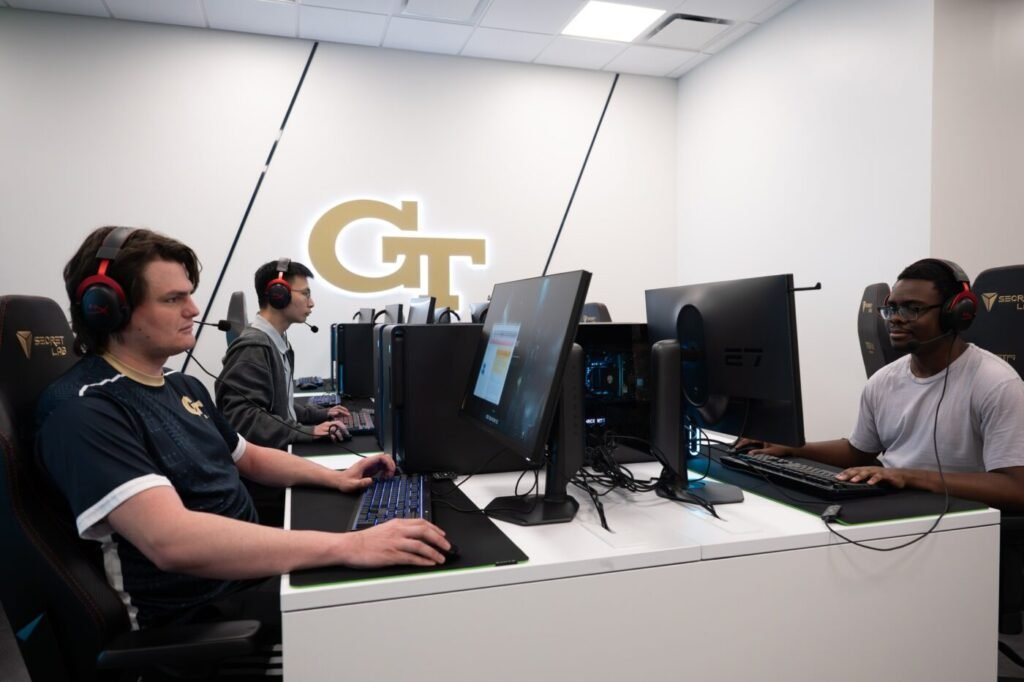
At Georgia Tech, the emphasis has long been on applied learning. The university’s co-op model, which allows students to alternate semesters of study with full-time paid work, has become a defining feature.
By the time they graduate, many students have accumulated a full year or more of professional experience. That changes how employers evaluate them. They are not seen as entry-level hires in the traditional sense but as candidates who have already operated inside real systems.
This approach also translates into strong long-term financial outcomes. Georgia Tech consistently ranks among the top public universities for return on investment, with graduates earning high salaries while carrying relatively low debt.
At a time when families are increasingly scrutinizing the value of a degree, that combination matters.
Emory: Reframing the Liberal Arts
If Georgia Tech represents technical depth, Emory offers a different but equally relevant model. The university has leaned into the idea that the future of work is not purely technical—it is human, ethical, and interdisciplinary.
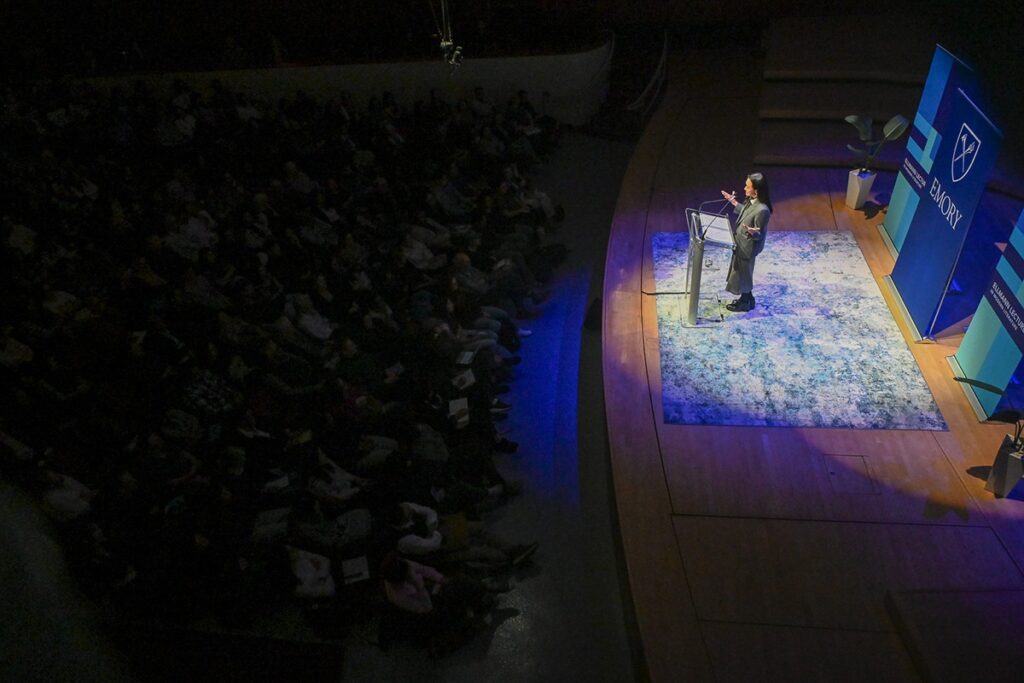
Through initiatives focused on artificial intelligence and society, Emory has woven AI literacy into a broad range of fields, from business to healthcare to the humanities. The goal is not to turn every student into an engineer, but to ensure they understand how these systems shape the world around them.
At the same time, Emory has strengthened its connection to the Atlanta job market through structured employer visits and industry exposure. Students are not only learning concepts but seeing how those concepts play out in real organizations.
The result is a graduate who combines analytical thinking with communication, judgment, and adaptability—traits that are becoming more valuable as automation handles routine tasks.
What Employers Are Really Looking For Now
Perhaps the most important change is not institutional but cultural. Employers are redefining what “elite” means in practice.
Technical skills still matter, especially in fields like engineering and data science. But they are no longer enough on their own. Companies increasingly emphasize qualities such as humility, curiosity, and the ability to learn quickly in uncertain environments.
In that context, the traditional advantage of brand-name schools is narrowing. The gap between graduates of Ivy League institutions and those from top public or private universities has shrunk, particularly in fields where measurable output—code, research, projects—matters more than pedigree.
The 2026 “New Ivies” List
| Type | University |
|---|---|
| Public | Georgia Institute of Technology |
| Public | University of Michigan–Ann Arbor |
| Public | University of Virginia |
| Public | Purdue University |
| Public | University of Florida |
| Public | University of Texas at Austin |
| Public | William & Mary |
| Public | University of Wisconsin–Madison |
| Public | U.S. Air Force Academy |
| Public | UNC Chapel Hill |
| Private | Emory University |
| Private | Northwestern University |
| Private | Georgetown University |
| Private | Carnegie Mellon University |
| Private | Vanderbilt University |
| Private | Rice University |
| Private | Tufts University |
| Private | Washington University in St. Louis |
| Private | University of Notre Dame |
| Private | Case Western Reserve University |
A Broader Redefinition of Opportunity
What is unfolding is not the decline of one group of schools, but the expansion of what counts as elite education.

Students who might once have felt they were choosing a “second-tier” option are now attending institutions that offer strong career outcomes, lower debt, and closer ties to industry. For many families, that tradeoff is increasingly compelling.
For Atlanta, the implications are clear. The region is no longer just benefiting from national trends—it is helping shape them. With two of the country’s most influential “New Ivies” operating within the same metropolitan area, the city has become a proving ground for what modern higher education can look like.
Why the “New Ivies” Appeal to Families Focused on Debt and ROI
On mobile: swipe left to see the full table.
| Category | What the research found | Why it matters |
|---|---|---|
| Public New Ivies | Average 23% less student debt than Ivy League graduates | Students often enter the workforce with less financial pressure |
| Starting salaries | Typically only 8% to 12% lower than Ivy peers | The salary gap is often smaller than families expect |
| Early career earnings gap | Often closes within about five years | Lower-cost schools can become the better long-term financial choice |
| Georgia Tech debt load | Average debt burden of about $7,726 | A relatively low debt figure for a high-earning university |
| Georgia Tech median 20-year salary | About $168,000 | Helps explain why ROI remains a major part of the school’s appeal |
| Big picture | Lower debt + strong earnings + workforce readiness | That combination is reshaping how families define “elite” value |
The Road Ahead
As artificial intelligence and other technologies continue to reshape the workforce, universities that adapt quickly will continue to gain ground. Those that integrate practical experience, interdisciplinary thinking, and technological fluency are likely to define the next era.
In that sense, the shift already underway may prove lasting. The path to opportunity is no longer routed through a single corridor of legacy institutions. It is widening—and in many ways, it now runs straight through Atlanta.
Keep reading with a few more stories from around North Atlanta.
About the Author


In North Atlanta
What North Atlanta Should Know Today
Suwanee’s Winton Machine Heads to Washington With $400,000 on the Line

North Atlanta’s NHL Race Is No Longer Just Alpharetta vs. South Forsyth

What North Atlanta Should Know Today. Friday, Sept. 11, 2026
Gwinnett Tech Leaders Say the Four-Year Degree Is No Longer the Automatic First Choice
Medley Job Fair Looks to Fill 300 Positions Ahead of Johns Creek Opening
IN NORTH ATLANTA