 Exclusive sponsor
Forsyth and Fulton Set New Graduation Records
Forsyth County Schools and Fulton County Schools set new on-time graduation records for the Class of 2026. Both districts surpassed the statewide average rate, with several North Fulton high schools exceeding 97%. These results reflect continued progress in student completion rates.

Major local stories and useful updates, once a week.
Forsyth County Schools graduated 97.47% of its Class of 2026 on time, while Fulton County Schools reached 93.44%. Both are district records.
The results released Monday, Sept. 28, place both systems above Georgia’s record statewide rate of 88.5%.
Forsyth remained the stronger of the two, but Fulton made the larger one-year gain. Its rate rose by approximately 1.5 percentage points, marking the district’s sixth consecutive record.
Graduation rates compared
| School system | Class of 2025 | Class of 2026 | Change |
|---|---|---|---|
| Forsyth County Schools | 97.0% | 97.47% | +0.47 points |
| Fulton County Schools | 91.9% | 93.44% | +1.54 points |
| Georgia | 87.2% | 88.5% | +1.3 points |
Georgia’s statewide rate has risen 21.1 percentage points since the current calculation began in 2011. This year, 147 school districts reached at least 90%, and 69 reached 95% or higher.
Forsyth crossed that higher threshold for the third consecutive year. Its latest result means fewer than three students out of every 100 in the adjusted graduating cohort failed to earn a qualifying diploma within four years.
Five North Fulton high schools exceeded 97%
Fulton’s districtwide figure includes schools across a large county, so the 93.44% average does not describe every North Fulton campus.
Cambridge, Chattahoochee, Johns Creek, Milton and Northview high schools each posted rates above 97%. FCS Innovation Academy remained above 99%.

Fulton’s district rate has climbed from 85.5% in 2020 to 93.44% in 2026, an increase of nearly eight percentage points. Among 21 high schools with comparable results for both years, 14 improved and two held steady.
The new figures do not provide an individual graduation guarantee. They show how successfully each school or district moved an entire group of students from ninth grade to a diploma on schedule.
What the rate actually measures
The four-year adjusted cohort is not simply the percentage of seniors who participated in a May graduation ceremony.
Students enter the calculation when they begin ninth grade. The cohort is adjusted over the next four years as students transfer into or out of the school system. The rate then measures how many members earn a regular diploma or qualifying alternate diploma within that period.
A student who finishes after a fifth year can be reflected in a separate five-year rate but does not retroactively become an on-time graduate. A student who leaves for another school can be removed when the transfer is properly documented.
The calculation also does not measure college acceptance, employment, military service or whether graduates later complete a degree or professional credential. Those outcomes require separate data.
Families still need an individual credit check
Record district results do not replace a transcript review for current high school students.
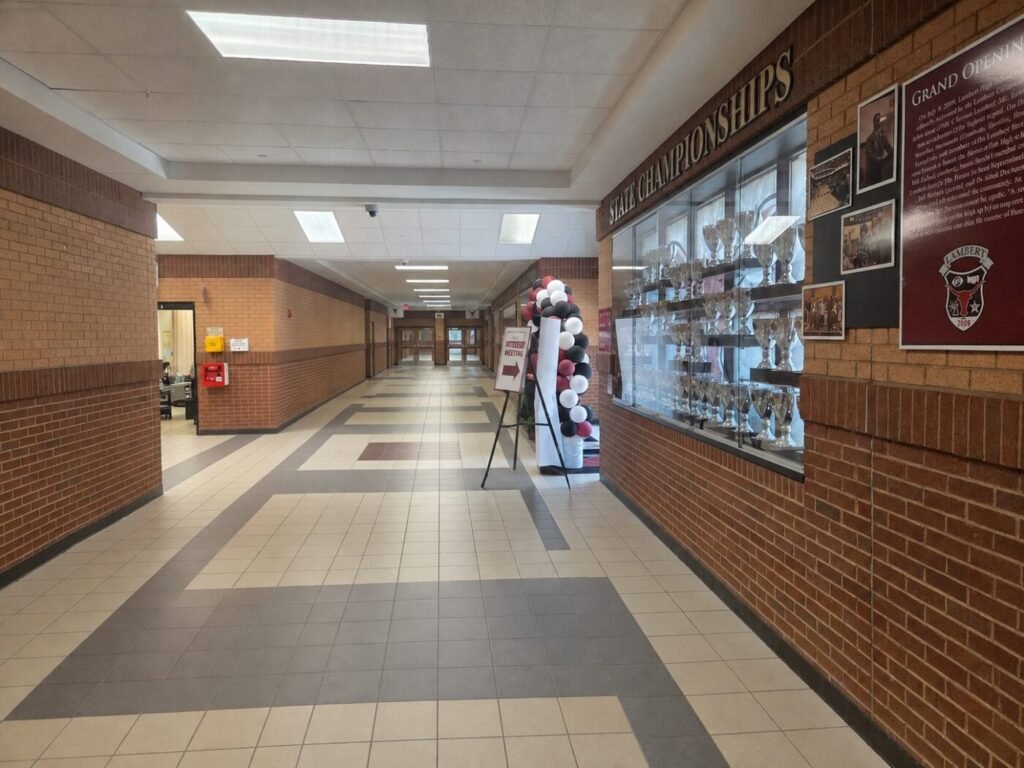
Georgia students generally need at least 23 credits, including specific coursework in English, mathematics, science and social studies. Forsyth’s current graduation requirements emphasize that both the number and type of credits count.
World-language credits offer a common example of the distinction between graduation and college preparation. They are not required for a standard Georgia diploma, but colleges may require them for admission.
Families of juniors and seniors should review the student’s graduation-status report with a counselor, confirm that required courses are scheduled and address missing credits before the final semester. A school system can post a record rate while an individual student remains one course short.
The Class of 2026 results show that on-time completion is becoming more common across Georgia. In Forsyth and Fulton, it has never been higher.
About the Author


In North Atlanta

Gwinnett Tech Leaders Say the Four-Year Degree Is No Longer the Automatic First Choice

Fulton Opens North Fulton School Closure Review; First Forum Is Oct. 7

Georgia Tied for America’s Lowest Fiction-Reading Rate. North Atlanta May Be Different

Why North Fulton Schools Are Losing Students Even as the Suburbs Keep Building

Northview High Opens to Out-of-District Students for $11,000 a Year

What North Atlanta Should Know Today. Tuesday, Aug. 11, 2026
IN NORTH ATLANTA