Fulton Voters Back School Tax Renewal, Advancing $1.3 Billion Capital Plan
Fulton County voters backed a sales tax renewal to support a $1.3 billion school capital plan covering renovations, new buses, and technology upgrades through 2032.
Major local stories and useful updates, once a week.
Fulton County voters backed the renewal of their school system’s one-cent sales tax Tuesday, keeping a major source of money in place for school renovations, classroom technology, safety improvements and new buses.
Unofficial returns showed roughly 68% in favor of the five-year renewal. The vote is not final until county certification, due Monday, Nov. 9. The county election results remain the place to track updates.
For families in Alpharetta, Johns Creek, Milton and Roswell, the result moves a long list of proposed school projects closer to reality. The work will not happen all at once, and some of the most substantial renovations are still several years away.
The renewal leaves the current sales-tax rate unchanged. Collections under the new term are scheduled to begin July 1, 2027, after the existing levy expires, and can continue for up to five years.
The countywide ballot measure authorizes up to about $2.096 billion for public school capital spending, with a maximum of $1.306 billion for Fulton County Schools and $789.5 million for Atlanta Public Schools. The latter is a separate district with its own capital program.
North Fulton campuses in line for major work
Milton High School and Webb Bridge Middle School are in the 2029 renovation wave of Fulton County Schools’ Capital Plan 2032. Northwestern Middle School follows in 2030, while Johns Creek and Roswell high schools are scheduled for 2031. New Prospect Elementary and Centennial High are in the 2032 wave.
The work at individual schools has not been fixed down to the last roof panel or classroom. Depending on each building’s condition, renovation packages may include heating and cooling systems, roofs, emergency generators, fire-alarm panels, lighting and flooring. The district will determine the final scope for each campus as the projects advance.
Athletic facilities are part of the plan as well. Competition-field turf and athletic storage improvements are scheduled at Milton and Roswell high schools in 2028, Alpharetta and Centennial in 2029 and Johns Creek in 2030. Stadium renovation work is scheduled at Chattahoochee High in 2029 and Northview High in 2031.
Middle school athletic improvements are spread across several years. Taylor Road and Webb Bridge are in the 2028 group; Autrey Mill and Hopewell are in 2029; Elkins Pointe and Ridgeview follow in 2030; and Northwestern and River Trail are scheduled for 2031.
Beyond construction
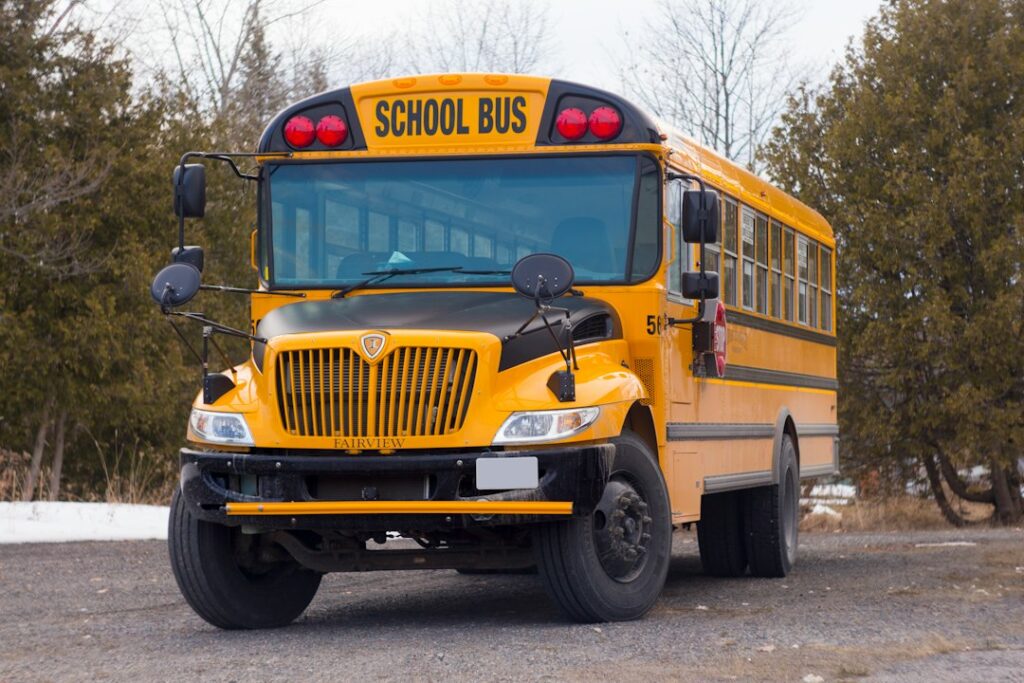
The district also intends to replace aging buses and invest in building security. Planned entrance upgrades reach North Fulton schools including Dolvin and State Bridge elementary schools, Autrey Mill and River Trail middle schools, and Alpharetta, Cambridge, Johns Creek and Milton high schools.
The five-year spending plan sets aside $300 million for technology, including replacement student and staff devices, classroom displays, network equipment and cybersecurity. It also includes a unified student identification system, known as One Card, intended to serve several school functions through a single credential.
Other allocations include $30 million for transportation and $15 million for safety and security, alongside funds for textbooks, furniture, equipment and reserves. Those are districtwide programs rather than promises of equal spending at every campus.
A North Fulton elementary school question remains
One of the largest decisions is still open. The capital plan calls for a replacement elementary school north of the Chattahoochee River, but the referendum did not select a site or determine whether any existing schools will close or merge.
The district could rebuild an elementary school on its current property, construct a replacement elsewhere or consolidate older schools. Those possibilities overlap with a separate North Fulton school-closure and attendance-boundary review, which still requires its own public process and school board decisions.
For parents, Tuesday’s vote settles the funding question, not the details of every project. The district must still establish designs, schedules and contracts, while families will have more chances to weigh in on proposals that could change where children attend school.
With the tax renewal headed toward certification, attention now turns from the ballot box to the school board: which improvements move first, how construction is managed around students and what happens to the elementary campuses facing possible reorganization.
Community Voice
A snapshot of reader views, not a scientific survey.
Explore Community Voice →About the Author

In North Atlanta
Forsyth Opens School Transfer Window; 12 Campuses Near Capacity

Gwinnett Families Have Until Thursday to Review 51 Course Standards

North Atlanta’s New School Phone Rules: What Parents Need to Know This Fall
North Fulton School Closures Could Take Effect No Earlier Than August 2028
Atlanta CASA Brings Giving Back Into Junior Achievement’s Financial Lessons
Free AI Training Opens to Fulton County Residents
IN NORTH ATLANTA