A 10,000-Worker Technician Shortage Is Hitting the Machines That Build America
A shortage of approximately 10,000 diesel technicians is affecting equipment repair across the Sun Belt, delaying construction and agricultural projects and increasing costs. Skilled labor shortages threaten to slow growth in key industries reliant on heavy machinery.
Jobs, development, business, housing and growth stories from across the Sun Belt.
America is spending hundreds of billions of dollars building factories, subdivisions, highways, warehouses and energy projects. But when the heavy equipment doing that work breaks down, finding someone to repair it is becoming increasingly difficult.
Agriculture and construction equipment dealers face an annual shortage of approximately 10,000 diesel technicians, according to a new industry workforce study released Sept. 11.
The shortage is costing equipment dealers an estimated $7 billion a year in lost service and parts revenue, nearly three times the $2.4 billion estimated when a similar study was conducted a decade ago.
The numbers point to a workforce problem that reaches well beyond repair shops.
Excavators, bulldozers, loaders, tractors and other heavy machines are essential to the construction and agricultural economies of fast-growing states across the Sun Belt. When equipment cannot be repaired quickly, the consequences can reach construction sites, farms and infrastructure projects already operating under tight schedules.
Dealers say they cannot keep up with demand
The new research comes from the AED Foundation, the workforce and education arm associated with equipment distributors.
Thinking About Moving to the Carolinas?
A short scouting trip can help you experience the neighborhoods, commutes and everyday character of a possible new home. Compare places to stay in several of the Carolinas’ fastest-growing destinations.
North Atlanta Star may earn a commission when readers book through these links, at no additional cost to the traveler.
Among dealers surveyed, 77% said the technician shortage was limiting business growth. Nearly three-quarters reported higher costs or operating inefficiencies, while 80% said they had been unable to meet customer demand because they did not have enough qualified technicians.
The findings are industry-generated, but federal labor data point in the same direction.
The U.S. Bureau of Labor Statistics projects about 20,300 openings each year through 2035 for heavy vehicle and mobile equipment service technicians as employers expand and replace workers who leave the occupation. Employment is projected to grow 7%, faster than the average for all occupations.
Diesel service technicians and mechanics represent another large part of the workforce needed to keep trucks and heavy machinery moving.
A significant part of the challenge is replacing experienced workers faster than they retire or leave the field.
These are not the mechanics of a generation ago
Heavy-equipment repair has also become more technologically demanding.
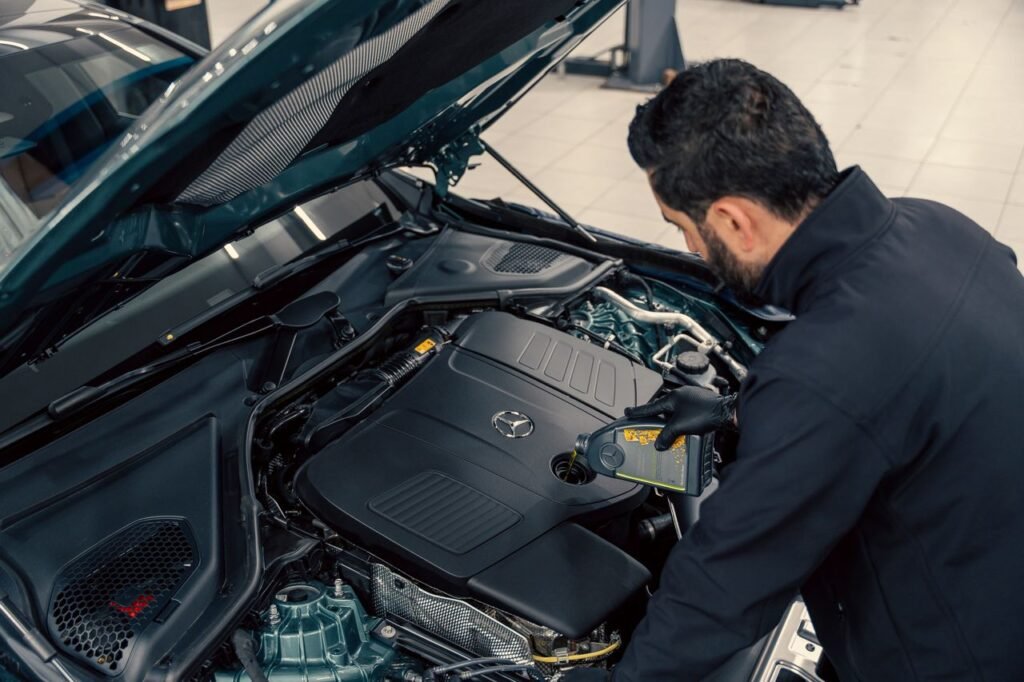
Modern construction and agricultural machines can contain sophisticated electronic controls, sensors, emissions systems, telematics and computer diagnostics alongside conventional diesel engines and hydraulic equipment.
The Bureau of Labor Statistics notes that increasingly sophisticated and computerized equipment has led some employers to prefer technicians who complete postsecondary training programs, even though a four-year college degree generally is not required.
That combination makes the occupation unusual in a labor market where many higher-paying careers are associated with bachelor’s degrees.
Nationally, mobile heavy-equipment mechanics earned a median $65,510 in May 2025, according to the Bureau of Labor Statistics. Heavy vehicle and mobile equipment service technicians as a broader group had a median wage of $63,850, while the highest-paid 10% earned more than $93,450.
What these jobs can pay across the Sun Belt
Current job postings provide a more tangible picture of what those salaries can look like in different Sun Belt communities.
In Scottsdale, Arizona, the city is advertising a fleet mechanic position paying $27.73 to $37.46 an hour, roughly $58,000 to $78,000 a year for full-time work. The position involves maintaining everything from diesel-powered heavy trucks and construction equipment to emergency vehicles and transit buses.
In Tarrant County, Texas, which includes Fort Worth, a Mechanic III opening focused on heavy off-road construction equipment pays $25.77 to $30.92 an hour, equivalent to roughly $54,000 to $64,000 annually before overtime.
A current City of Homestead, Florida, posting for a medium- and heavy-duty equipment technician lists annual pay of $69,888 to $73,382. The job includes diagnosing and repairing diesel trucks, refuse vehicles, generators and large equipment.
And in Asheville, North Carolina, the city is seeking a heavy-equipment mechanic at $26.39 an hour, or about $55,000 a year at a standard full-time schedule.
Those are individual public-sector openings rather than regional averages, and private employers may pay more or less depending on experience, certification, overtime and specialty. But they illustrate why the occupation can be a meaningful alternative for workers who want a technical career without necessarily pursuing a four-year degree.
In some shops, overtime can push total earnings higher, particularly during busy construction, planting or harvest periods.
A hidden constraint on the Sun Belt construction boom
The shortage could be particularly consequential across the South and Southwest.
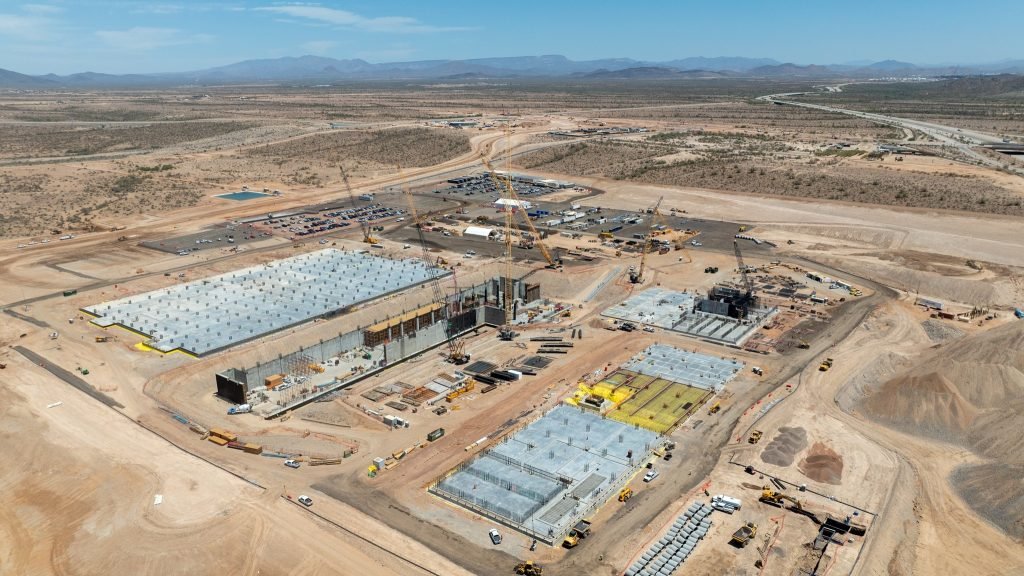
Texas, Florida, Arizona, the Carolinas, Tennessee and other growth states are simultaneously building housing, roads, factories, data centers, warehouses and utility infrastructure.
All of that development depends on machines.
A stalled excavator at a residential development or an inoperable loader on a highway project is not simply a repair problem. It can become a scheduling problem for contractors, subcontractors and developers waiting for the equipment to return to service.
Agriculture faces the same pressure, often with even less flexibility. A farmer who loses a critical machine during planting or harvest may have only a narrow window to get it repaired.
That makes technicians an easily overlooked part of the workforce supporting the broader Sun Belt economy.
The people repairing heavy machinery rarely receive the attention given to engineers designing semiconductor factories or electricians wiring data centers. Yet those projects cannot be built without functioning equipment.
The pipeline starts long before the repair shop
The industry’s challenge now is attracting enough younger workers into technical programs and keeping them in the field.
That places additional pressure on community colleges, trade schools and high-school career programs to introduce students to occupations they may never have considered.
It also raises a larger question about how Americans think about skilled work.
The country has spent years debating whether every student needs a four-year college degree. At the same time, employers in transportation, construction, manufacturing and equipment maintenance continue searching for workers who can perform increasingly technical jobs that often require specialized training rather than traditional university credentials.
Federal data show the larger installation, maintenance and repair sector is expected to produce hundreds of thousands of openings each year through 2035. Median pay across those occupations was above the median for all U.S. jobs in 2025.
The equipment technician shortage is one piece of that much larger labor-market shift.
America may have the money to build new roads, factories, homes and data centers.
Increasingly, the question is whether it has enough people who know how to keep the machines building them running.
If you’ve been following growth and change around here, these stories are worth a look too.
About the Author

Notice an update, correction, or detail we should include? Tell the editor. Seen something new around you? Send us a local tip.