NASA and IBM Launch Open AI Model to Search the Moon for Ice, Craters and Hidden Features
NASA and IBM introduced an AI model that examines the Moon’s surface to identify craters, volcanic features, and ice deposits. This open-source tool accelerates lunar research and supports future exploration efforts by analyzing millions of images.
Jobs, development, business, housing and growth stories from across the Sun Belt.
NASA and IBM have released a new artificial-intelligence model designed specifically to study the Moon, giving researchers a faster way to search enormous amounts of lunar imagery for craters, unusual volcanic features and possible deposits of ice near the poles.
The NASA-IBM Lunar Foundation Model was trained primarily on data collected by NASA’s Lunar Reconnaissance Orbiter, which has spent 17 years mapping the Moon in extraordinary detail. NASA says the model is among the first open-source AI systems built specifically for lunar science.
Unlike a conventional AI tool built for one narrow task, the new model can be adapted for different kinds of lunar research with relatively small amounts of additional labeled data.
Researchers can use it to identify craters, search for unusual volcanic structures and estimate where ice may be stable on or beneath the lunar surface.
The model and its code are publicly available, allowing scientists outside NASA and IBM to build on the system rather than starting from scratch.
Nearly 2 million pieces of the Moon went into the model
The scale of the training data is one of the most striking parts of the project.
Thinking About Moving to the Carolinas?
A short scouting trip can help you experience the neighborhoods, commutes and everyday character of a possible new home. Compare places to stay in several of the Carolinas’ fastest-growing destinations.
North Atlanta Star may earn a commission when readers book through these links, at no additional cost to the traveler.
NASA says the model was trained on roughly 2 million image tiles, including more than 1 million high-resolution Lunar Reconnaissance Orbiter images showing the surface at approximately 1-meter resolution.
It also used nearly 964,000 multispectral images at about 100-meter resolution.
Additional information came from NASA’s GRAIL and Lunar Prospector missions and Japan’s SELENE lunar mission.
The Lunar Reconnaissance Orbiter dataset is particularly valuable because it covers most of the Moon’s surface and is larger than the data produced by all other NASA planetary missions combined.
That creates exactly the kind of problem AI is increasingly being asked to solve: scientists possess an enormous amount of information, but examining every image manually is impractical.
Ice may be one of the most important targets
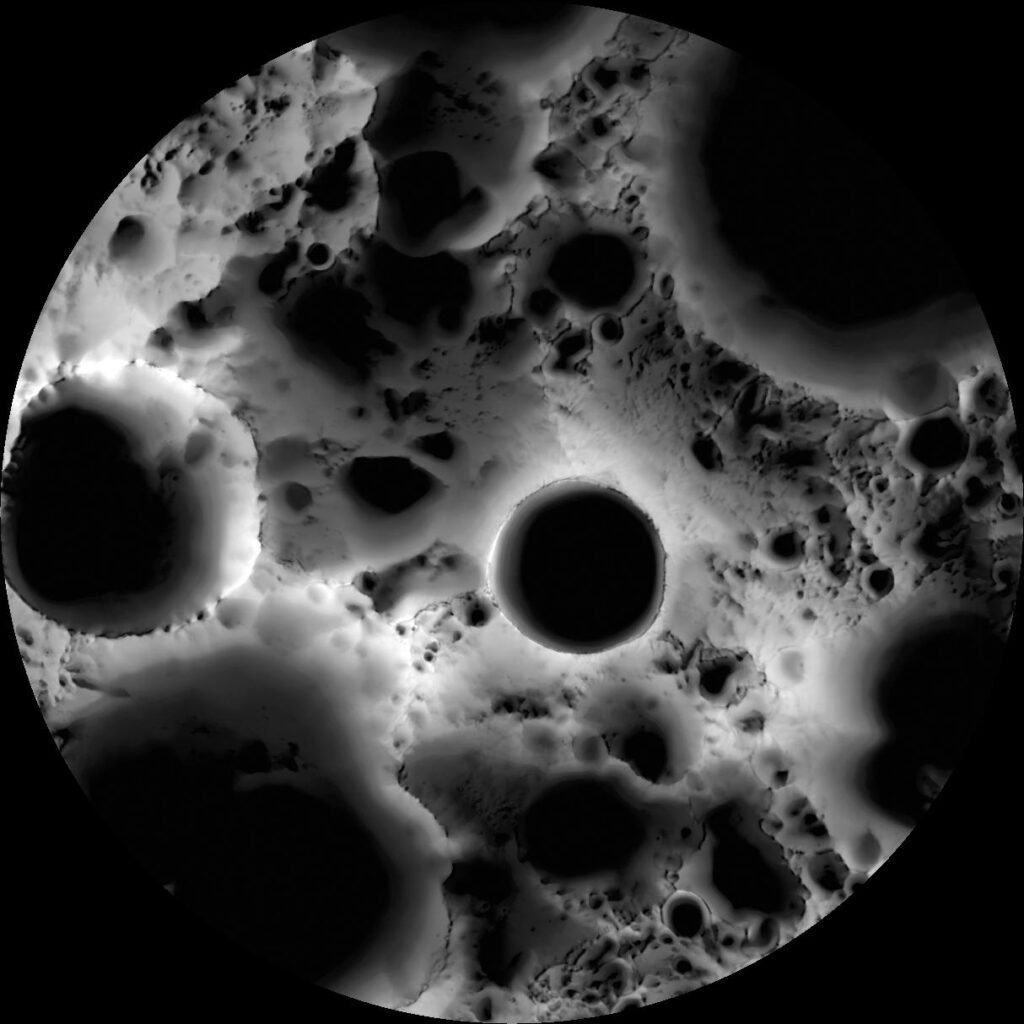
One of the model’s most significant jobs is helping scientists estimate where water ice could remain stable near the lunar poles.
Some permanently shadowed regions near the poles are so cold that ice could survive for billions of years.
Finding and mapping those deposits matters for more than scientific curiosity.
Water could eventually support astronauts living and working on the Moon. It could potentially be used for drinking, producing oxygen or, after being separated into hydrogen and oxygen, making propellant.
NASA is increasingly focused on the Moon’s south polar region as it develops plans for longer-term lunar exploration and future surface infrastructure. Earlier this month, the agency also requested proposals for technologies including oxygen production, power generation and construction systems for a future Moon base.
That makes better maps of possible ice deposits especially valuable. In NASA’s evaluations, the new AI model showed its clearest advantage over competing systems when estimating the stability of polar ice.
AI can also count craters much faster
Craters are among the Moon’s most familiar features, but they also function as a scientific record.
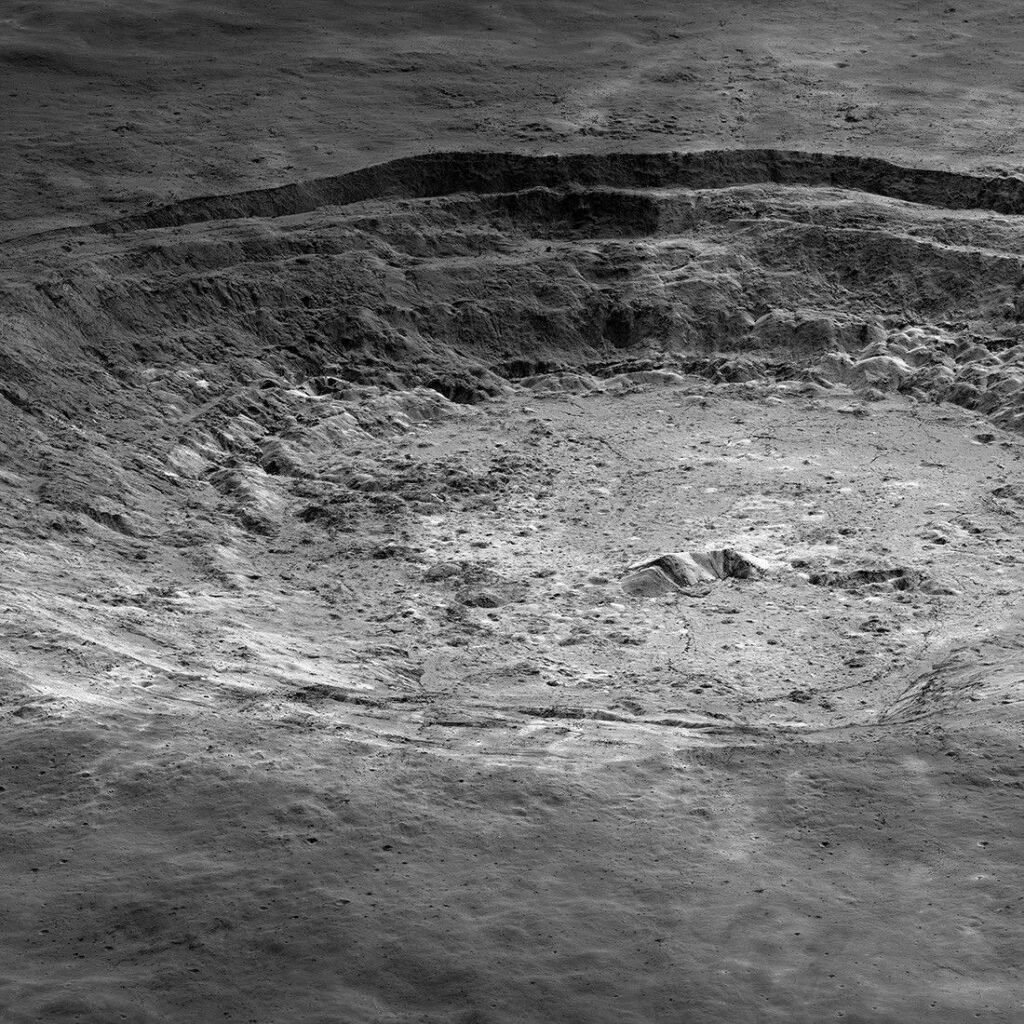
Because each crater was created by an impact, scientists can use their number, size and distribution to estimate the age of different areas of the lunar surface and reconstruct parts of the solar system’s history.
Traditionally, identifying and measuring large numbers of craters can require extensive manual work or specialized software.
The NASA-IBM model can accelerate that process. Researchers also tested it on images taken before and after a recent rocket-body impact near the Einstein crater. The model was able to identify existing craters and highlight the newly formed impact site even though the post-impact image had not been part of its original training data.
That suggests similar systems could eventually help scientists automatically detect changes across enormous collections of lunar images.
It is also looking for signs of the Moon’s volcanic past
The Moon no longer has active erupting volcanoes, but it was once geologically much more dynamic.
Researchers are particularly interested in features called irregular mare patches, which appear surprisingly young compared with much of the surrounding lunar terrain.
Finding and mapping more of them could help scientists better understand when volcanic activity ended and how the Moon cooled over time.
NASA says the new AI model performed at least as well as several established systems in identifying those features while requiring less work to adapt it to new tasks. (NASA Science)
Huntsville helped build it
The project also has a strong Sun Belt connection.

NASA’s Impact AI team at Marshall Space Flight Center in Huntsville, Alabama, worked with scientists at NASA headquarters, Goddard Space Flight Center in Maryland and Ames Research Center in California to develop the lunar model.
Researchers from several universities and scientific organizations also contributed.
Marshall has long been central to America’s space program, particularly in propulsion and lunar exploration. Its involvement in the project shows how that role is expanding into artificial intelligence and scientific data analysis.
NASA is building a family of scientific AI systems
The lunar model is not an isolated experiment. NASA and IBM have already developed foundation models for Earth observation and solar science.
The Prithvi family of models can help analyze satellite imagery for tasks such as flooding, crops and disaster monitoring. Another system, called Surya, uses solar observations to study and predict activity that can affect satellites, communications and power grids.
The strategy is straightforward: NASA already owns decades of exceptionally valuable scientific observations. AI may make it possible to extract discoveries from those archives much faster.
The Moon is now one of the clearest examples.
NASA has made the new lunar model, training datasets and supporting code openly available to researchers worldwide. That means the next unusual crater, volcanic formation or promising patch of lunar ice may not be found by an astronaut looking out a window.
It may first be noticed by an algorithm examining millions of images from Earth.
If you’ve been following growth and change around here, these stories are worth a look too.
About the Author

Notice an update, correction, or detail we should include? Tell the editor. Seen something new around you? Send us a local tip.