 Exclusive sponsor
The Georgia Coast North Atlanta Families Love Is Also a Nursery for One of Earth’s Rarest Whales
The Georgia coast supports a rare whale species each winter, with 23 North Atlantic right whale calves documented this season. This strong calving year signals cautious hope for their recovery.
Major local stories and useful updates, once a week.
Many families across Johns Creek, Alpharetta, Milton and South Forsyth know the Georgia coast as a place of marsh sunsets, seafood restaurants, golf weekends and summer rentals.
But each winter, the same waters off Jekyll Island, St. Simons Island and the broader Southeast coastline become one of the most important wildlife nurseries in North America.
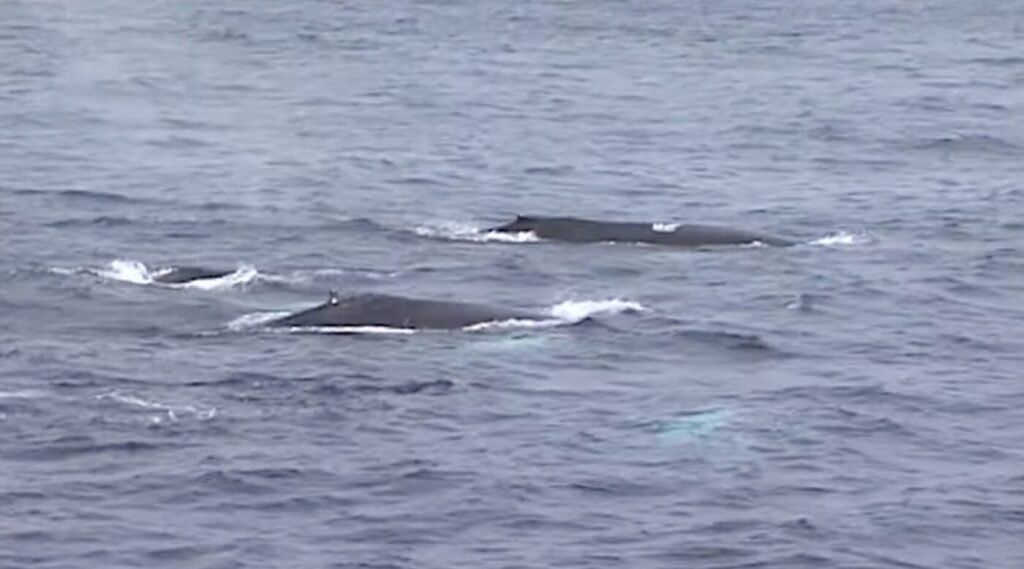
North Atlantic right whales — among the rarest whales on Earth — travel thousands of miles south each year to give birth in the warmer coastal waters off Georgia, Florida and the Carolinas. Scientists estimate only about 380 of the whales remain alive today.
This year brought a rare piece of encouraging news.
Researchers documented 23 right whale calves during the most recent calving season, which runs roughly from November through April. According to marine researchers, it was the strongest calving season recorded since 2009 and one of the best reproductive years in more than 15 years.
For a species that recently endured multiple years of unusually high deaths and near-zero birth seasons, the number matters enormously.
The whales’ decline has become one of the defining environmental stories along the Eastern Seaboard. Since 2017, scientists have tracked what federal officials classify as an “unusual mortality event,” with whales dying from ship strikes, fishing gear entanglements and changing ocean conditions linked to warming waters.
In some recent years, female whales were waiting nearly a decade between calves instead of the normal three- to four-year reproductive cycle researchers historically expected. Scientists increasingly interpreted that delay as a sign the whales were struggling to find enough food in the rapidly changing North Atlantic ecosystem.
This season showed signs of improvement beyond simply the number of calves born.
Researchers observed several first-time mothers, including two whales estimated to be just 10 years old — roughly the youngest age at which female right whales typically begin reproducing. Scientists also noted healthier intervals between pregnancies, suggesting at least some whales may be adapting to changing feeding grounds farther north.
Still, marine experts remain careful not to overstate the recovery.
A quarter of the calves born during the 2023–2024 season later died. Adult whales continue to face threats during migration along one of the busiest boating corridors in the country. Federal fishing-rule debates aimed at reducing entanglements remain politically contentious, with some proposed protections delayed until at least 2028.
For now, scientists say the strong calving season offers something they have struggled to find in recent years: cautious optimism.
But with fewer than 400 whales remaining, researchers also warn that the species still lives dangerously close to the edge.
Community Voice
A snapshot of reader views, not a scientific survey.
Explore Community Voice →About the Author


In North Atlanta

Brookhaven Approves $750,000 Land Purchase to Expand Lynwood Park
Why North Atlanta Suburbs Have So Many Deer

Thousands of Fish Found Dead Along Chattahoochee River Stretch West of Atlanta

Peachtree Corners Moves From Deer Study to Controlled Removal

Why You’re Suddenly Seeing So Many Rabbits Across North Atlanta
Milton Is Reconsidering How Every Home’s Trash Gets Collected
IN NORTH ATLANTA