 Exclusive sponsor
Why North Atlanta Suburbs Have So Many Deer
Major local stories and useful updates, once a week.
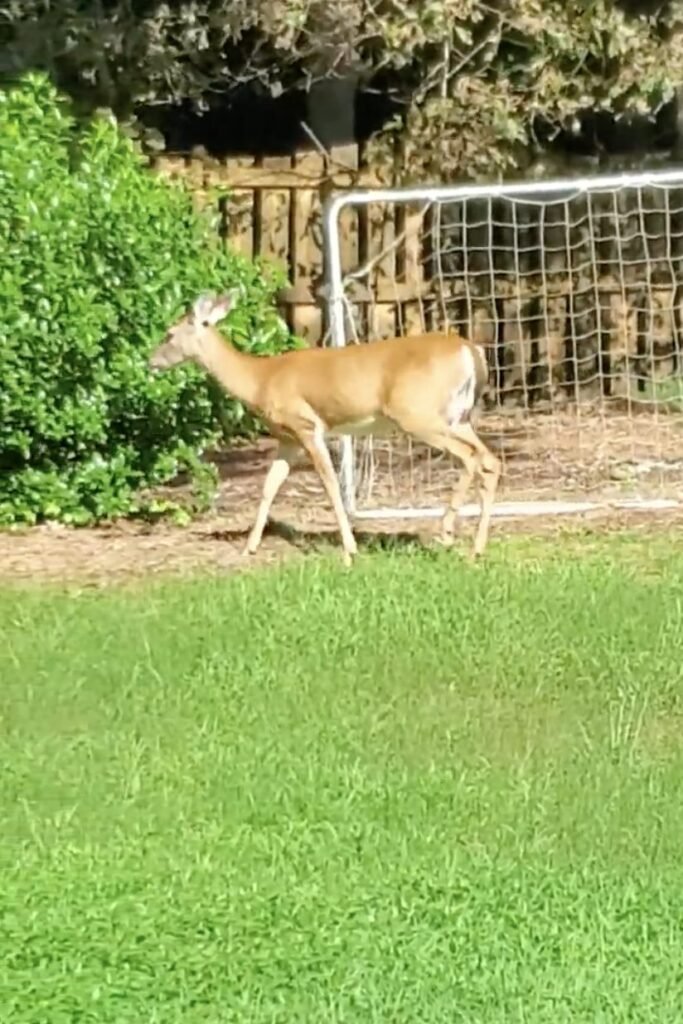
From time to time in neighborhoods across Johns Creek, Alpharetta, Milton, Cumming, Duluth, and Suwanee, white-tailed deer appear quietly at the edges of suburban life—crossing residential streets, moving through wooded buffers, or grazing near ponds at dusk.
The large number of deer in North Atlanta’s suburbs is not accidental. It reflects a mix of geography, suburban development patterns, and ecological conditions that together create an unusually favorable environment for deer.
A Landscape of Forest Edges
North Fulton and South Forsyth were historically covered with dense forests and farmland. As the area developed over the past several decades, large tracts of forest were divided into neighborhoods rather than cleared entirely.
The result is what ecologists call “edge habitat.”
Deer thrive where forests meet open land. Suburban communities provide exactly that pattern:
wooded buffers, greenways, golf courses, parks, retention ponds, and landscaped yards. These patchwork environments offer shelter, open feeding areas, and easy movement between them.
Neighborhoods in Milton, southern Cumming, and parts of Johns Creek are especially rich in these mixed environments.
Suburban Landscaping Is Perfect Deer Food
Modern suburban landscaping unintentionally creates a buffet for deer. Popular plants used across North Atlanta neighborhoods—such as hostas, azaleas, hydrangeas, and ornamental shrubs—are highly attractive to deer. Vegetable gardens and fruit trees also provide seasonal food sources.
Because neighborhoods often have dozens or hundreds of yards filled with similar plantings, deer can move from property to property feeding continuously.
Even HOA common areas, walking trails, and landscaped entrances add to the available vegetation.
Good to know: Deer are most active during dawn and dusk
Deer are most active during dawn and dusk, which is why many sightings in North Atlanta neighborhoods happen early in the morning or in the evening. Movement also increases during the fall mating season, typically from October through early December.
Few Natural Predators
Historically, the forests of North Georgia were home to large predators, including wolves and eastern mountain lions (also called cougars or panthers). These animals helped maintain balance in the natural ecosystem. As European settlement expanded during the 1700s and 1800s, forests were cleared for farms and towns, and predators were widely hunted to protect livestock. Over time their populations disappeared from the region. Historical records indicate that the last confirmed mountain lions in Georgia were reported in the early 1900s.
Today, adult deer in suburban areas face very few natural threats. Occasional coyotes are present across North Fulton and Forsyth County, but they primarily prey on small animals and rarely affect adult deer populations.
Without significant predation, deer populations tend to grow until limited mainly by food availability or disease.
Protected Green Corridors
North Atlanta suburbs contain an expanding network of green corridors that allow wildlife to move safely between areas.
Examples include:
- Chattahoochee River greenways
- Big Creek Greenway
- wooded buffers along streams and creeks
- undeveloped land along utility corridors
These corridors create quiet movement routes for deer across otherwise developed areas. A deer feeding in a Johns Creek neighborhood may easily move toward wooded sections of the Chattahoochee corridor or nearby parkland.
Mild Winters Help Populations Grow
Georgia’s climate also favors deer survival. Winters are relatively mild compared with northern states, meaning fewer deer die from harsh conditions or lack of food.
Fawns born in spring often have high survival rates, contributing to steady population growth in suburban areas.
When Deer Become a Neighborhood Issue
While many residents enjoy seeing deer, larger populations can create challenges, including damaged landscaping and gardens and, more seriously, vehicle collisions, particularly at dusk and dawn.
Local governments typically manage deer populations primarily through regulated hunting seasons in surrounding rural areas rather than suburban removal programs.
Helpful Tools for Deer-Heavy Yards
• Motion-activated sprinkler deterrent
• Solar garden lights
• Garden netting
Good to know: Feeding deer is discouraged
Wildlife experts generally discourage feeding deer in suburban neighborhoods. Providing food can cause animals to lose their natural caution around people, concentrate larger groups in one area, and increase the risk of disease transmission.
Feeding can also lead to more vehicle collisions as deer begin to gather near homes and roadways where food is available. In most cases, the best approach is to allow deer to remain wild and avoid direct feeding.
Best Deer-Resistant Plants for North Atlanta Yards
While no plant is completely “deer-proof,” some varieties are significantly less attractive to deer and tend to survive better in neighborhoods where deer regularly pass through.
Several plants that often perform well in North Atlanta landscapes include boxwood, rosemary, lavender, Russian sage, daffodils, salvia, yarrow, and many varieties of ferns.
These plants typically have strong fragrances, fuzzy leaves, or bitter flavors that deer tend to avoid. Many local landscapers recommend mixing these varieties with other plantings to reduce browsing damage in suburban gardens.
Over time, these planting strategies can make yards far less attractive feeding areas while still maintaining a full and attractive landscape.
At the same time, some homeowners enjoy seeing deer regularly and do not mind occasional browsing. For those who prefer to support backyard wildlife habitat, many common plants naturally attract deer. White-tailed deer are especially drawn to tender garden plants, fruit trees, and vegetable patches. Hostas, hydrangeas, azaleas, daylilies, roses, and young fruit trees are among the plants deer frequently browse in North Atlanta neighborhoods.
Natural food sources can also attract deer into yards, including acorns from oak trees, fallen fruit, clover in lawns, and garden vegetables such as beans or lettuce. In wooded parts of Milton, southern Cumming, and areas near the Chattahoochee River corridor, these food sources can make residential yards part of the broader habitat deer use as they move between forests and neighborhoods.
A Permanent Part of the Suburban Landscape
For now, deer are likely to remain a visible part of daily life across North Atlanta suburbs. The combination of forest edges, abundant landscaping, green corridors, and mild climate makes neighborhoods in Johns Creek, Alpharetta, Milton, Duluth, Suwanee, and southern Forsyth County some of the most comfortable habitats deer could find.
In many ways, the animals are simply adapting to the same landscape that attracted so many residents to the area in the first place.
Seen deer in your neighborhood?
If you’ve had an interesting encounter or captured a photo, share it on Instagram and tag @northatlantastar.
Selected photos from local readers may be featured in future North Atlanta Star coverage.
Community Voice
A snapshot of reader views, not a scientific survey.
Explore Community Voice →About the Author


In North Atlanta

Weekend Events (April 3–5, 2026). From the Hop-A-Long Egg Hunt and Tribute Concerts to Spring Markets and Theatrical Whodunits
Quiet Winter Walks in North Atlanta. Where to Slow Down When the Trees Are Bare
A Development Was Approved Near Your Home. What Happens Next?
Georgia’s Turtle Season Is Underway, From Sawnee Mountain to the Barrier Islands
Milton Is Reconsidering How Every Home’s Trash Gets Collected

The Georgia Coast North Atlanta Families Love Is Also a Nursery for One of Earth’s Rarest Whales
IN NORTH ATLANTA