 Exclusive sponsor
Best Areas for Rental Property Investment in North Atlanta 2026 Analysis
Major local stories and useful updates, once a week.
North Atlanta’s 2026 rental-investment story is fundamentally about stability with selective, corridor-driven upside. Home values in much of North Fulton and South Forsyth have shifted into a slower-growth (and in some submarkets, modestly down) environment year-over-year, while asking rents remain comparatively elevated and generally steady—creating a landscape where entry price, HOA rules, and corridor selection matter more than broad “city averages.”
Across the authority ring, relative “rent-to-value” signals tend to look most favorable in West Gwinnett (especially Duluth) and parts of South Forsyth/Cumming, where home values are lower than North Fulton’s core while rents remain competitive. Meanwhile, “blue-chip school-zone” areas (Johns Creek, Milton, parts of Alpharetta/Roswell) are more often low-yield / high-stability profiles because entry prices are high relative to achievable rents.
The highest-probability “outperformer” locations in 2026 are not whole cities—they are nodes and corridors: especially the Johns Creek Town Center footprint (Medley + surrounding civic investment), Downtown Alpharetta/Civic Center/Avalon-adjacent areas, the Duluth Town Green/downtown ecosystem, Suwanee’s Town Center orbit, Roswell’s Canton Street/Southern Post area, and South Forsyth’s Halcyon/Vickery/Windermere submarket triangle.
In 2026, the most consistent local “risk stack” for small-scale landlords is (1) insurance premium pressure, (2) property tax reassessment volatility and notice/appeal timing, (3) HOA leasing caps and rule changes, and (4) apartment supply competition in a handful of nodes—especially where large multifamily deliveries cluster near the same amenities a single-family rental is trying to monetize.
City-by-City Breakdown
The table below is designed to keep comparisons “realistic but not over-precise.” Zillow’s city-level metrics reflect ZHVI (home values) and ZORI / Zillow Rentals (asking rents) rather than negotiated contract outcomes; they are best used as directional signals for relative pricing and rent strength across this specific North Atlanta ring.
| City | Typical home value signal (ZHVI) | Recent 1-yr change (home value) | Asking rent signal (Zillow) | Recent 1-yr change (rent) | Rough “rent-to-value” signal* | Investment type (2026) |
|---|---|---|---|---|---|---|
| Johns Creek | ~$684k (data through Jan 31, 2026) | ~+1.4% | ~$2,430/mo (Jan 31, 2026) | ~+3.5% | ~4.3% | Stable hold (amenity-driven) |
| Alpharetta | ~$709k | ~-0.1% | ~$2,591/mo (all beds/all types; Feb 16, 2026) | ~flat (-$5 YoY) | ~4.4% | Stability + corridor appreciation |
| Roswell | ~$639k | ~+0.8% | ~$2,650/mo (Feb 16, 2026) | ~+$55 YoY | ~5.0% | Amenity + redevelopment play |
| Milton | ~$918k | ~+1.8% | ~$2,800/mo (Feb 16, 2026) | ~+$100 YoY | ~3.7% | Low-yield, high-stability hold |
| Duluth | ~$441k | ~-2.4% | ~$2,200/mo (city-level; Feb 2026 page) | ~-$50 YoY | ~6.0% | Rental yield play + selective growth |
| Suwanee | ~$595k | ~-2.0% | ~$2,700/mo (Feb 16, 2026) | ~+$50 YoY | ~5.4% | Balanced (family demand + Town Center) |
| Cumming | ~$590k | ~-2.1% | ~$2,500/mo (Feb 2026 page) and ~$2,195/mo (ZORI Jan 31, 2026) | ~near-flat to slightly up (depending on series) | ~5.1% (using $2,500) | School-driven demand + mixed-use nodes |
*“Rent-to-value signal” is a coarse ratio of (12 × reported average rent) ÷ (reported average home value). It does not include expenses, vacancy, repairs, HOA fees, insurance, property taxes, or leasing friction and should be treated as a directional comparison only.
Table sources: city-level Zillow home value pages for ZHVI/ZORI timing and direction, and Zillow Rental Manager “market trends” pages for city rent snapshots when used.
City-specific assessment
Johns Creek (center of gravity)
Johns Creek is a high-stability rental hold market where the “win” in 2026 is usually tenant quality / lease renewals / long-term desirability, not high initial yield. Home values (ZHVI signal) are ~mid-$600Ks with mild year-over-year gain, and asking rents show modest year-over-year growth—consistent with a mature, premium suburban submarket.
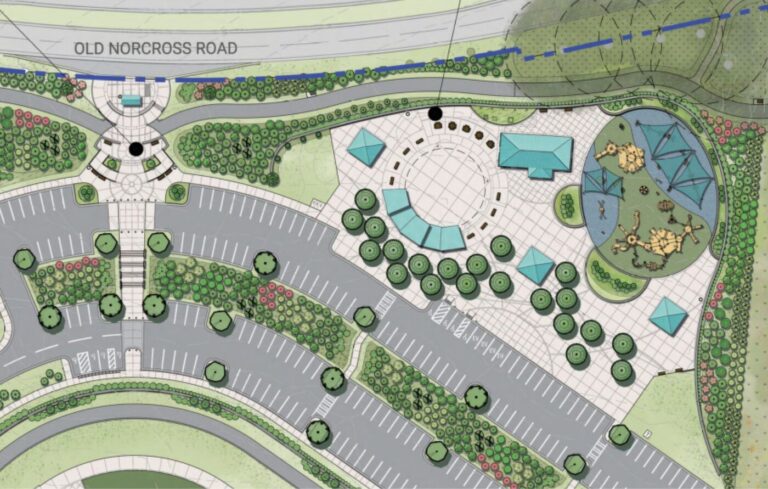
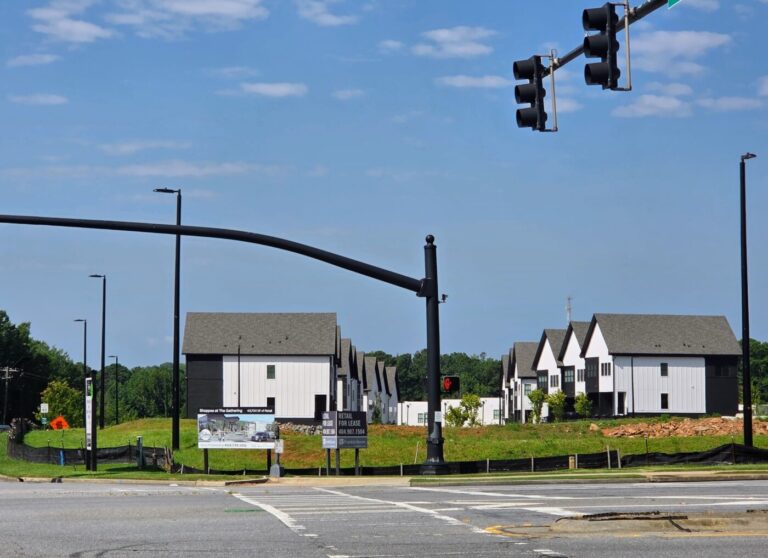
The primary local thesis is town-center formation: the City’s documented Johns Creek Town Center effort focuses on turning a large legacy office park footprint into a walkable mixed-use district at the junction of Johns Creek Parkway, McGinnis Ferry Road, and Medlock Bridge Road, anchored by projects such as Medley (with substantial planned retail, office, hotel, multifamily, and townhome components). This can lift “rental stickiness” for nearby homes, but it also introduces direct competition from new multifamily supply in the same node.
- Demand drivers: town-center investment + established suburban desirability.
- What tends to work: well-located single-family rentals and townhomes within short drives of Town Center nodes.
- Watch-outs: new multifamily deliveries in the Town Center plan area can pressure rents for “similar lifestyle” product (townhome-style rentals especially).
Alpharetta
Alpharetta remains one of the region’s key employment and amenity magnets, with widely recognized corporate presence in tech/fintech-adjacent sectors and large employers cited locally (e.g., ADP, Morgan Stanley, Equifax, and others listed in Alpharetta-focused employer summaries). These employment anchors tend to support managerial/professional rental demand, particularly for townhomes and “executive” single-family rentals near the GA‑400 spine.
From a built-environment standpoint, Alpharetta’s central investment story is walkable mixed-use intensity: City documentation ties Downtown planning to Alpharetta City Center and corridor streetscape/parking changes intended to strengthen downtown’s function as a destination—relevant because proximity to durable amenity nodes is one of the few levers that can outperform broad suburban averages.
- Demand drivers: employment concentration + destination nodes (Downtown/Avalon/North Point area planning).
- Expected profile: lower cap-rate feel than West Gwinnett; stronger “tenant quality / resale liquidity” characteristics.
- Watch-outs: premium pricing makes HOA leasing rules and insurance/tax cost drift more consequential to net outcomes.
Roswell
Roswell is best understood as an amenity + redevelopment market in 2026: its strongest rental micro-areas are the ones that can monetize proximity to its historic/downtown fabric and new mixed-use infill. A key example is Southern Post, described by local destination/visitor sources as a major mixed-use redevelopment with offices, retail, apartments, and townhomes near Canton Street—exactly the kind of “walkability proxy” that tends to boost renter willingness-to-pay in established suburbs.
Roswell also has additional forward pipeline in/near civic gateways (e.g., Hill Street mixed-use approvals reported in local business-development coverage), which reinforces the idea that specific nodes matter more than Roswell-wide averages.
- Demand drivers: downtown-adjacent lifestyle + redevelopment-infill.
- What tends to work: townhomes/compact single-family close enough to benefit from “Canton Street/Southern Post” gravity without paying the very highest entry prices.
- Watch-outs: older neighborhoods can carry higher maintenance variability; insurance inflation can be more painful when older roofs/systems are involved.
Milton
Milton reads as low-yield, high-stability: Zillow’s home value signal is the highest in the ring (roughly high-$800Ks/low-$900Ks) while average rents, although strong in absolute dollars, typically do not keep pace with entry price.
In practice, Milton’s investable rental niche is often executive rentals—larger homes, longer leases, and tenants prioritizing space and schools over walkability. That profile can reduce turnover but increases exposure to (a) repair/replacement capex and (b) insurance premiums as replacement costs rise statewide.
- Demand drivers: premium suburban positioning; often “space-first” renters.
- Best fit: long-hold owners prioritizing stability and resale liquidity over yield.
- Watch-outs: cost stack (insurance + taxes + maintenance) can compress real returns even when rent is high.
Duluth
Within West Gwinnett, Duluth offers one of the clearest 2026 cases for a rental-yield-forward profile: lower entry pricing (home value signal ~low-$400Ks) coupled with rents that remain competitive across the ring.
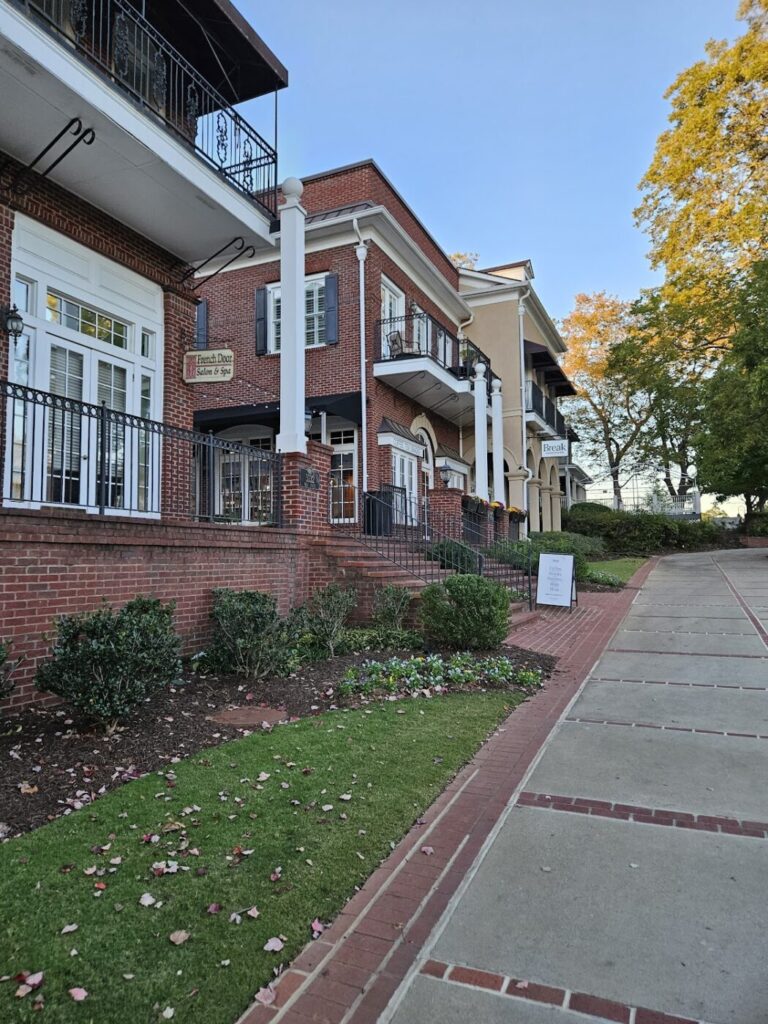
What makes Duluth especially “investable” in corridor terms is the Downtown/Town Green nucleus: Georgia tourism and local destination sources emphasize the Town Green as a year-round event and gathering anchor, supporting the idea that rentals within short drives of downtown Duluth can command more durable demand than generic suburban product.
A second Duluth advantage for 2026 is relative new-apartment competition risk: metro multifamily forecasts have specifically called out Duluth as having a more limited construction slate versus many other suburban areas, which—if accurate—can reduce direct apartment supply pressure near Duluth’s renter base.
- Demand drivers: Town Green/downtown events + comparatively attractive price-to-rent relationship.
- What tends to work: townhomes and single-family homes near downtown and along key connectors toward Johns Creek/Suwanee.
- Watch-outs: zoning/HOA variance is wide; diligence on leasing rules remains essential.
Suwanee
Suwanee often sits in the balanced middle of this ring: closer to Johns Creek’s stability than Duluth’s yield, but with enough amenity concentration to support both renters and resale liquidity. Zillow indicates home values modestly down year-over-year while rents are broadly steady to slightly up on the Zillow Rentals snapshot, suggesting a “reset” period where investors benefit most from micro-location selection.
Suwanee’s corridor advantage is its Town Center ecosystem and civic planning continuity: the City maintains an official Town Center Master Plan framework and long-range strategic planning reference points, which tends to point toward deliberate, place-based reinvestment.
- Demand drivers: town-center proximity + regional access between Johns Creek, Duluth, and South Forsyth.
- What tends to work: 3-bedroom townhomes and “right-sized” single-family homes near Town Center and commuter corridors.
- Watch-outs: HOA leasing caps can materially limit investor inventory in certain subdivisions.
South Forsyth / Cumming (south of Exit 13 focus)
South Forsyth/Cumming’s investment logic in 2026 is school-driven family demand + mixed-use lifestyle nodes. Forsyth County Schools documents long-run enrollment growth and ongoing school footprint scale—useful context because sustained family inflow is one of the more durable demand engines for single-family rentals.
The south-of-Exit‑13 lens is particularly about a node triangle: (1) the Exit 12/“Halcyon area,” (2) Post Road/Vickery, and (3) the Windermere Parkway/Peachtree Parkway area near Exit 13. Halcyon and Vickery are both described in Georgia tourism sources as mixed-use destinations with retail/dining and residential components, supporting the notion that nearby rentals can benefit from amenity gravity (even when walkability is imperfect).
Windermere specifically presents a classic South Forsyth reality: high-amenity, master-planned environments can be exceptionally attractive to long-term tenants, but they are also the places where HOA governance and covenants can be most consequential. The presence of dedicated HOA infrastructure and covenant/rules resources is explicit on Windermere community channels, reinforcing the need for rule diligence for investors targeting that submarket.
- Demand drivers: long-run population/family growth signals and a large school district footprint.
- What tends to work: townhomes and single-family rentals near established mixed-use nodes (Halcyon, Vickery) and within strong commuter access to GA‑400.
- Watch-outs: HOA leasing caps + property tax/insurance cost pressure can be the difference between a “fine” rental and a disappointing one.
Corridor-Level Highlights
McGinnis Ferry corridor (Johns Creek–Suwanee–South Forsyth edge)
The McGinnis Ferry corridor earns “outperformer” status primarily because it intersects multiple demand engines: Johns Creek’s Town Center redevelopment footprint explicitly sits along McGinnis Ferry Road and Johns Creek Parkway, and the Medley project is positioned at that intersection with a large planned mix of retail, office, hotel keys, and housing units. In practical rental terms, the corridor’s advantage is optionality—tenants can access Johns Creek amenities, Suwanee connectivity, and South Forsyth nodes without committing to the highest-priced blocks of Alpharetta or Milton.
Johns Creek Parkway nodes (Town Center + civic park anchoring)
The Johns Creek Parkway spine matters because it is a direct address for the city’s “create a real center” strategy: the City’s own redevelopment materials describe a 192‑acre transformation intended to become a walkable town center, and the Medley project’s published program implies a meaningful new concentration of residences and services. In 2026, this is best treated as a stability-plus corridor: likely to raise long-term desirability for nearby rentals, but also likely to increase local rental competition via new multifamily deliveries.
Medlock Bridge Road at State Bridge Road (Johns Creek gateway)
Johns Creek’s Community Development materials call out a revitalization focus at the Medlock Bridge Road and State Bridge Road intersection, framing it as a gateway with land use and streetscape intent. For rental property, corridor plans like this generally matter less for short-term rent spikes and more for reducing future downside by improving the area’s long-term “everyday convenience.”
Downtown Alpharetta and the City Center / Avalon orbit
Downtown Alpharetta is one of the clearest examples in North Atlanta of a suburb deliberately engineering destination density over time. The City’s Downtown Master Plan materials explicitly link public actions (streetscapes, parking, civic components) to the creation and reinforcement of Alpharetta City Center. Separate, well-documented mixed-use projects in the same market (e.g., Avalon’s mix of retail, office, hospitality, and residences described in ULI case study materials) reinforce the corridor logic: amenity gravity drives rent resilience, even when overall suburban rent growth is modest.
Suwanee Town Center proximity
Suwanee’s Town Center approach is best viewed as planned-place continuity: the City maintains a Town Center Master Plan framework and broader strategic planning, and supporting planning/implementation narratives describe public realm investment (streetscape, roadway improvements) as the mechanism for long-run downtown strength. For investors, the practical takeaway is that rentals closest to that civic core tend to have more durable demand than subdivisions where the only differentiator is square footage.
Downtown Duluth and Town Green ecosystem
Downtown Duluth’s Town Green is a proven events-and-public-space anchor highlighted by Georgia tourism channels, and local destination marketing reinforces downtown identity as the city’s “heart.” In corridor terms, that translates into stronger prospects for townhomes/condos and smaller single-family rentals within short drives—especially when compared with similarly priced homes farther from “weekend life” amenities.
Roswell Canton Street / Southern Post redevelopment zone
Southern Post is one of the more tangible, documented mixed-use redevelopment examples in this ring, described as a major investment (including office, retail, apartments, and townhomes) near Canton Street. For single-family investors, the corridor significance is that renters pay for “place,” not just bedrooms—and Roswell’s downtown-adjacent redevelopment expands the pool of renters who want walkability-adjacent living (even if they ultimately choose a nearby single-family neighborhood).
South Forsyth nodes near Exit 12–13: Halcyon, Vickery, Windermere Parkway
This submarket’s corridor strength is “suburban mixed-use clustering”: Halcyon is described as a large mixed-use gathering place in Forsyth County with retail, restaurants, offices, hotel rooms, and residences, and Vickery Village is described as a substantial retail/restaurant/office environment in Cumming. These nodes can support rental demand by reducing perceived “distance penalties” for renters who want lifestyle amenities without moving into higher-density urban locations. The Windermere Parkway area adds another layer via master-planned community density and county park infrastructure (Windermere Park), but it also tends to be where HOA covenants are most influential on rental feasibility.
Risk & Caution Section
Vacancy and absorption context (what can be verified locally)
At a county level, rental vacancy rates from the Atlanta Regional Commission’s county profiles (ACS 2020–2024) show meaningful variation: Fulton County rental vacancy is higher than Forsyth and Gwinnett in those profiles, with Gwinnett notably lower. These figures are not “single-family rental vacancy,” but they do provide a grounded signal that renter markets are not uniform across the ring’s counties.
At a broader market level, the U.S. Census Bureau’s Housing Vacancies and Homeownership release (Q4 2025) shows a national rental vacancy rate in the low-7% range; this is useful only as a macro benchmark, not a local proxy.
Insurance premium pressure (2025–2026)
Georgia homeowners insurance pricing has been under upward pressure, with local reporting citing double-digit annual increases recently and multi-year increases since 2019 (attributed to inflation, storms, and other claim-cost drivers). For rental properties—especially older homes or larger replacement-cost homes—this is a direct threat to net operating performance because premiums typically reprice faster than rents in a “flat rent growth” year.
Property tax reassessment dynamics
Georgia property taxes introduce two practical risks for investors: (1) assessed values can shift annually, and (2) administrative timing matters. Forsyth County assessor materials emphasize that annual notices are informational (not a bill) and that assessed value reflects a statutory percentage of fair market value; Fulton County assessor guidance similarly underscores the assessed-value framework and that millage rates are set by multiple taxing jurisdictions. This makes escrow and renewal-year projections particularly sensitive in 2026 if countywide values stabilize unevenly by neighborhood.
In Gwinnett, changes to assessment notice formats and related public confusion have been reported and linked to new state laws, a reminder that “paperwork risk” isn’t hypothetical—owners need to understand notices and deadlines to manage tax volatility.
HOA leasing caps and rule change risk
In North Atlanta’s master-planned suburbs, HOA leasing caps are one of the most common “silent deal killers.” Leasing-cap references from HOA legal guidance commonly describe caps in the single-digit to mid-teen percentages (with variation) and note that covenants can be amended through member-vote thresholds. Separately, Georgia POAA-related commentary highlights that leasing restrictions added by amendment may “grandfather” existing leasing owners under specific statutory updates—meaning two homes in the same neighborhood can have very different leasing rights depending on timing and ownership history.
New apartment supply competition (where it is most relevant)
For 2026, two competing truths can coexist: metro multifamily pipelines have been elevated in recent years, yet some forecasts indicate easing pressure and submarkets with limited construction. For this ring, the key point is micro: the closer a single-family rental is to a major new multifamily delivery node, the more it competes for the same “amenity-seeking” renter. Johns Creek’s Medley program, for example, explicitly includes a large multifamily component alongside townhomes and retail/office—valuable for the area’s vitality, but a direct source of competitive supply.
Practical Investor Takeaways
A workable 2026 strategy in North Atlanta is to match the market’s dominant demand pattern to the property type, then use corridors to refine location selection.
First, treat Johns Creek and Milton as stability-first markets: rent growth and home value growth appear modest rather than explosive in the latest city snapshots, meaning the “edge” tends to come from (a) buying the right micro-location near enduring amenities and (b) reducing cost volatility (insurance, taxes, HOA surprises).
Second, treat Duluth and parts of South Forsyth/Cumming as rent-value balancing markets: with lower entry prices (Duluth) or more moderate pricing (Cumming) relative to achievable rents, there is more room for a property to absorb expense inflation—assuming leasing rules allow rentals and the home is positioned near “daily life” corridors (Town Green/downtown in Duluth; Halcyon/Vickery/Windermere nodes in South Forsyth).
Third, treat Alpharetta, Roswell, and Suwanee as corridor-picking markets: they can behave like stability markets or growth markets depending on whether the home is close enough to benefit from downtown/mixed-use reinvestment. City planning documentation in Alpharetta and redevelopment reporting in Roswell make this corridor logic explicit; Suwanee’s Town Center planning and public-realm focus suggests similar place-based reinforcement.
Finally, do not treat HOA diligence as optional—especially in South Forsyth master-planned environments. The existence of covenant/rules infrastructure (as shown in Windermere community resources) is not negative; it simply means the rental thesis depends on documented leasing permissions, not assumptions.
Conclusion: Who This Market Fits in 2026
In 2026, North Atlanta (with Johns Creek as the center of gravity) most strongly fits patient, operations-minded owners who value stable tenant demand, long-run neighborhood desirability, and corridor-driven resilience more than rapid, speculative appreciation. The public redevelopment posture in Johns Creek’s Town Center plan, paired with long-range downtown strengthening efforts in Alpharetta and the redevelopment momentum visible in Roswell, reinforces that “place-making” is the region’s dominant lever for outperformance—not sudden marketwide rent surges.
The market is also well-suited to small-scale investors who are disciplined about rule and cost due diligence—because the biggest 2026 threats are not abstract: insurance inflation, property tax assessment variability, and HOA leasing caps are all clearly documented frictions in Georgia and in this specific ring.
Community Voice
A snapshot of reader views, not a scientific survey.
Explore Community Voice →About the Author


In North Atlanta

Is Opendoor Still a Good Choice for North Atlanta Home Sellers in 2026?

Alpharetta Hiring Events Tuesday Offer Telecom Field Work and Retail Sales Jobs
This Alpharetta open house has a full in-law suite, pool, and no HOA

Marksman Hiring Event Offers Security Jobs Paying $17 to $20.50 Across Four Communities
North Atlanta Car Shoppers May See Fewer Bargains Online

Home Insurance Is at a Record High. Greenville Just Saw the Nation’s Biggest Increase
IN NORTH ATLANTA