North Texas Is Opening a Third Commercial Airport. Voters Rejected the Original Plan
McKinney National Airport opens commercial flights November 11 after voters rejected a $200 million bond. A smaller, differently financed terminal will test demand in North Texas.
Get the week’s jobs, development, housing and growth stories from across the Sun Belt in one email.
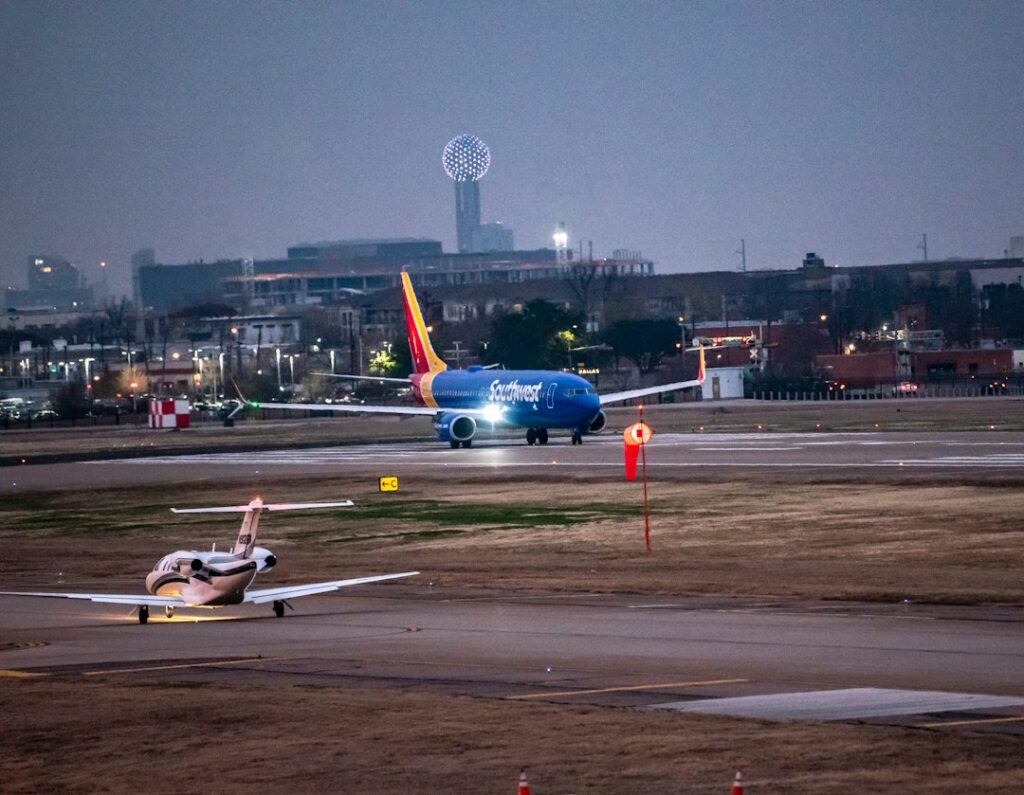
North Texas travelers will have a new way to fly beginning Wednesday, November 11. McKinney National Airport, about 30 miles north of Dallas, is preparing to open its first commercial passenger terminal, giving residents of fast-growing Collin County an alternative to Dallas Fort Worth International Airport and Dallas Love Field.
The opening has another story behind it. In May 2023, McKinney voters rejected a $200 million bond proposal for a much larger terminal. City officials subsequently moved forward with a scaled-down project financed through sales-tax-backed borrowing and other funds rather than the rejected property-tax-backed general obligation bonds.
Now a four-gate terminal is ready for scheduled service, and Avelo Airlines has committed aircraft, routes and jobs. Whether the airport becomes a lasting transportation alternative will depend on more than the first departure.
A smaller terminal after a rejected bond
The original 2023 proposal envisioned a roughly 144,000-square-foot commercial terminal and supporting improvements. Nearly 59% of voters rejected the $200 million borrowing measure. The rejection did not amount to a legal prohibition on all future airport investment, but it ruled out the requested voter-authorized financing.
The city’s replacement approach called for a terminal of roughly 46,600 square feet, along with aircraft ramp space, roads, parking, utilities and other eastside improvements. McKinney City Council approved construction contracts totaling approximately $58 million in May 2025, an action that also drew opposition from council members concerned about the financing.
McKinney’s initial financing plan for the $57,997,386 construction contract included $30 million in community development corporation sales-tax revenue bonds, $15 million in economic development corporation sales-tax revenue bonds, $8 million from an airport tax-increment reinvestment zone and $5 million in utility construction funds.
That package matters because changing the source of repayment does not make public financing disappear. Sales-tax revenue bonds are distinct from the general obligation bonds voters rejected, but they still commit designated public revenues. A 2026 city financing action also authorized a federal transportation infrastructure loan of up to $30 million to refinance community development corporation bonds issued for the airport improvements.
One flight on opening day, more routes to follow
Avelo’s first scheduled departure from McKinney is to Fort Myers, Florida, on November 11. Las Vegas and Orlando flights are scheduled to begin November 12, followed by Tampa and Fort Lauderdale on November 19. The five destinations will not all operate on the first day.
In December, the airline plans to add Atlanta, Denver, Nashville and New Orleans. Its September route expansion announcement called for three Boeing 737 aircraft based at McKinney and approximately 150 jobs, including pilots, flight attendants, maintenance personnel and airport workers. The airline has also announced additional Florida destinations for December, bringing the planned network beyond the initial nine cities.
For travelers, convenience may matter as much as the destination map. A smaller airport closer to northern Dallas suburbs could mean a shorter drive and a less complicated terminal experience. But passengers will have to compare the actual flight schedule, fares, baggage charges, parking and ground transportation against the extensive route networks at DFW and Love Field.
Federal clearance is in place
McKinney received an FAA Part 139 airport operating certificate in September. The certification allows the airport to serve scheduled commercial passenger flights after demonstrating compliance with federal requirements covering runway and taxiway conditions, rescue and firefighting, emergency planning, wildlife management and staff training.
The Federal Aviation Administration said it was the first Texas airport to receive a new commercial airport operating certificate since 2005. The agency has invested more than $9 million in McKinney airport infrastructure, including taxiway work and improvements to its federal contract tower.
The terminal will add scheduled airline service to an airport that has served general aviation for decades. The city expects the new facility to accommodate growth in a part of the Dallas-Fort Worth region where homes, workplaces and highways have spread far beyond the established commercial airports.
The next test is financial, not ceremonial
McKinney’s decision illustrates a question facing other growing suburbs: when does a community become large enough to support its own passenger airport, and who should carry the risk while it tries?
Supporters expect better access and economic benefits from a hometown airport. Skeptics have questioned public spending on commercial service after voters rejected the larger bond request. Both concerns will remain relevant after the ribbon-cutting.
The remaining measures of success are practical: how many passengers use McKinney, whether Avelo sustains its routes, how airport revenue compares with operating costs and debt service, and whether the project requires further public support.
Community Voice
A snapshot of reader views, not a scientific survey.
Explore Community Voice →About the Desk

Across the Sun Belt
A $950 Million Solar Factory Plan Could Turn a Texas Campus Into a Domestic Supply Hub

TSMC Eyes Texas Expansion, Holds Talks on Elon Musk’s Terafab

FedEx Plans $54.5 Million Expansion Near Houston, With 300 Jobs

Scout Motors Suppliers Plan 200 Jobs and $82 Million in South Carolina Expansions

Logistics Company to Add 150 Jobs in Texas With 340,000-Square-Foot Expansion Near San Antonio