Vacation Rental Investing From North Atlanta: Where the Numbers Work in 2026
North Atlanta buyers face distinct vacation rental market opportunities from the Blue Ridge Mountains to Florida and local lakes. Returns depend on location, regulations, and operational factors.
Get major local stories and development updates.
For buyers in Alpharetta, Johns Creek, and South Forsyth, vacation rentals have shifted from lifestyle purchases to capital allocation decisions. The current market rewards precision—location, regulation, and unit configuration matter more than broad trends. The gap between top-performing properties and average ones is widening, and the data now points clearly to where returns hold up.
North Georgia Mountains: Two Different Plays
The Blue Ridge–Ellijay corridor remains the closest high-volume investment zone for North Atlanta. Both markets draw consistent drive-to demand from metro Atlanta, but they operate on different financial models.
Blue Ridge is priced as a premium brand. Three-bedroom cabins typically trade between $300,000 and $450,000, with top-performing units reaching gross yields near 18 percent when positioned correctly. The current opportunity is not new construction but renovation—older cabins from the 1990s can be acquired at lower cost and upgraded to compete with newer inventory. Regulation inside city limits is tightening, pushing investors toward unincorporated areas where short-term rental rules are looser.
Ellijay is a volume-driven market. Average home values are around $583,000, with annual short-term rental revenue near $35,000. The economics improve significantly with scale. Larger properties dominate: five-bedroom homes can generate over $75,000 annually, and six-bedroom units can exceed $100,000. Seasonality is pronounced—July and fall festival months drive the bulk of revenue, while winter periods require cash-flow discipline.
Amenities are no longer optional. Washer-dryer setups, fully equipped kitchens, dedicated workspaces, and pet-friendly policies all produce measurable revenue lifts. In Blue Ridge, allowing pets alone can increase bookings by up to 30 percent.
Florida Panhandle: Higher Ceiling, Higher Risk
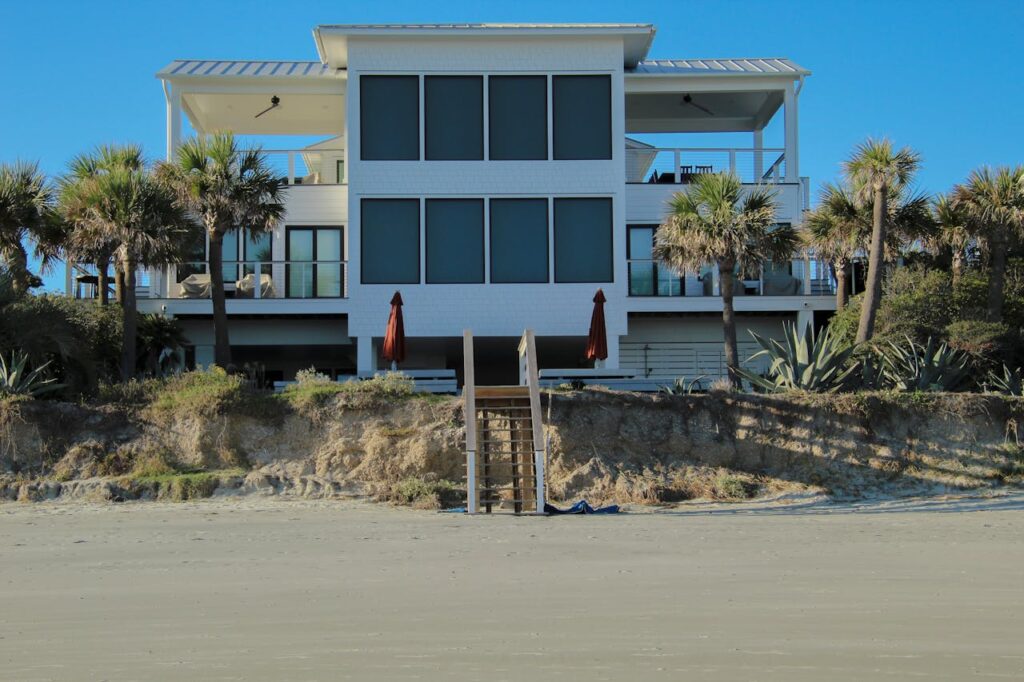
Destin and the 30A corridor operate as institutional-grade vacation markets. Revenue potential is higher, but so are costs and volatility.
In Destin, peak summer performance defines the model. A single month—July—can generate more than $14,000 per unit, while winter months drop close to $1,200. This creates a sharp seasonal imbalance that requires liquidity to sustain.
The 30A corridor, including Santa Rosa Beach and Inlet Beach, is positioned as a luxury market. Entry pricing starts around $500,000 and moves well above $1 million, with high-end communities exceeding $3 million. These properties command premium nightly rates but carry heavier operational burdens.
Insurance and taxes are the key constraints. Annual insurance alone can range from $5,000 to $10,000, and recent tax reassessments in Florida are pushing property tax increases into the 15 to 30 percent range for rental properties. For many investors, the summer season must carry a disproportionate share of the annual cost structure.
Lake Lanier and Lake Oconee: Scarcity Over Cash Flow
Closer to home, Lake Lanier represents a fundamentally different investment thesis. Inventory is capped—only 10,615 dock permits exist across the lake, creating structural scarcity that supports long-term appreciation.
A typical $800,000 lakefront home may generate about $65,000 annually, but often runs negative after financing costs. The return is not immediate income but equity growth. Historical appreciation of roughly 5.6 percent annually has made Lanier a long-term wealth play rather than a cash-flow asset.
Water access is the key variable. Properties with direct lake access command about a 22 percent higher daily rate, and in some cases significantly more. For North Atlanta buyers, proximity also allows hybrid use—personal access combined with partial rental income.
Lake Oconee operates at a higher tier. Large waterfront homes can generate $200,000 to $350,000 annually, targeting a luxury renter profile that prioritizes privacy and amenities .
High-Yield Georgia Cities: Cash Flow Markets
Outside the lifestyle-driven markets, several Georgia cities now function as pure yield plays.
Augusta leads the state with gross yields around 12 percent, supported by low entry prices near $272,000 and demand spikes tied to The Masters Tournament. Savannah follows with roughly 10 percent yields, backed by year-round tourism and a stable event calendar.
Secondary markets like Columbus and Covington are emerging with yields near 10 percent. These locations rely less on tourism cycles and more on institutional demand—military bases, healthcare systems, and film production activity.
The Operational Reality
Management, regulation, and financing define the outcome more than location alone.
Professional property management typically costs 20 to 30 percent of revenue, and can reach 50 percent in high-service markets. Hidden fees—linen services, platform commissions, and marketing costs—often compress margins further.
Regulation remains the primary risk. Georgia lacks a unified statewide policy, leaving cities and counties to enforce their own rules. In some areas, HOA restrictions are becoming more restrictive than municipal law.
Financing is tighter than in previous cycles. Investment property loans are generally priced between 7.25 and 7.5 percent, with 20 to 25 percent down requirements. Debt-service-coverage loans offer an alternative, allowing qualification based on projected rental income rather than personal income.
Tax strategy remains a core advantage. Depreciation allows investors to offset rental income, often turning a profitable property into a tax loss on paper, generating annual savings in the range of $9,000 to $13,000 for higher-income households.
The Decision Point
For North Atlanta investors, the market has segmented into three clear paths. Mountains offer accessible entry with operational upside. Florida provides higher revenue ceilings with higher volatility. Lakes deliver long-term appreciation anchored in scarcity. Secondary Georgia cities quietly outperform on yield.
The decision is no longer where people like to vacation. It is where the numbers hold under pressure.
If you’ve been following growth and change around here, these stories are worth a look too.
About the Author


In North Atlanta
20-Acre Buford Highway Tract Hits Market at $5.08 Million
A $100,000 Household Can Afford Just 38% of Metro Atlanta Listings
Sandy Springs Completes $4.33 Million Incentive Deal for North River Shopping Center Redevelopment

Is Opendoor Still a Good Choice for North Atlanta Home Sellers in 2026?
The South Has Become America’s Buyer’s Market. The Bargains Come With Questions

5 Coffee Trucks and Mobile Cafés Worth Finding Around North Atlanta
IN NORTH ATLANTA