North Point, Duluth Hillsides, and the Projects That Didn’t Happen; The New Reality Behind Big Plans
Get major local stories and development updates.
The past few years have produced no shortage of bold proposals: walkable districts, entertainment hubs, mixed-use “downtowns” built from scratch. But increasingly, these projects are running into a quieter set of obstacles—financing gaps, political skepticism, infrastructure breakdowns, and a level of community resistance that can stop momentum entirely.
In Alpharetta, the long-running debate over North Point Mall has come to symbolize this shift. A major redevelopment proposal—centered on housing, retail, and public space—was rejected after city leaders questioned whether the commercial vision would ever materialize alongside the residential components. The concern was not about ambition, but about delivery.
That moment revealed something deeper: suburban cities are no longer willing to accept promises without guarantees.
When Private Development Stalls Out
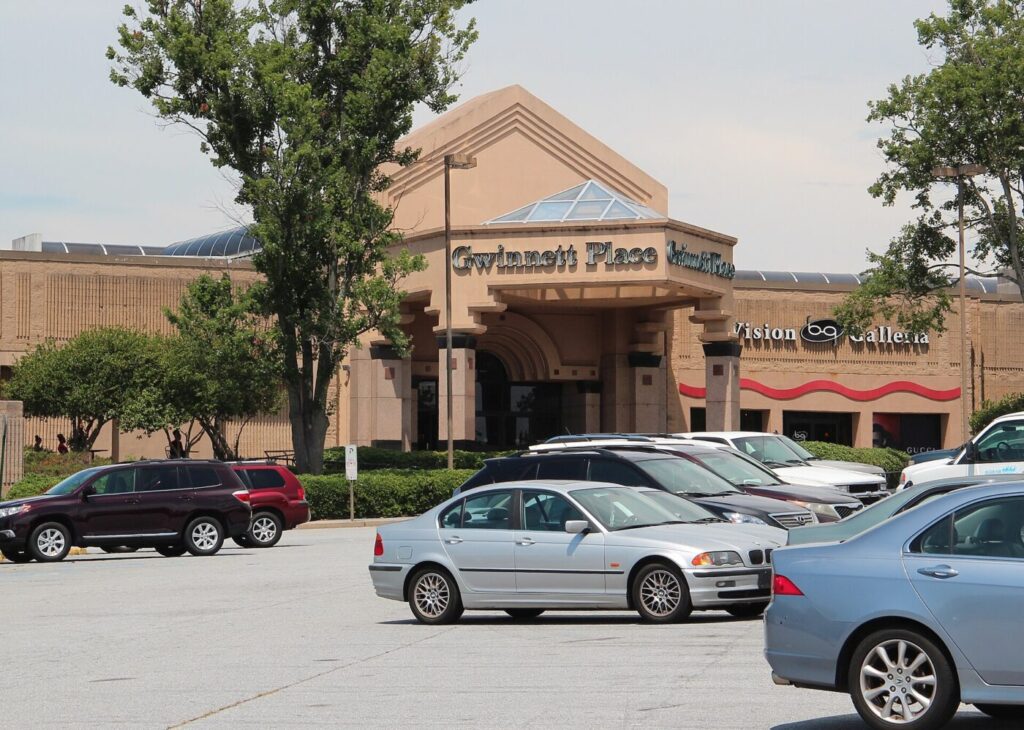
Few places illustrate this better than Gwinnett Place Mall. Once a dominant retail center, it spent years under private ownership without meaningful reinvestment. As plans came and went, the property deteriorated—stores closed, sections were sealed off, and activity drained from the site.
Over time, the consequences spread beyond the mall itself. Property values declined sharply, and surrounding areas struggled to attract new investment.
Eventually, local government stepped in. Gwinnett County began assembling control of the property, shifting from a passive role to an active one. The new long-term vision—rebuilding the site into a large-scale mixed-use district—may take decades to complete, a reflection of how long stalled development can linger even after momentum returns.
The High Stakes of Big Bets
In South Forsyth, another kind of uncertainty is taking shape. The proposed The Gathering at South Forsyth is one of the most ambitious developments ever envisioned in the area, anchored by the possibility of a professional hockey arena.
But the entire project hinges on something outside local control: whether the National Hockey League expands in the coming years. Without that decision, timelines stretch and risk grows. Costs have already escalated significantly, raising the stakes for investors and local governments alike.
This kind of dependency—on external approvals, league decisions, or large-scale financing—has become one of the defining vulnerabilities of modern suburban development.
When Infrastructure Fails
Not all delays come from planning or financing. In Milton, a major road project along Highway 9 was abruptly halted after a breakdown in the property acquisition process. The result: years of delay, partially cleared land, and a corridor left in limbo.
For nearby business districts and redevelopment efforts tied to that road, the impact is immediate. Investment slows, uncertainty rises, and the physical environment begins to signal instability instead of progress.
It is a reminder that infrastructure—often taken for granted—is still the foundation of everything else.
Financing Is No Longer a Given
In Duluth, the collapse of a large residential project showed how fragile development can be in the current financial climate. Even after initial progress, the project unraveled when funding failed to materialize. Rising interest rates, tighter lending conditions, and broader economic uncertainty have made it far harder for developers to move from vision to execution.
This is happening at the same time that buyers themselves are becoming more cautious. Deals fall through more often, and large-scale residential components—the engine behind many mixed-use projects—are harder to sustain.
The Power of Local Opposition
At the same time, community resistance continues to shape outcomes in ways that are difficult to predict. Projects that align with long-term planning goals can still be halted if local opposition becomes strong enough.
Concerns about traffic, school capacity, and neighborhood character are not new. But they now carry more influence, especially in cities that are trying to balance growth with the expectations of long-time residents.
In practice, this means that even well-designed proposals can stall indefinitely, caught between planning frameworks and political realities.
Why Some Projects Still Move Forward
Against this backdrop, a few developments are advancing—and their success offers clues.
In Johns Creek, the Medley project has continued to move ahead, backed by secured financing, a proven development team, and strong alignment with city leadership. That combination—capital, credibility, and cooperation—has become increasingly rare.
It suggests that the future of suburban development may not depend on bigger ideas, but on tighter execution.
A Region in Transition
Across North Fulton, South Forsyth, and northern Gwinnett, the challenge is not a lack of vision. It is the growing friction between vision and reality.
Projects stall not because they are poorly imagined, but because too many variables must align at once: financing, infrastructure, public trust, political approval, and market timing.
For residents, the result is a landscape of contrasts. A vibrant downtown here. A stalled site a few miles away. A major announcement that lingers for years without construction.
The next phase of growth in North Atlanta will likely be defined by which communities—and which projects—can close that gap.
If you’ve been following growth and change around here, these stories are worth a look too.
About the Author


In North Atlanta
North Atlanta’s Homeownership Divide Spans 31 Percentage Points
ANDRITZ Is Hiring Engineers and Project Leaders in Alpharetta
Old Milton Parkway Widening Will Reshape Avalon Corridor Through 2029
Medley Opens First Access to 133 Townhomes in Johns Creek
North Atlanta’s NHL Race Is No Longer Just Alpharetta vs. South Forsyth
ADP Opens New Alpharetta Roles in AI Content, Product Strategy and Internships
IN NORTH ATLANTA