Exclusive sponsor
The South Has Become America’s Buyer’s Market. The Bargains Come With Questions
Southern housing markets are becoming buyer's markets with more inventory and longer listing times. Buyers have more negotiating power, but rising mortgage rates and other costs continue to challenge affordability.
Major local stories and useful updates, once a week.
After years of bidding wars, waived inspections and offers made before buyers had time to reconsider, the balance of power in much of the South has shifted.
Thirty-eight of the nation’s 50 strongest buyer’s markets are now in Southern ZIP codes. Florida alone accounts for 21. Not one Southern ZIP code appears among the 50 strongest markets for sellers.
The numbers suggest an extraordinary reversal for a region that defined the pandemic housing boom. Homes are remaining available longer, sellers are reducing prices and buyers who can afford to proceed have more time and negotiating room.
But “buyer’s market” does not necessarily mean affordable market.
In several of the places offering the greatest leverage, the abundance of listings reflects more than healthy home construction. Buyers are also confronting elevated mortgage rates, expensive insurance, condominium assessments, storm exposure or asking prices that remain beyond the reach of local incomes.
The South may finally offer buyers more choices. The harder question is why so many of those choices are still waiting.
Miami leads a remarkable Southern sweep
ConsumerAffairs examined 6,291 ZIP codes using Redfin data from April through June. The ranking considered housing supply, time on the market, price reductions, sale prices relative to asking prices and the share of homes selling above list.
Miami’s 33130 ZIP code, covering parts of Brickell and Little Havana, emerged as the strongest buyer’s market in the country. It had 15.5 months of housing supply, approximately three times the national average. Homes remained on the market for a median of 158 days, and none of the sales included in the study closed above the asking price.
Sellers received an average of 95% of their asking price. That can represent a meaningful reduction on an expensive condominium, particularly when a buyer also negotiates closing assistance or credits for repairs.
Two other South Florida ZIP codes placed among the five strongest buyer’s markets. Port Aransas, a Texas Gulf Coast community, ranked second nationally with 18.3 months of inventory. Port Bolivar, another coastal Texas market, placed sixth, while Canyon Lake in the Hill Country ranked seventh.
Altogether, 38 of the top 50 markets were in the South, compared with only one Southern ZIP code among the study’s five dozen most competitive markets for sellers. The ZIP-code analysis found the greatest buyer leverage concentrated in places that experienced heavy construction, investment or demand during the pandemic years.
A separate national analysis provides further evidence that the change extends beyond a handful of unusual ZIP codes. Redfin estimated that sellers outnumbered buyers by 51% in July, with the number of active buyers falling to the lowest level in its records dating to 2013.
Thirty-nine of the 49 large metropolitan markets included in that analysis favored buyers. Miami had 154% more sellers than buyers, followed by Nashville, Houston, San Antonio and Austin. Redfin’s July market estimate also classified Atlanta as a buyer’s market, with approximately 39,800 sellers competing for 21,200 buyers—a difference of 88%.
That does not mean every house in Alpharetta, Johns Creek or South Forsyth suddenly comes with a substantial discount. Housing conditions can change sharply by school district, price range and neighborhood. A well-priced house in a sought-after subdivision may still draw several offers even when the metropolitan market contains far more sellers than buyers.
The broader signal is nevertheless clear: buyers have choices again, including in Atlanta.
More negotiating power, but fewer people able to use it
The change is partly a story of supply. Southern states permitted and built enormous numbers of homes as their populations expanded. Builders added subdivisions around Dallas, Houston, Austin, Nashville, Charlotte, Atlanta and numerous smaller metropolitan areas, while South Florida received another wave of condominium construction.
Much of that housing is now reaching the market after demand has cooled. Builders can offer mortgage-rate reductions, closing-cost assistance and upgrade packages to move new houses. Individual owners competing with them may have to lower their prices or accept contingencies that would have been dismissed several years ago.
Yet the market has shifted toward buyers partly because there are fewer buyers left.
The average rate for a 30-year fixed mortgage stood at 6.66% on Aug. 27. A buyer financing $400,000 at that rate would face monthly principal and interest of roughly $2,570 before property taxes, insurance or association fees. Freddie Mac’s weekly mortgage survey shows borrowing costs remaining high enough to erase much of the benefit created by a modest price reduction.
A seller accepting $20,000 less may feel like a victory for the buyer. But the house can still be less affordable each month than it was when mortgage rates were near 3%, even if its purchase price has declined.
This is the central contradiction of the current market. The people still able to qualify for a loan possess more negotiating power. Many of the people who would normally compete against them have been forced to wait.
Florida’s condo bargains require a second calculation
Nowhere is the difference between price and cost more visible than in South Florida.
The country’s leading buyer’s ZIP code is dominated by condominiums. Miami-Dade had approximately 12.3 months of condo inventory during the period examined, compared with 4.9 months for single-family homes. Fewer than 1% of South Florida condo buildings were approved for Federal Housing Administration financing, according to figures cited in the ConsumerAffairs analysis, narrowing the pool of buyers able to obtain certain lower-down-payment loans.
Older buildings also face inspection, repair and reserve-funding requirements adopted after the 2021 collapse of Champlain Towers South in Surfside. Florida law requires qualifying condominium associations to complete recurring structural integrity reserve studies, identify major components and establish funding plans for expected repairs and replacement. Florida’s condominium statute is designed to expose costs that associations once could postpone by keeping reserves low.
That transparency serves an important safety purpose, but it can produce an imposing bill. An attractively priced condominium may come with rising monthly fees, a large special assessment or a building that is difficult to finance or insure.
Some of the apparent discount may simply represent the market subtracting those obligations from the unit’s value. A seller who accepts $50,000 less for a condominium facing a comparable assessment has not necessarily given the buyer a bargain.
The more meaningful comparison is the complete cost of ownership: mortgage payment, taxes, insurance, regular association fees, approved special assessments and the likelihood of additional work identified in engineering or reserve reports.
In this kind of buyer’s market, the most valuable concession may not be a lower sale price. It may be the seller’s agreement to pay an existing assessment before closing.
Coastal Texas presents a different version of the same question
The Texas markets near the top of the ranking require their own explanation.
Port Aransas and Port Bolivar are Gulf Coast communities with substantial vacation and second-home activity. Their high inventory may create genuine opportunities for buyers who have watched prices rise during the past several years. It may also reflect the narrower pool of households willing to assume the costs and uncertainty that accompany ownership on a barrier island.
Canyon Lake is different. Its 14.6 months of supply, 102-day median selling period and price reductions on nearly half of its listings point toward a Hill Country market working through the aftermath of rapid construction and pandemic-era demand. Sellers received an average of 97% of asking price, while only 3.4% of homes sold above it.
Texas is one of the few places where the shift has begun appearing clearly in sale prices as well as inventory. Redfin’s July home-price index showed annual declines of 2.1% in San Antonio, 1.3% in Fort Worth and 1% in both Dallas and Austin. Each of those markets had roughly twice as many sellers as buyers. The July price index suggests that some sellers are no longer merely waiting—they are adjusting.
Even then, a small annual decline does not undo the enormous appreciation that occurred earlier in the decade. Buyers may be paying less than last year while still paying substantially more than local households would have considered normal before the pandemic.
Atlanta buyers have leverage, too
For North Atlanta households, the Southern shift is more practical than abstract.
Metro Atlanta had nearly 89% more sellers than buyers in Redfin’s July estimate. In the city of Atlanta, homes sold for a median of approximately $425,000 during the three months ending in June, generally closing about 2% below the asking price after an average of 50 days. More than one-third of listings received a price reduction.
The suburban market will not mirror the city precisely, but the conditions create opportunities that were scarce during the frenzy: time for an inspection, the ability to compare several houses and a reasonable chance of negotiating repairs, closing costs or a temporary mortgage-rate reduction.
Buyers should still distinguish between a house that is negotiable and one that is mispriced. A property sitting for two months may simply have started with an unrealistic asking price. A new house carrying a large incentive may be competing against many similar homes in the same development. An older home discounted below comparable listings may require a roof, heating system or structural repair that consumes the apparent savings.
The buyer’s advantage lies in being able to investigate those questions without the same pressure to make an immediate, unconditional offer.
A buyer’s market is an opportunity, not a verdict
Housing-market rankings capture the balance between available homes and active purchasers. They do not determine whether those homes are safe, appropriately priced or affordable to the people who live nearby.
The South’s dominance of the latest list tells an important story. Years of construction have produced more selection. Pandemic demand has retreated. Sellers in many markets can no longer assume that another buyer will appear with a better offer.
But the rankings also reveal where buyers are hesitating.
In Miami, that hesitation is tied partly to condominium financing, insurance, reserve funding and assessments. Along the Texas coast, it accompanies the responsibilities of owning property in an exposed vacation market. In the Hill Country and major Texas metros, it follows a construction boom that moved faster than current demand. Across Atlanta, it reflects the combination of increased listings and mortgage payments that remain difficult for many households to carry.
For qualified buyers, this is the most favorable negotiating environment the South has offered in years. They can demand inspections, study association finances, compare insurance costs and walk away when the complete price does not make sense.
That last option may be the clearest evidence that the market has changed. The new Southern bargain is not necessarily the house with the largest reduction.
It is the ability to pause long enough to understand what the discount is trying to say.
If you’ve been following growth and change around here, these stories are worth a look too.
Community Voice
A snapshot of reader views, not a scientific survey.
Explore Community Voice →About the Author


In North Atlanta
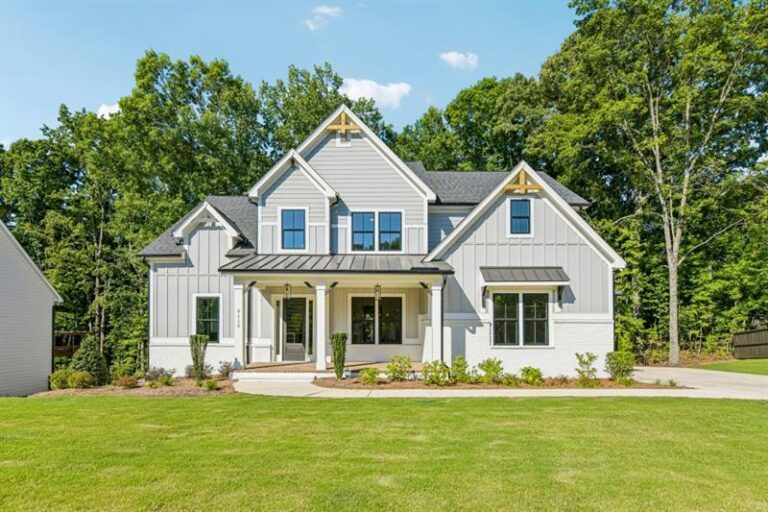
Two Cumming Homes See Price Cuts Exceeding $160,000 After a Year on the Market
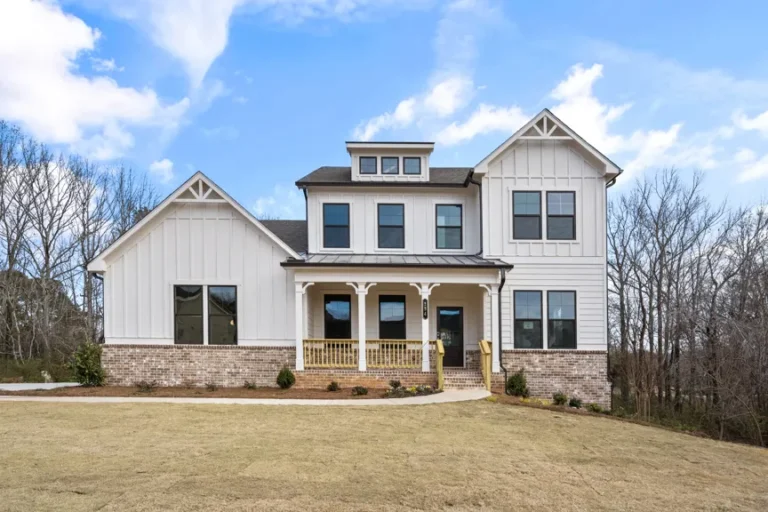
North Atlanta’s Homeownership Divide Spans 31 Percentage Points

Belk Is Leaving The Forum After 25 Years. What Comes Next for Peachtree Corners?

Lawrenceville Development Update 2026: New Hotel, More Homes and Downtown Street Work
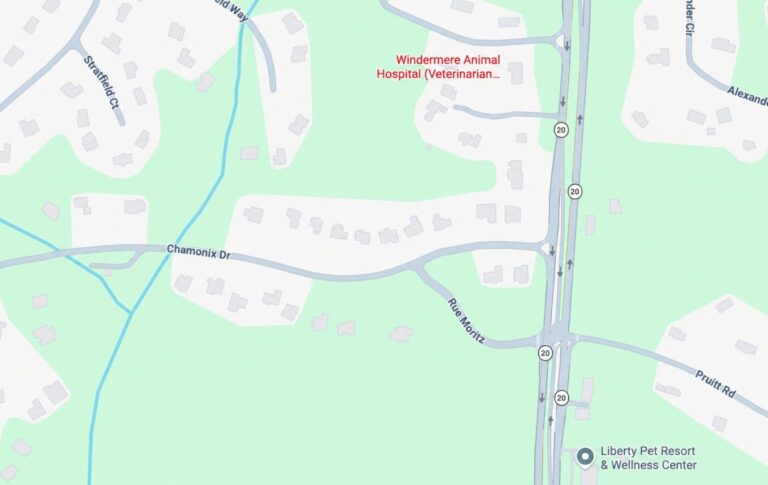
20-Acre Buford Highway Tract Hits Market at $5.08 Million
A $100,000 Household Can Afford Just 38% of Metro Atlanta Listings
IN NORTH ATLANTA