Jewish Institutions Now Spend More Than $1 Billion a Year on Security
Jewish organizations now face a growing security cost, spending over $1 billion a year on personnel and technology. This shift deeply influences how institutions operate across the U.S., especially during High Holy Days.
Jobs, development, business, housing and growth stories from across the Sun Belt.
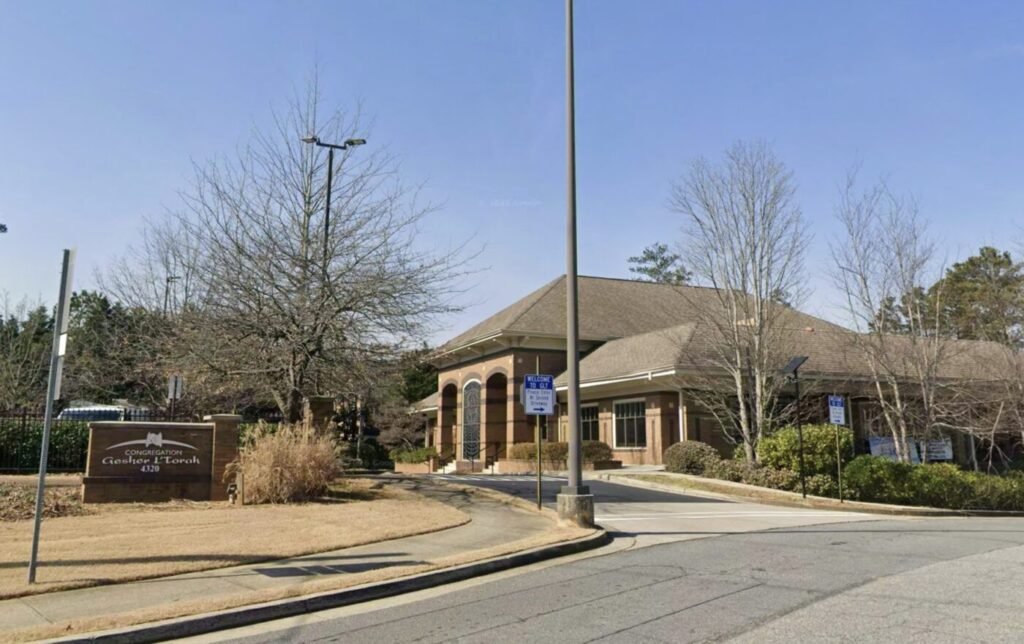
As Jewish families gather for Rosh Hashanah this weekend, an increasingly expensive part of American Jewish life will be present alongside the prayers, meals and shofar calls: security.
Jewish synagogues, schools, community centers, camps and other nonprofit institutions are now spending an estimated $1.015 billion a year to protect their buildings and the people who use them, according to new data from the Jewish Federations of North America.
That is a 33% increase from the organization’s previous estimate of $765 million in 2024.
The total covers more than 4,500 Jewish institutions and works out to roughly $225,000 per institution on average. The largest expense is security personnel, including guards and security directors. Another $150 million goes toward security technology and building improvements such as cameras, reinforced entrances, access controls and other protective systems.
The figure offers a striking measure of how security has moved from an occasional concern surrounding major holidays or special events to a recurring cost of operating Jewish institutions in the United States.
And in fast-growing Sun Belt communities, that change is increasingly visible.
Security is becoming part of ordinary congregational life
In Houston, one congregation’s High Holy Days membership requirements explicitly include a security fee alongside dues and its building fund. In San Antonio, another congregation is requiring advance registration and identification checks at the door for this year’s services. Tucson’s Kol Ami Synagogue tells worshippers that registration is required partly for security reasons.
Those arrangements differ from congregation to congregation, but they illustrate how security now affects some of the most basic details of Jewish communal life: who enters, whether visitors register in advance, how buildings are designed and how much congregations must raise simply to open their doors.
The trend is especially noticeable during the High Holy Days, when attendance at synagogues reaches its annual peak.
Rosh Hashanah began at sundown Friday, Sept. 11, and continues through Sunday evening. Yom Kippur begins at sundown Sept. 20.
In South Florida, where one of the country’s largest Jewish populations lives, additional precautions are already in place.
The Jewish Federation of Broward County has spent nearly $50,000 on measures including security equipment, crowd management, emergency planning, training and coordination with law enforcement. Miami Beach police are also increasing their presence around synagogues and other faith institutions during the holidays. Officials said there was no specific credible threat ahead of Rosh Hashanah.
The point, community leaders there have emphasized, is not to keep people away. It is to make it possible for Jewish life to continue normally.
A billion dollars that cannot be spent elsewhere
The new national estimate also raises a less visible question: what would Jewish organizations be doing with that money if security did not consume so much of their budgets?
The Jewish Federations estimates that the amount now spent annually on security would be enough to send about 44,000 children to Jewish day schools, cover Jewish summer-camp costs for every child attending, or fund years of other community programs.
Security spending is particularly difficult because much of it is recurring. Cameras, doors and barriers may be purchased once and maintained over time. Guards, security directors and other personnel must be paid every week a building remains open.
That changes the economics of everything from religious services and preschool to senior programs, lectures, community dinners and youth activities.
The federation’s estimate does not include privately owned Jewish businesses, including kosher restaurants and markets, Judaica stores and bookstores, meaning the broader amount spent protecting Jewish public life is likely higher.
Federal help covers only part of the cost
The federal government has expanded a program that helps vulnerable nonprofits pay for security improvements.
For fiscal year 2026, the Federal Emergency Management Agency’s Nonprofit Security Grant Program has $300 million available nationwide — $150 million for organizations in designated urban areas and $150 million for organizations outside them. The grants are available to eligible nonprofits facing a heightened risk of terrorist or extremist attack, not only Jewish organizations.
That means the entire federal pool for churches, mosques, synagogues, schools and other eligible nonprofits is less than one-third of what Jewish institutions alone are estimated to spend annually on security.
Jewish organizations are now supporting legislation that would increase the program to $1 billion, arguing that the current funding no longer matches the scale of the need.
The threat remains unusually concentrated
The latest FBI statistics help explain why the spending has continued even after some measures of antisemitic incidents declined from their recent peaks.
The FBI recorded 1,528 anti-Jewish hate-crime incidents in 2025. That was down from 1,938 in 2024 but still the third-highest annual total on record.
Anti-Jewish incidents accounted for about 63% of the 2,408 religion-based hate crimes reported nationwide in 2025, making Jews by far the most frequently targeted religious group.
The Anti-Defamation League, which uses a broader methodology that also includes incidents that may not meet the criminal definition of a hate crime, recorded 6,274 antisemitic incidents involving assault, harassment or vandalism in 2025. That total was also lower than in 2024 but remained far above levels seen before 2023.
The challenge is keeping the doors open
Security can easily become the defining image of the story: guards at entrances, identification checks, cameras and barricades.
But the larger change may be quieter. A synagogue deciding whether it can afford another community program. A school adding security personnel to its annual budget. A family paying dues that increasingly help cover protection as well as education and worship. A visitor who can no longer simply walk through the door without registering first.
Across Florida, Texas, Arizona, Georgia and other parts of the growing Sun Belt, Jewish communities are continuing to expand their religious and cultural lives while adapting to those realities.
This weekend, thousands of those doors are open for the Jewish New Year. Opening them safely has become a billion-dollar undertaking.
About the Author

Notice an update, correction, or detail we should include? Tell the editor. Seen something new around you? Send us a local tip.