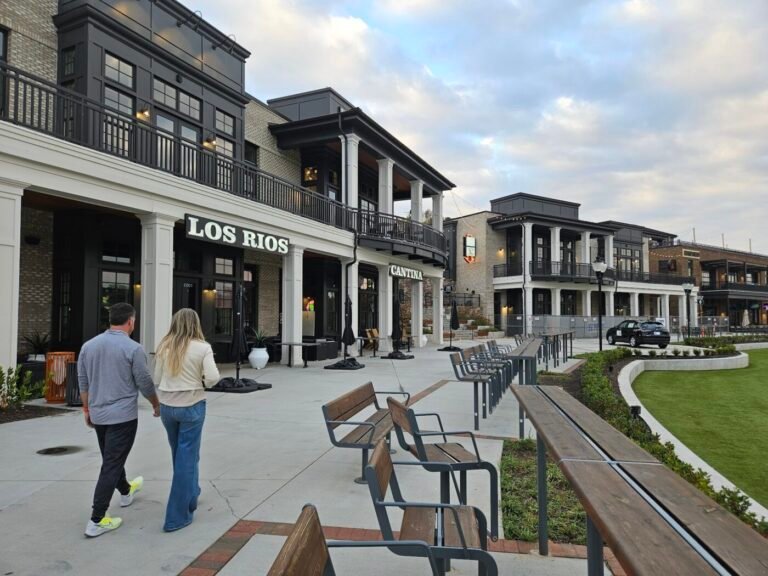
North Atlanta’s Homeownership Divide Spans 31 Percentage Points
Homeownership rates differ significantly across North Atlanta communities, influencing housing costs and local tax discussions. Forsyth County leads in owner-occupied homes, while Peachtree Corners has nearly half renters.
Get major local stories and development updates.
Read this article in Spanish · Leer en español
North Atlanta may look like a region of homeowner suburbs, but the housing mix changes dramatically from one community to another.
In Forsyth County, 84.4% of occupied homes are owner-occupied. In Peachtree Corners, the rate is 53%, leaving renters just three percentage points short of half the city’s households.
The 31.4-point gap affects how residents experience rising prices, new development and local tax policy. It also shows why housing debates in one North Atlanta community may bear little resemblance to those in the next.
Owners and renters across North Atlanta
The figures are Census Bureau estimates covering 2020 through 2024. The renter column represents the remaining share of occupied housing units.
| Community | Owner-occupied | Renter-occupied |
|---|---|---|
| Forsyth County | 84.4% | 15.6% |
| Johns Creek | 80.4% | 19.6% |
| Sugar Hill | 79.9% | 20.1% |
| Milton | 72.5% | 27.5% |
| Roswell | 71.9% | 28.1% |
| Georgia | 65.7% | 34.3% |
| Alpharetta | 65.1% | 34.9% |
| Suwanee | 59.0% | 41.0% |
| Duluth | 56.5% | 43.5% |
| Peachtree Corners | 53.0% | 47.0% |
Forsyth County is the one countywide figure in the comparison. It includes Cumming and the much larger unincorporated area, so it should not be read as a statistic for Cumming city alone.
Three communities remain strongly owner-occupied
More than four out of five occupied homes in Forsyth County and Johns Creek are owner-occupied. Sugar Hill falls just below that threshold at 79.9%.
That does not necessarily mean homes are easy to buy. The median value of an owner-occupied home was $629,400 in Johns Creek and $550,400 in Forsyth County. A high ownership rate can reflect the housing already built and households that purchased years ago, rather than the options available to a first-time buyer today.
Sugar Hill combines a similarly high ownership rate with a lower median owner-occupied value of $413,400. Its housing stock therefore resembles Johns Creek and Forsyth more closely in tenure than in price.
Alpharetta is close to the statewide average
Alpharetta’s 65.1% ownership rate is slightly below Georgia’s 65.7%, despite a median owner-occupied value of $649,000.
Milton, where that median reaches $789,000, has a higher ownership rate of 72.5%. Roswell is close behind at 71.9%.
Those figures illustrate why home values and homeownership rates should not be treated as the same measurement. One describes the value of homes occupied by their owners. The other describes how occupied housing is divided between owners and renters.
Rental housing also does not mean apartments alone. A renter may occupy a detached house or townhome, while an owner may live in a condominium. The tenure figures describe the household’s relationship to the property, not the building’s appearance.
Gwinnett’s cities contain sharply different housing mixes
Sugar Hill and Peachtree Corners sit at opposite ends of the local range even though both are northern Gwinnett cities.
Only about one in five occupied Sugar Hill homes is rented. In Peachtree Corners, the figure is nearly one in two. Duluth and Suwanee also have renter shares above 40%.
That distinction becomes important when communities discuss apartment construction, property taxes and housing costs. In Peachtree Corners, Duluth and Suwanee, a large share of households experiences housing costs principally through rent and lease renewals. Homestead exemptions and resale values speak more directly to the owner-occupied portion.
The figures also help explain why a single description such as “suburban housing market” can obscure more than it reveals. Forsyth County, Johns Creek and Sugar Hill are overwhelmingly owner-occupied. Peachtree Corners is nearly evenly divided. Alpharetta closely resembles Georgia as a whole.
These are survey estimates, so small differences should not be treated as a precise ranking. The broader gaps are the useful finding: North Atlanta is not one uniform landscape of homeowners. In several of its cities, renters already make up a substantial part of the community.
About the Author


In North Atlanta
The South Has Become America’s Buyer’s Market. The Bargains Come With Questions
20-Acre Buford Highway Tract Hits Market at $5.08 Million
A $100,000 Household Can Afford Just 38% of Metro Atlanta Listings
Sandy Springs Completes $4.33 Million Incentive Deal for North River Shopping Center Redevelopment

Is Opendoor Still a Good Choice for North Atlanta Home Sellers in 2026?
5 Coffee Trucks and Mobile Cafés Worth Finding Around North Atlanta
IN NORTH ATLANTA