At School of Rock Dunwoody, a Second Act Begins With a Band
School of Rock Dunwoody opens with a focus on community and music education for children and adults. Owner Yael Lindenboim is building a vibrant space where beginners and seasoned musicians can learn and play together.
Major local stories and useful updates, once a week.
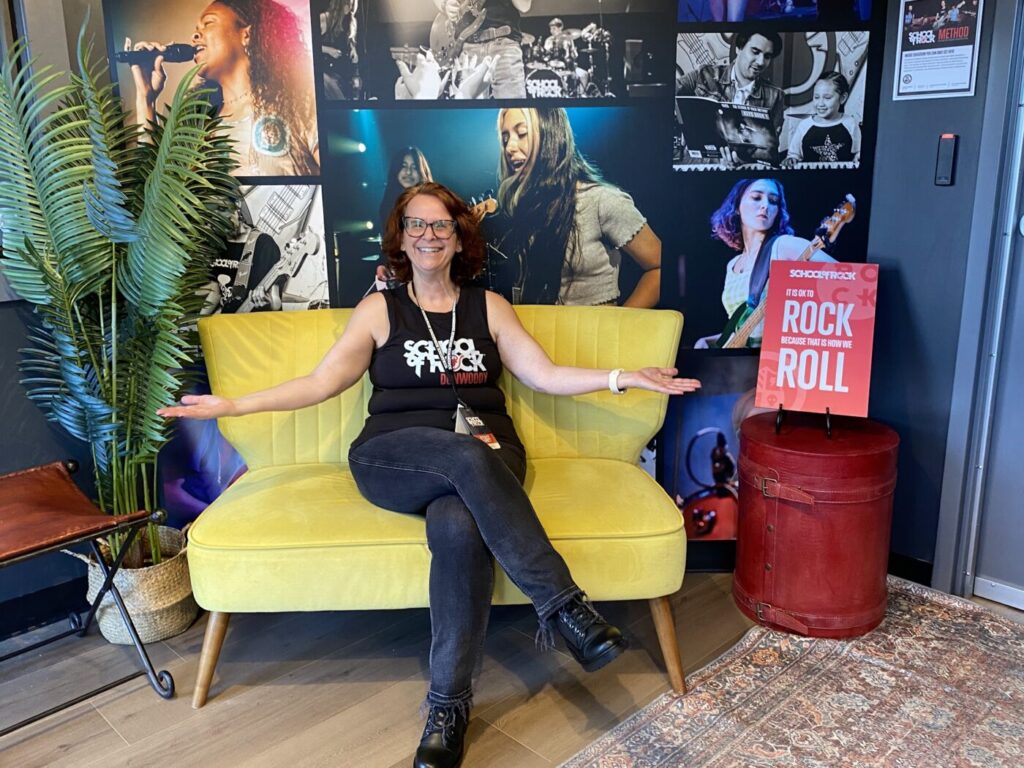
By late Friday afternoon, students were arriving for dress rehearsal at School of Rock Dunwoody. There were balloons waiting for the next day’s grand opening, a game of Connect Four between young musicians and a steady stream of greetings from owner Yael Lindenboim.
One student played piano. Another played bass. A friend had come along to watch. Lindenboim welcomed them in while keeping track of who was still on the way.
The school was preparing to introduce itself to the neighborhood. Inside, a community was already beginning to form.
For Lindenboim, that is the point of the business she has spent the past several months building. After a career in technology, most recently as head of customer relationship management at Airbnb, she wanted a working life with more music, more face-to-face contact and something she could see happening in the room.
Now she has young children discovering drums, teenagers rehearsing ’90s rock and adults spending Monday evenings playing the British Invasion.
She is also learning what it means to trade a corporate salary for the responsibility of paying everyone else.
A Blank Canvas
Lindenboim left Airbnb last year feeling ready to step away from the work she had been doing. She took some time to recover before deciding what should come next.
Opening a music school was not a plan she had carried around for decades. She began with a more open question.
“If I treat my next chapter as a blank canvas, what would I put on it?” she said during North Atlanta Star’s visit Friday.
She wanted a physical place to go, work that involved people and more music in her life. Art had long occupied the spaces around her career, through pottery, collage and other creative pursuits. She had also done coaching.
During an earlier career break, she spent about six months in Nepal, where she said she helped teach mosaic-making to young people through a charitable project. The pieces were then sold. Working with people through art was familiar territory, even if running a music school was new.
Moving to the Atlanta area about two years ago brought another experiment: a stand-up comedy class at the Punchline.
Signing up meant knowing that, several weeks later, she would have to face an audience. She remembers the combination of fear and motivation. A performance date gives preparation a purpose.
That experience helped her connect with the idea behind School of Rock.
A Song, a Band and a Reason to Practice
Lindenboim studied piano for about five years growing up. Her instruction centered on classical music, while she wanted to explore something more contemporary.
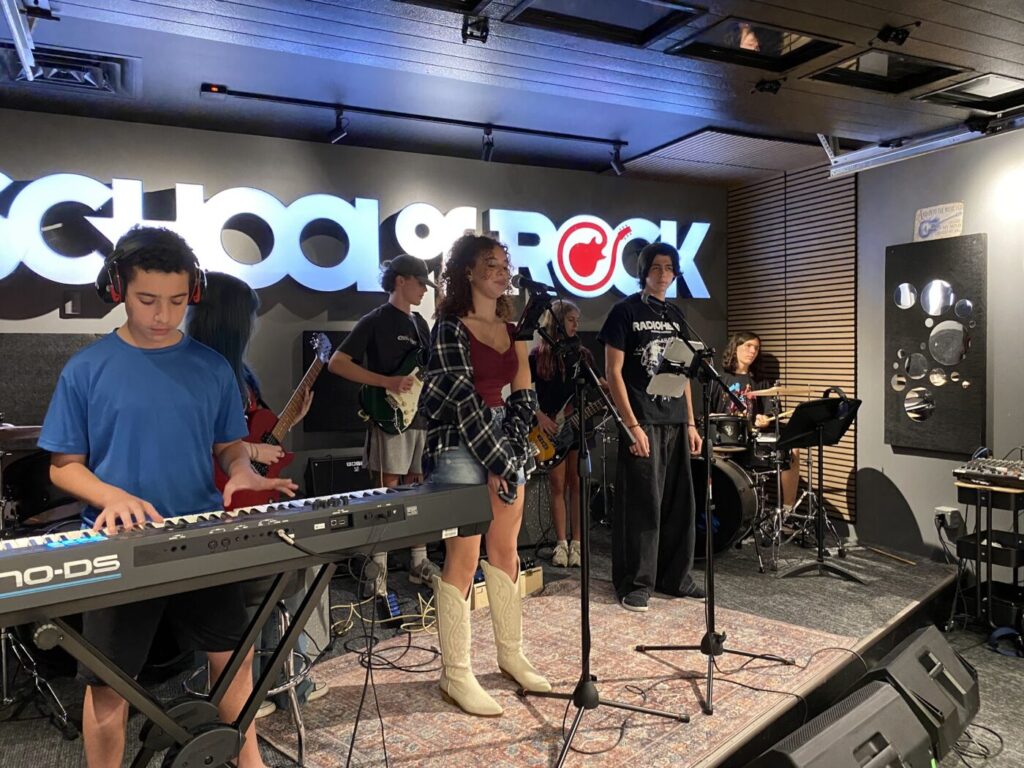
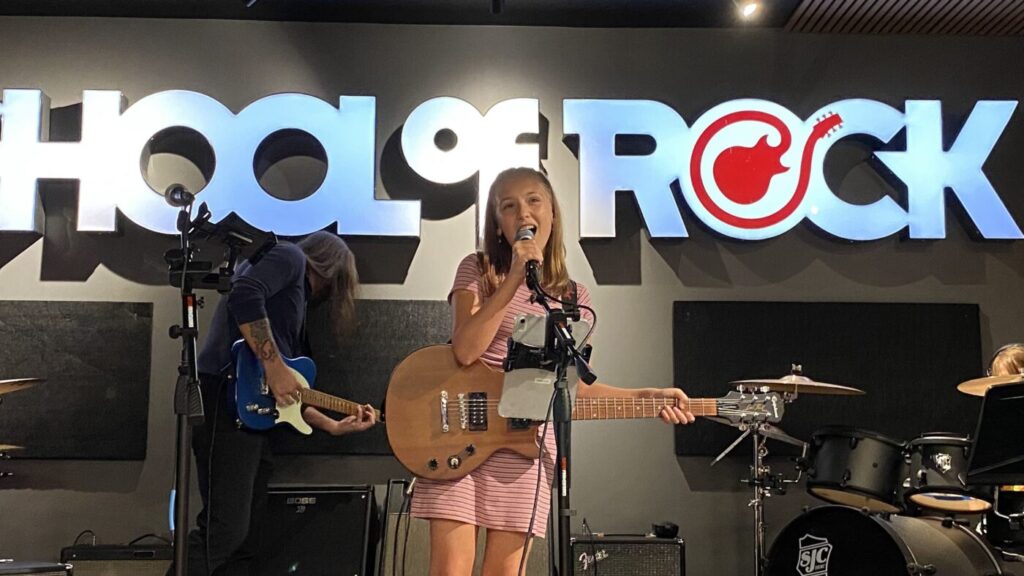
At School of Rock Dunwoody, students work on songs in private lessons and bring those parts into group rehearsals. Guitar, bass, drums, keyboards and vocals come together in a band.
Beginners in Rock 101 start with simpler material. As their playing and readiness develop, they can move into the Performance program.
The group changes what a lesson asks of a student. Learning an individual part is one task; keeping time with a drummer, listening to a singer and recovering from a mistake without stopping everyone else are others.
There is also the social pull of having people to play with. Students make friends at the school or bring friends into it. Practicing prepares them for something they will do together.
Lindenboim’s instructors are working musicians, she said, bringing their own experience of performing into the teaching rooms. In the drum room, two kits allow teacher and student to play alongside each other.
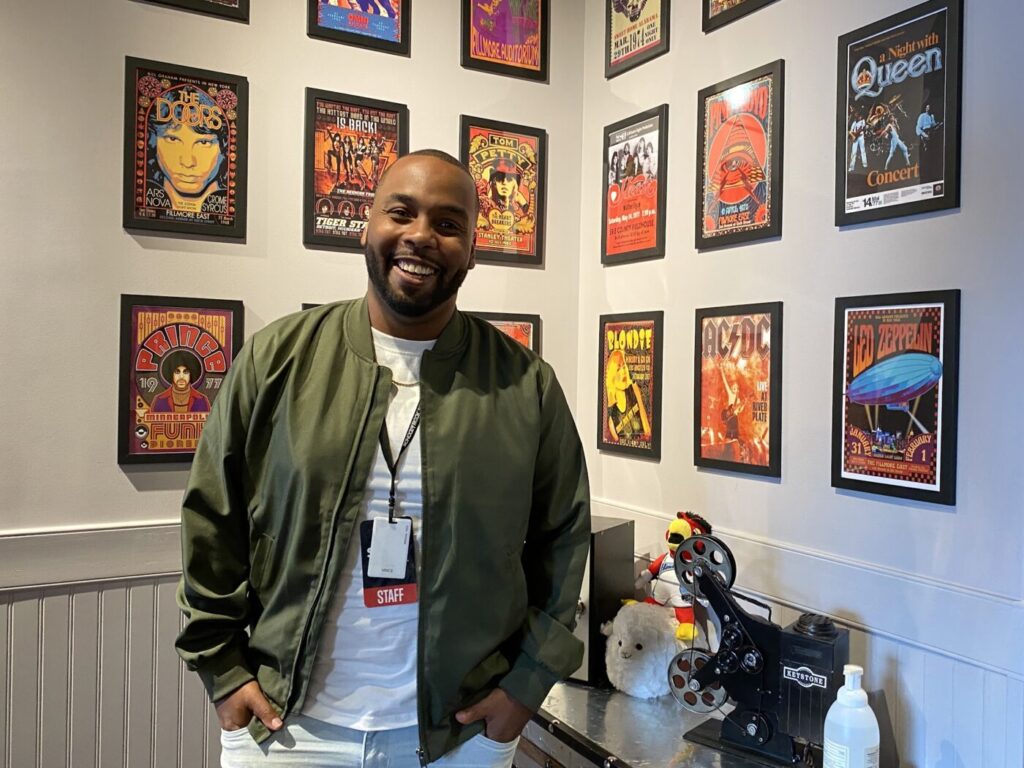
Vince, one of the school’s vocal instructors, said the most satisfying changes are often visible within weeks.
“They’re shy and timid and really trying to find their voice,” he said of some new students. Two months later, they may be “rocking out and looking like rock stars in rehearsals.”
“To see the growth, especially if it happens in a short amount of time, like, that’s really, really cool.”
Room for the Grown-Ups
The school’s youngest programs serve children ages 4 and 5, followed by a program for ages 6 and 7. But the pleasure of being a beginner extends well beyond childhood.
Lindenboim said her oldest student is 76. He bought a guitar and tried teaching himself through YouTube before coming to the school. Now he arrives each week for a lesson.
Several students are in their 70s. The adult band meets Monday evenings, currently working on British Invasion songs, while the teenagers tackle ’90s rock.
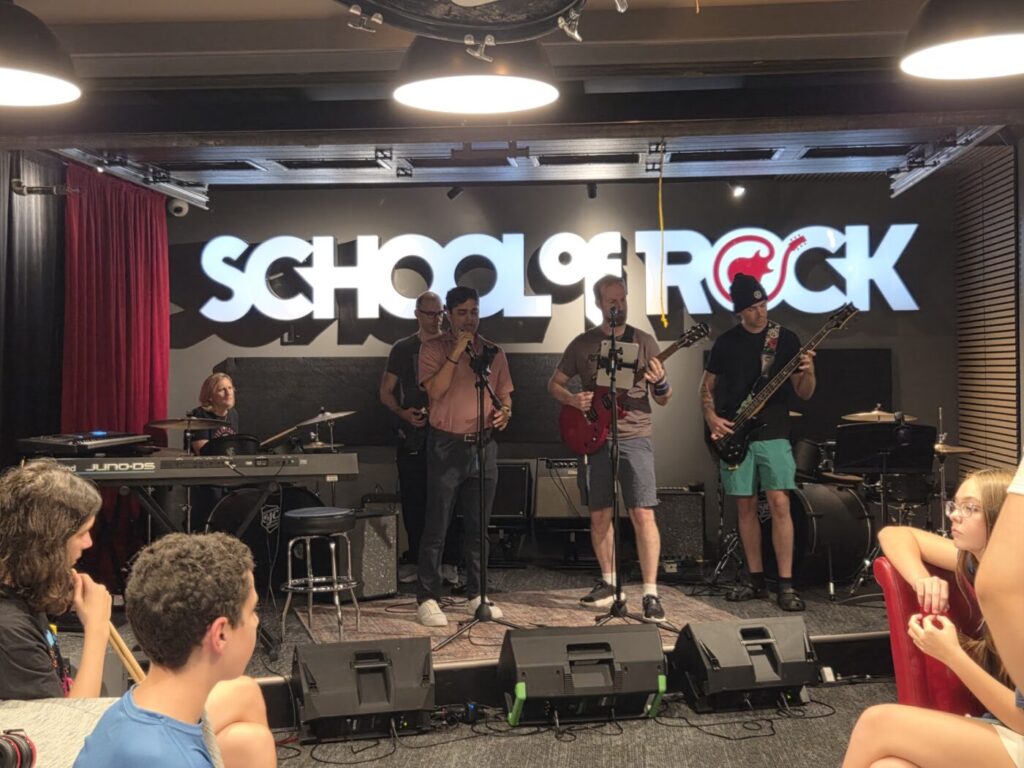
Lindenboim described a woman in her 40s who began learning drums and, within a couple of months, was earning encouraging comments from fellow musicians about her progress.
Those exchanges stay with her: the excitement of a young child sitting at electronic drums for the first time, or adults noticing how much someone in their band has improved.
The school gives both groups a place to begin, with other people there to hear the difference.
Building the Place Around the Music
Lindenboim has put considerable attention into how the school feels.
There are musical references throughout the rooms, including Green Day, Sublime and the Blues Brothers, and a garage-inspired rehearsal space. In the common area, students can spend time together before they play.
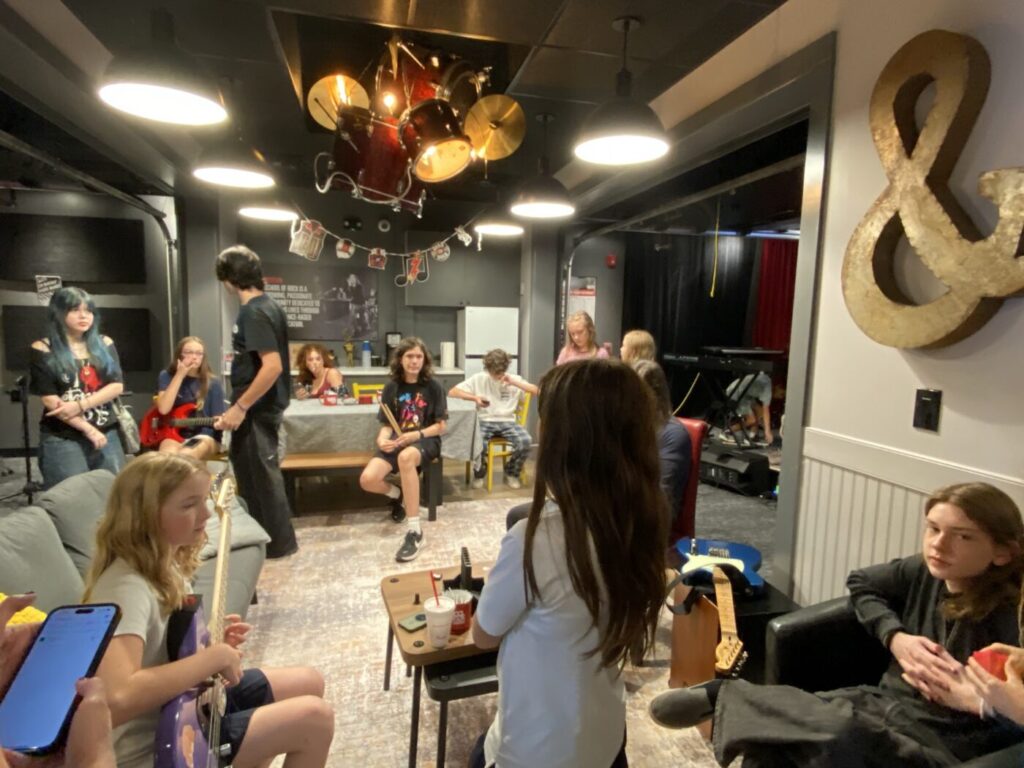
She wanted a “home away from home,” a place where parents would feel comfortable and children would want to return.
That attention also shaped the pace of the opening. While some franchise owners concentrate on building a large enrollment before the doors open, Lindenboim said she spent much of her early energy on the space and making sure the teaching was working well.
The school had about 60 students after its first two months, she said. Friends and siblings were beginning to follow.
It is still a business that needs to grow.
She acknowledged that having financial flexibility helped her take the risk. Even so, moving from receiving a technology salary to meeting a payroll is a substantial adjustment.
What keeps her engaged is close at hand: the students coming through the door and the progress she can hear.
The First Big Celebration
Saturday’s grand opening will bring that work outside, with a ribbon cutting and a louder welcome: students smashing an electric guitar as part of the School of Rock opening tradition.
School of Rock Dunwoody, at 2458 Jett Ferry Road, is joining Explorefest, the free community event at Williamsburg Shopping Center on Oct. 3. Explorefest runs from 10 a.m. to 2 p.m., with music, activities and visits to neighboring businesses. The school’s grand-opening after-party follows from 2 to 4 p.m.
Dunwoody’s mayor is expected to join the ribbon-cutting celebration, while students will have their own role in marking the opening, both onstage and in the ceremonial guitar smash.
On Friday, the immediate task was getting ready. Students from different groups were assembling for rehearsal, and instructors were sorting out arrival times and performance plans.
Lindenboim moved between the conversations, welcoming another student, checking on a missing band member, inviting a visitor inside.
Her next chapter had acquired a place, a payroll and about 60 students. Now there was a show to put on.
About the Contributors

In North Atlanta
Kidcreate Studio Opens in South Forsyth With Art, Science and Sensory Programs

Duluth Multi-Employer Job Fair Set for Thursday at Pleasant Hill Career Center
New Chick-fil-A Opens Oct. 1 as Southard Exchange Begins Its West Forsyth Rollout
Darchin Mediterranean Begins Hiring in Peachtree Corners

Pvolve Begins Presales for New Alpharetta Studio Near North Point