Chattanooga Weekend Guide from Atlanta: Best Things to Do, Stay & See
Get major local stories and development updates.
This article is part of our Weekend Escapes from North Atlanta series — curated trips within driving distance from Johns Creek, Alpharetta, Cumming, Roswell, Milton, Duluth, and Suwanee.
The Tennessee River moves quietly through downtown Chattanooga, curving past bridges and low buildings that catch the morning light. Early in the day, the city feels unhurried. A few runners pass along the riverwalk, coffee shops begin to open, and the water sets a steady, almost calming pace.
Chattanooga manages to feel both lively and easygoing at the same time. You can start the day on a trail up on Lookout Mountain, spend the afternoon downtown, and end the evening back by the river without feeling like you’ve rushed from one place to another. It’s the kind of place where the day unfolds naturally.
From North Atlanta, it’s an easy trip. Just far enough to feel like you’ve gone somewhere different, but close enough that getting there doesn’t take much planning.
Getting to Chattanooga
The drive from communities like Johns Creek, Alpharetta, or Cumming typically takes just under two hours, following GA-400 or I-75 north into Tennessee. It’s a straightforward route, one that gradually trades suburban traffic for open stretches of highway and rolling hills.
As you approach the city, the landscape begins to shift. Ridges rise on both sides, and the Tennessee River comes into view, winding through the center of Chattanooga. The setting feels more dramatic than most nearby cities, shaped by mountains that sit right at the edge of downtown.
That geography defines the entire experience.
A Riverfront Designed for Walking
Chattanooga’s downtown is anchored by its riverfront, and much of a weekend here naturally unfolds along that stretch.
The Tennessee Riverwalk runs for miles, connecting parks, public art, bridges, and key attractions. It’s one of the easiest places to start—whether with a morning walk, a bike ride, or simply finding a bench and watching the river move past.
Coolidge Park, on the north shore, has become one of the most recognizable gathering spots. Families gather, open green spaces invite picnics, and the pedestrian Walnut Street Bridge connects directly back to downtown. Crossing that bridge, especially in the evening, offers one of the best views of the city.
What stands out is how connected everything feels. You don’t need to plan carefully. You can just move—along the river, across bridges, into neighborhoods—and let the day shape itself.
Where to Stay in Chattanooga
Chattanooga offers a mix of boutique hotels, historic properties, and modern stays, many within walking distance of the river and downtown attractions.
The Edwin Hotel has become one of the city’s most recognizable stays, sitting right at the base of the Walnut Street Bridge. Its design leans modern, with large windows and rooftop views that overlook the river.
Just a short walk away, The Read House blends historic character with updated interiors. The building dates back more than a century, and staying there feels tied to the city’s past while still offering modern comfort.
The Westin Chattanooga provides a more contemporary experience, with spacious rooms, a rooftop pool, and easy access to downtown restaurants and shops.
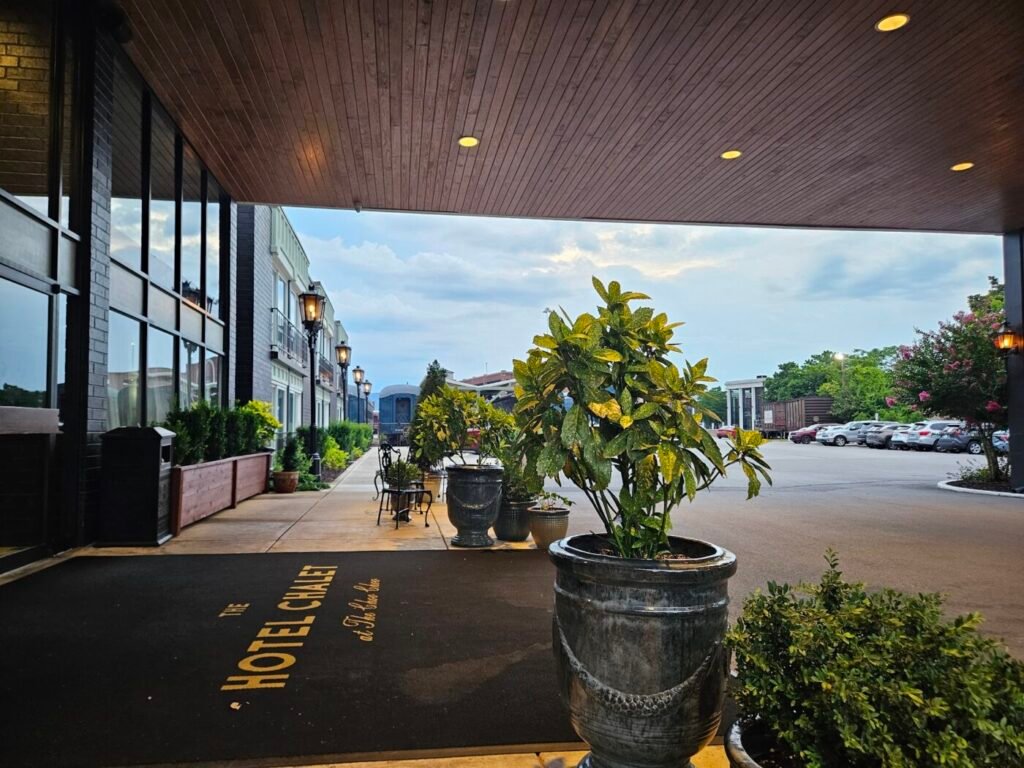
In the Southside district, The Hotel Chalet offers something more distinctive. Set within the historic Chattanooga Choo Choo complex, it carries a sense of place that feels different from a typical hotel stay. The design leans into a subtle, nostalgic atmosphere while still feeling polished and current, and its setting places you close to restaurants, galleries, and the walkable energy of the neighborhood.
For something smaller and more personal, Dwell Hotel offers a boutique stay with a distinct mid-century style. Each room feels slightly different, and the atmosphere is quieter, more tucked into its own corner of downtown.
Travelers looking for views often choose properties along the river or on the north shore, where mornings tend to feel especially calm.
Outdoor Spaces That Shape the City
What sets Chattanooga apart is how quickly the city transitions into nature.
Lookout Mountain rises just outside downtown, and within minutes you can find yourself on trails, overlooks, or scenic attractions that feel far removed from the city below. Rock City Gardens offers winding paths through rock formations and panoramic viewpoints, while nearby overlooks provide sweeping views of the valley.
Another well-known stop is Ruby Falls, a waterfall located deep inside Lookout Mountain. The path to reach it moves through a cave system, creating a completely different kind of experience from the open-air trails nearby.
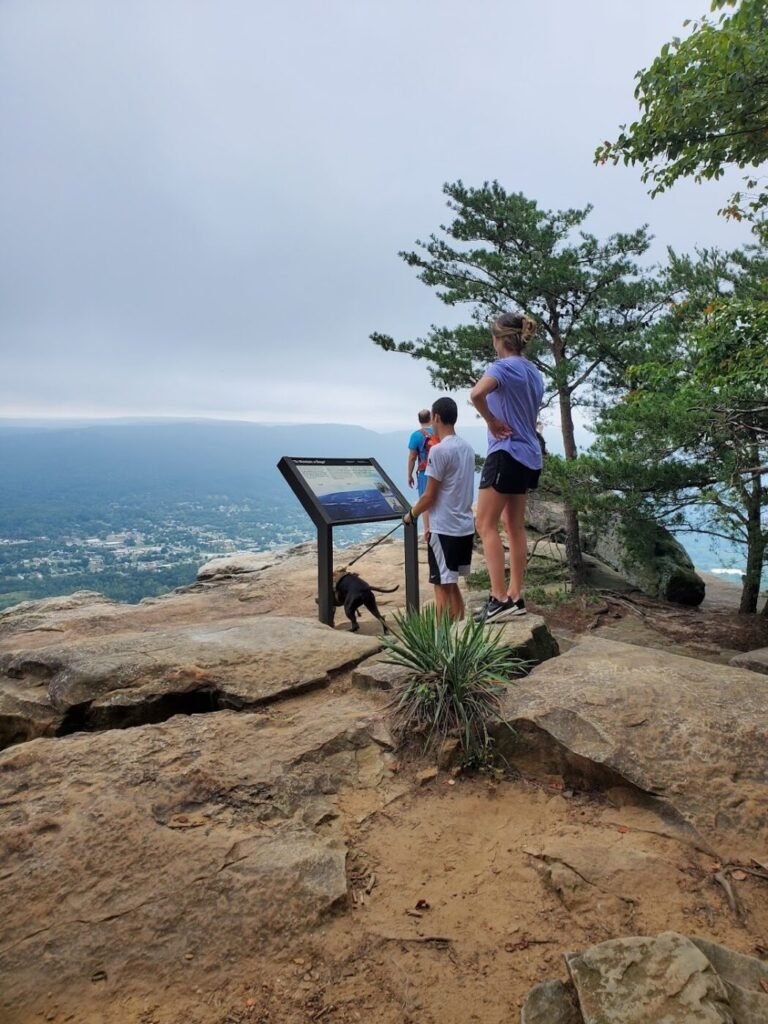
Signal Mountain, on the opposite side of the city, offers quieter hiking areas and scenic drives. Sunset Rock, in particular, draws visitors in the late afternoon, when the light shifts across the valley.
Even for those who prefer a slower pace, simply driving through these areas—pausing at overlooks, stepping out for short walks—can shape an entire afternoon.
A Downtown That Feels Lived In
Pedestrians walking through Chattanooga’s Southside district with restaurants, murals, and outdoor seating.
Chattanooga’s downtown is not large, but it feels active in a steady, comfortable way.
The Southside district has become a focal point for restaurants, coffee shops, and small local businesses. Converted industrial buildings now house cafés and restaurants, and the streets often feel lively without ever becoming crowded.
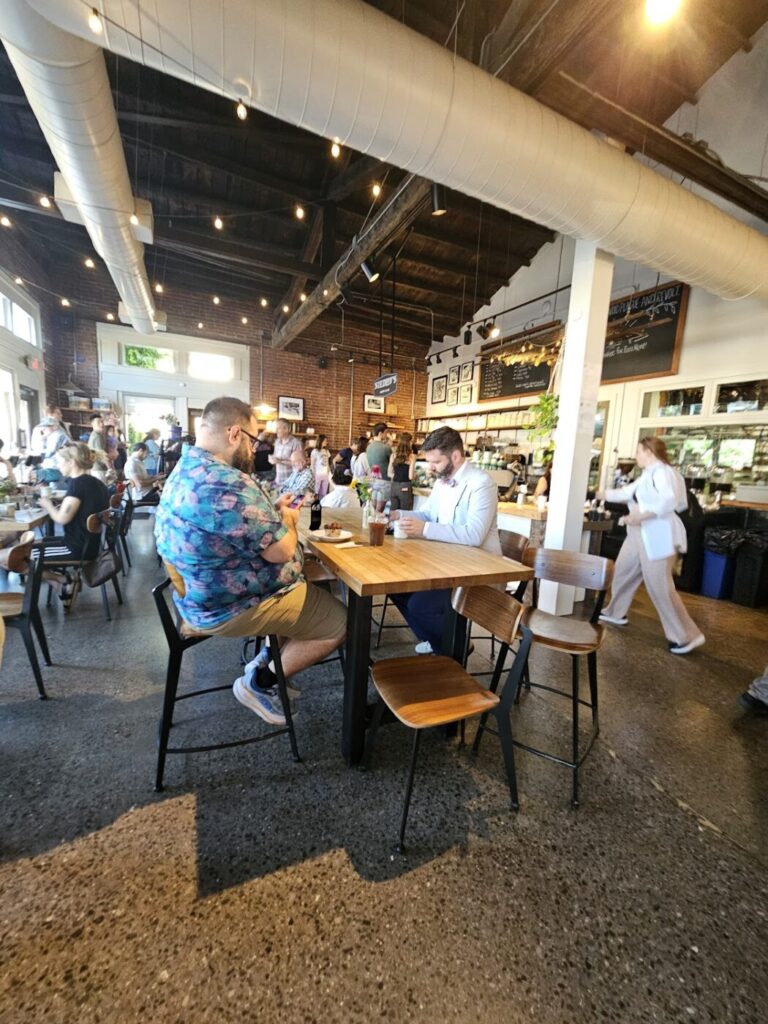
Warehouse Row offers a different kind of space—historic brick buildings turned into a mix of retail and dining. It’s quieter, more contained, and easy to wander through at a slower pace.
Throughout downtown, there’s a sense that the city has grown into itself rather than expanding outward. Everything feels close, connected, and easy to return to.
Dining in Chattanooga
Chattanooga’s food scene reflects its mix of tradition and reinvention. Many restaurants focus on Southern ingredients while bringing in newer approaches to presentation and atmosphere.
Dinner at St. John’s Restaurant is often considered a highlight, with a seasonal menu that leans into refined Southern cooking. The space feels understated, letting the food take the lead.
For something more casual, Public House offers a relaxed setting with familiar dishes done well, making it a reliable stop after a day of exploring.
On the North Shore, restaurants and cafés line the streets near the river, creating easy options for lunch or a slower evening meal.
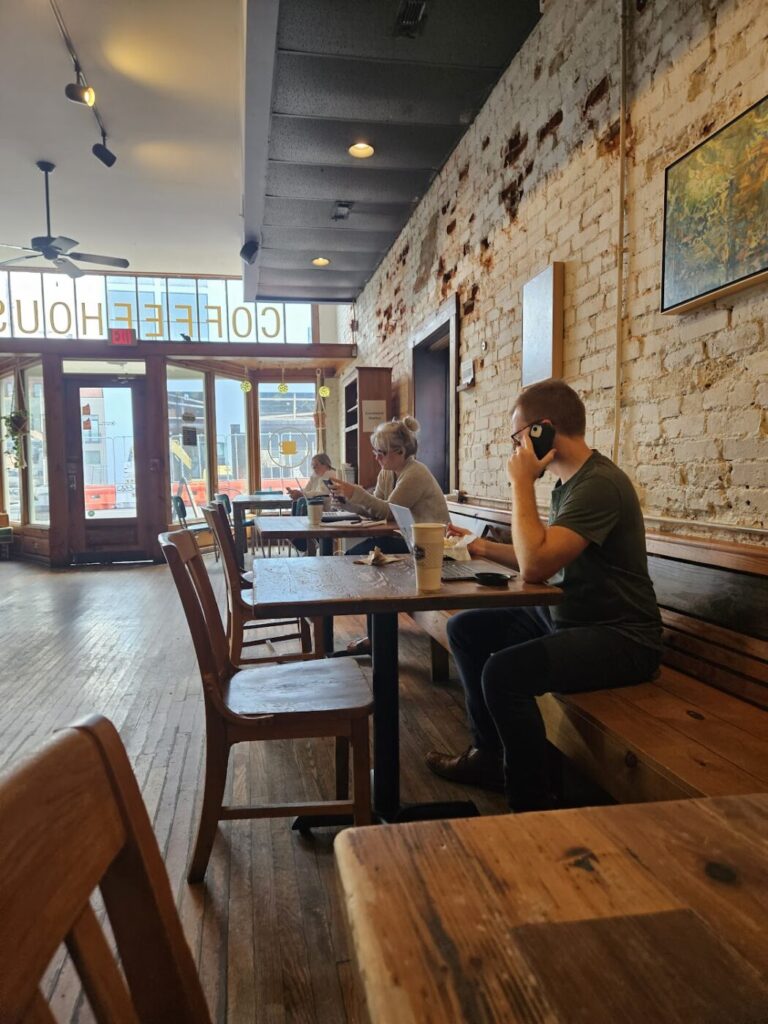
Coffee shops are part of the rhythm here as well. Places like Rembrandt’s Coffee House provide a natural pause in the day, especially in the late morning or mid-afternoon when the pace softens.
Why Chattanooga Keeps Drawing People Back
Chattanooga feels accessible in every sense. The drive is short, the layout is easy to understand, and the balance between city and nature is immediate.
For North Atlanta residents, it offers something slightly different from the mountain towns of North Georgia. There’s still access to trails and views, but with the addition of a riverfront city that feels complete on its own.
A weekend here can take many shapes. Some visitors focus on hiking and overlooks. Others stay close to downtown, moving between cafés, shops, and the riverwalk. Many do a bit of both.
That flexibility is what makes Chattanooga easy to return to. Each visit can feel slightly different, while the overall pace—the sense of space, movement, and calm—remains the same.
Read Also:
About the Author


In North Atlanta
North Atlanta Weekend Guide: Festivals, Dogs, Live Music and the First Feel of Fall

Dervish Plans 200-Seat Turkish Restaurant in Johns Creek

Dumpling Master Opens at Peachtree Corners Town Center

ANDRITZ Is Hiring Engineers and Project Leaders in Alpharetta

Fall Is the Right Time to Repair Many North Atlanta Lawns

South Forsyth Roads and Development Take Center Stage at Forsyth County Meeting
IN NORTH ATLANTA