 Exclusive sponsor
A $200 Million South Carolina Expansion Will Help Supply America’s GLP-1 Drug Boom
CordenPharma is expanding its North Augusta, South Carolina campus with a $200 million investment to boost peptide drug ingredient production. The new facility will support growing demand for GLP-1 medicines and create over 200 jobs by 2028.
Get the week’s jobs, development, housing and growth stories from across the Sun Belt in one email.
A pharmaceutical manufacturer is investing more than $200 million in South Carolina to expand production of the specialized ingredients used in some of the fastest-growing medicines in the world.
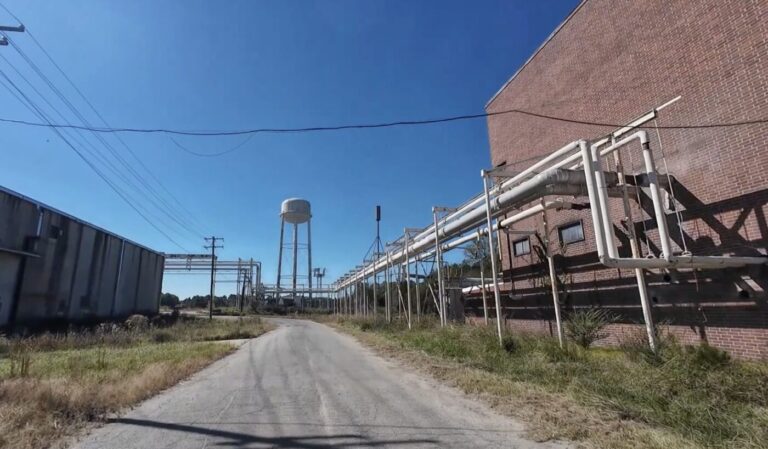
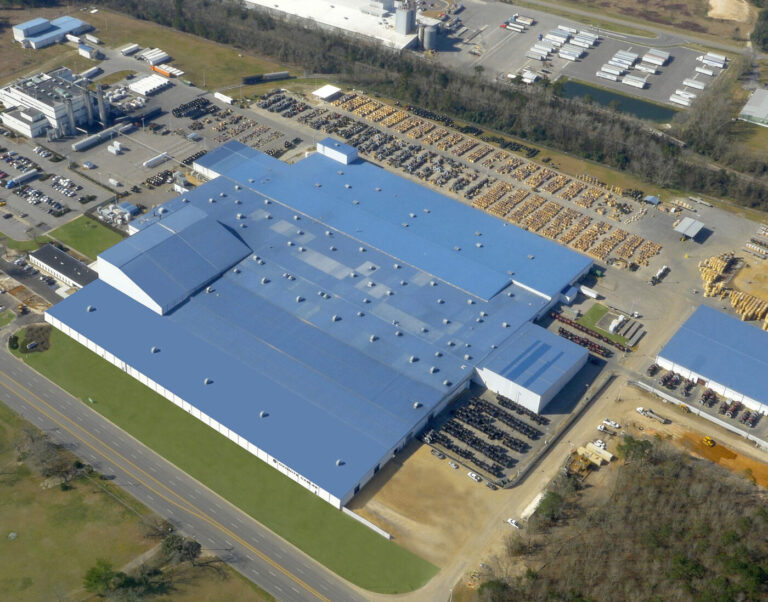
CordenPharma broke ground Sept. 22 on a 68,000-square-foot expansion of its North Augusta manufacturing campus, where the company will increase production of peptide active pharmaceutical ingredients, or APIs.
Those ingredients are used in medicines addressing obesity, diabetes, cardiovascular disease, cancer and other conditions. The company says the expansion is being built in response to rapidly growing demand for peptide-based therapies, including the market surrounding GLP-1 medicines.
The project is expected to create more than 200 jobs and begin operations in early 2028.
The factory sits behind the medicines patients recognize
Patients will not see the CordenPharma name on a Wegovy, Ozempic, Mounjaro or Zepbound box.
CordenPharma is a contract development and manufacturing organization, part of the less-visible industrial network that pharmaceutical companies rely on to develop and produce drug ingredients and finished medicines.
Its South Carolina expansion will focus on peptides, chains of amino acids that can serve as the active pharmaceutical ingredient inside certain medicines.
Semaglutide, the active ingredient used in Wegovy and Ozempic, is a long-acting analogue of the human GLP-1 hormone. Tirzepatide, used in Mounjaro and Zepbound, works on both GIP and GLP-1 receptors. The FDA describes GLP-1 medicines as drugs that can improve blood-sugar control and reduce appetite, among other effects.
CordenPharma has not disclosed which drugmakers or individual products will use material produced in North Augusta. That distinction matters: the expansion is serving the broader peptide-drug market rather than a publicly identified GLP-1 brand.
A $200 million expansion after an acquisition
The South Carolina project has grown substantially since it first became public.
In June, the operation was still owned by AmbioPharm, a North Augusta-based peptide manufacturer. South Carolina announced at the time that AmbioPharm would invest $118.96 million and create 202 jobs through a new modular manufacturing building at its existing campus.
The original state announcement called for commercial-scale peptide synthesis using several manufacturing methods, including solid-phase and liquid-phase production.
CordenPharma completed its acquisition of AmbioPharm in August and folded the North Augusta operation into its global manufacturing network.
By the Sept. 22 groundbreaking, CordenPharma was describing the South Carolina investment as more than $200 million while maintaining a job commitment of more than 200 positions.
The new building will add about 68,000 square feet of purpose-built commercial manufacturing space to a North Augusta operation that already had more than 82,000 square feet of manufacturing capacity before the expansion.
Why peptide manufacturing is expanding so quickly
The success of GLP-1 medicines has created demand far beyond the factories that fill injection pens and package finished drugs.
Before a medicine reaches that stage, manufacturers need large quantities of highly controlled active ingredients.
Peptide production is technically demanding. Manufacturers assemble amino acids in precise sequences, then purify the resulting material to pharmaceutical standards. Scaling the process from laboratory quantities to commercial production can require specialized equipment, large solvent-handling systems and extensive quality controls.
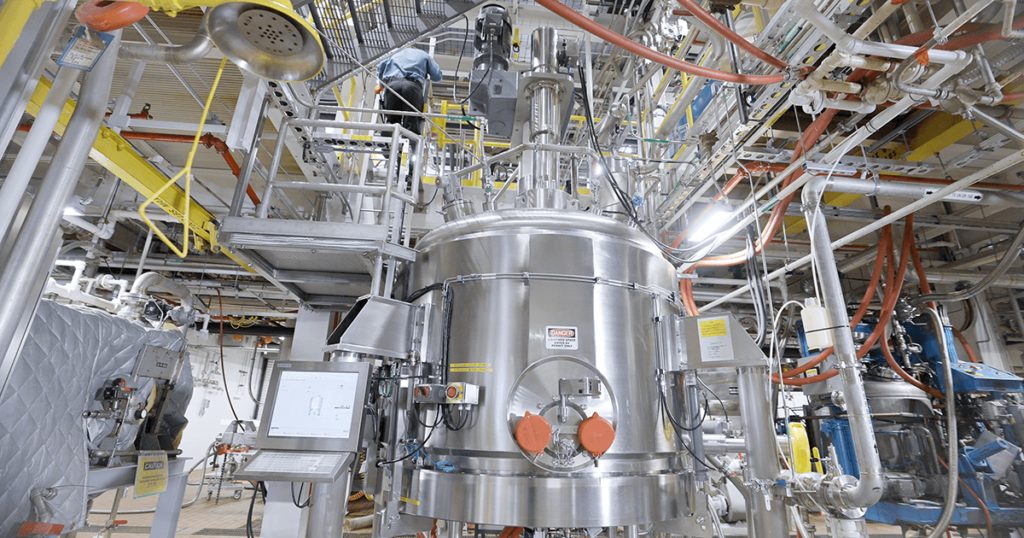
CordenPharma has been investing heavily in that part of the supply chain.
In 2024, the company committed about €900 million to peptide-manufacturing expansion in the United States and Europe, explicitly citing rapidly rising demand for diabetes and obesity GLP-1 medicines. It said at the time that long-term peptide manufacturing contracts associated with the expansion totaled roughly €3 billion.
That expansion has continued.
CordenPharma says its Colorado peptide operations are being enlarged to more than double solid-phase peptide synthesis capacity to above 42,000 liters by 2028. The North Augusta facility adds another U.S. production point, giving pharmaceutical customers the ability to move work between sites and keep more of the manufacturing chain within the country.
Together, CordenPharma now expects its South Carolina and Colorado operations to represent more than $1.4 billion in U.S. peptide-manufacturing investment.
North Augusta will handle an earlier stage of production
The South Carolina and Colorado facilities will perform complementary roles.
North Augusta is expanding its upstream peptide-synthesis capacity, where the peptide itself is assembled. Colorado provides large-scale downstream manufacturing capabilities needed later in production.
The South Carolina plant will support solid-phase peptide synthesis, liquid-phase peptide synthesis and hybrid production methods. It is designed to handle projects from clinical development through full commercial manufacturing.
That gives CordenPharma something increasingly valuable to pharmaceutical companies: multiple U.S. locations capable of handling different stages of a drug ingredient’s production.
Supply-chain resilience became a much larger concern across the pharmaceutical industry after pandemic-era shortages exposed the risks of depending heavily on a limited number of overseas manufacturing sites.
CordenPharma’s acquisition of AmbioPharm also brought a Shanghai facility into the company’s network, while North Augusta became its second major U.S. peptide location.
More than 200 jobs are expected
The project is expected to add more than 200 positions in South Carolina.
The state originally described the AmbioPharm commitment as 202 jobs when the expansion was announced in June. CordenPharma has continued to describe the project as creating more than 200 jobs following its acquisition and the increase in planned investment.
The company has not publicly released a detailed breakdown of occupations or salaries for the new workforce.
The existing North Augusta operation already employs more than 200 people and has experience producing peptide ingredients at commercial scale.
Construction of the new manufacturing space is now underway, with startup targeted for early 2028.
The GLP-1 boom is becoming a manufacturing story
The extraordinary growth of weight-loss and diabetes medicines is often discussed through prescriptions, prices and the competition among major pharmaceutical companies.
But behind those medicines is a much larger industrial buildout.
Companies need factories to synthesize active ingredients, purify them, formulate finished drugs, fill injection devices and package millions of doses. Each increase in demand moves backward through that supply chain.
North Augusta is becoming one of those upstream links.
CordenPharma is not promising that its new South Carolina factory will manufacture any particular well-known drug. Its customers remain confidential, and peptide medicines extend well beyond obesity and diabetes.
But the reason manufacturers are adding capacity is increasingly clear.
Demand for peptide therapies has grown large enough to produce billion-dollar investments in the factories behind the prescriptions.
And in South Carolina, another 68,000 square feet of that supply chain is now under construction.
About the Desk

Across the Sun Belt

Texas and the Carolinas Lead a Concentrated Sun Belt Jobs Surge

A $1.4 Billion Medical-Isotope Reactor Is Planned for Rural New Mexico
The Carolinas Are Moving to the Center of America’s Migration Map

A Weekend in Charleston, South Carolina: Coastal Elegance, Walkable Streets, and Slower Days

A Weekend in Charleston: Coastal Light, Historic Streets, and Long Evenings