Data Centers Are Raising Pay Across the Carolinas and Virginia. Costs Are Rising Too
A Richmond Fed survey finds businesses involved in data-center construction experiencing faster growth in wages, input costs and prices.
Get the week’s jobs, development, housing and growth stories from across the Sun Belt in one email.
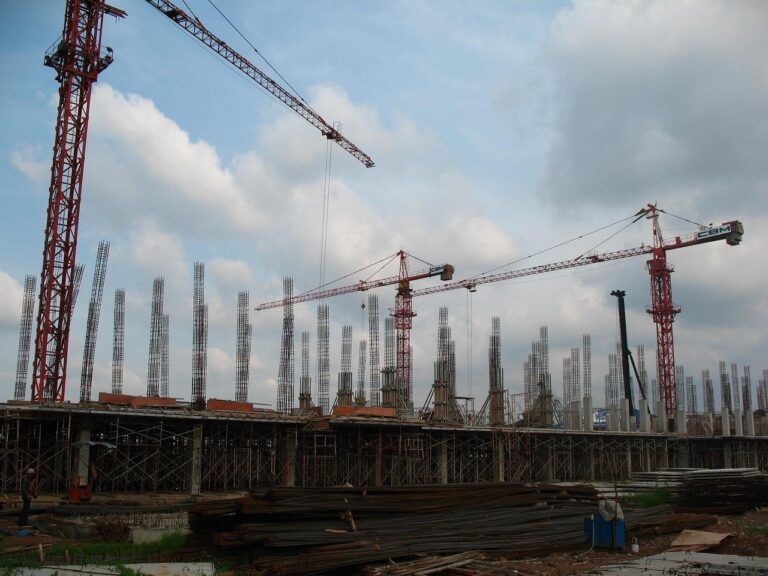
Data-center construction is creating more business for construction crews, material suppliers and professional services firms across parts of the Southeast. It is also bringing higher costs that may complicate the benefits of the boom.
In a new survey of 376 companies, the Federal Reserve Bank of Richmond found that businesses directly involved in building data centers experienced annual input-cost increases averaging 9.7%, compared with approximately 6.7% at firms with indirect involvement or no involvement. Their wages rose faster, too, as employers competed for skills and workers.
The results give a more detailed picture of the data-center economy than the familiar announcements of large investments and new facilities. The construction boom reaches far beyond technology companies, and the financial effects do not stop with a building’s completion.
Who is benefiting from the building boom?
The Richmond Fed’s Fifth District includes Virginia, the Carolinas, Maryland, the District of Columbia and most of West Virginia. The district is home to more than one-fifth of U.S. data centers, giving its businesses an unusually close view of the industry’s expansion.
In the bank’s October survey, 31% of respondents reported some direct or indirect connection to data-center construction. About 18.6% were directly involved, 8.4% were indirectly involved and another 4% reported both kinds of work.
Direct participants provide construction labor, materials or other essential services. Indirect participants include legal, consulting, financing and recruiting operations. Most businesses surveyed, 69%, said they were not involved at all.
That distinction matters. The data-center economy is growing, but it has not become the entire regional economy. Among participating firms, roughly 68% derived less than 10% of their revenue from data-center activity.
Wages rise, but materials and other expenses rise faster
Wages at directly involved firms rose an average of 4.2% over the year, compared with 4% at indirectly involved businesses and 3.4% at uninvolved firms.
The increases in input costs were larger. Directly involved firms reported 9.7% annual growth, compared with about 6.7% for indirect and uninvolved businesses. The prices directly involved firms charged customers rose 6.4%, versus 5% among indirectly involved firms and 4.5% at uninvolved ones.
Those differences suggest that companies close to the construction boom are experiencing greater demand, but also greater pressure to pay for labor, supplies and services. Higher selling prices did not fully offset their reported input-cost increases.
The Richmond Fed’s November 3 analysis cautions that the figures describe surveyed companies rather than proving data centers caused every wage or price difference. The businesses involved may differ from uninvolved companies in size, industry and location.
Employers expect more hiring
Construction-linked businesses also expressed greater optimism about employment. Among directly involved firms, the percentage expecting staffing to rise over the next six months exceeded the percentage anticipating cuts by 14 points. The gap was 11 points for indirectly involved firms, versus five points among uninvolved businesses.
That does not mean permanent data-center jobs will expand by those percentages. The figures measure the balance of employers expecting to hire or reduce staff. They also include work tied to construction, which can rise rapidly and then subside after a project is built.
For electricians, engineers, construction workers and suppliers, the near-term demand can bring opportunities. For contractors and employers outside data-center projects, it can also mean having to compete harder for the same workers and materials.
A regional question bigger than one industry
The economic test is whether this wave of construction builds durable regional skills and businesses or produces temporary shortages and higher prices that remain after major projects are finished. The survey cannot settle that question, but it shows that the effects already reach beyond data-center owners and operators.
It also offers a caution against treating every announced investment as an equal gain for local workers. Wage increases are valuable, but the broader outcome depends on how many employees benefit, how long jobs last and how local housing, transportation and utility costs respond.
For Virginia and the Carolinas, the data-center boom is already a labor and business-cost story as much as a technology story. The new survey begins to show who feels both sides of it.
Community Voice
A snapshot of reader views, not a scientific survey.
Explore Community Voice →About the Desk

Across the Sun Belt

They Moved to Rural Texas for Quiet. Then the Technology Boom Arrived.

Amazon Pledges $1 Billion for Communities Hosting Data Centers

Texas, Louisiana and Mississippi Are Competing for the Next Generation of Megaprojects

A Tiny Texas Community Is Becoming a $1.2 Billion Data Center Hub