Duluth vs. Suwanee: Two Different Styles of Gwinnett Suburbs
Get major local stories and development updates.
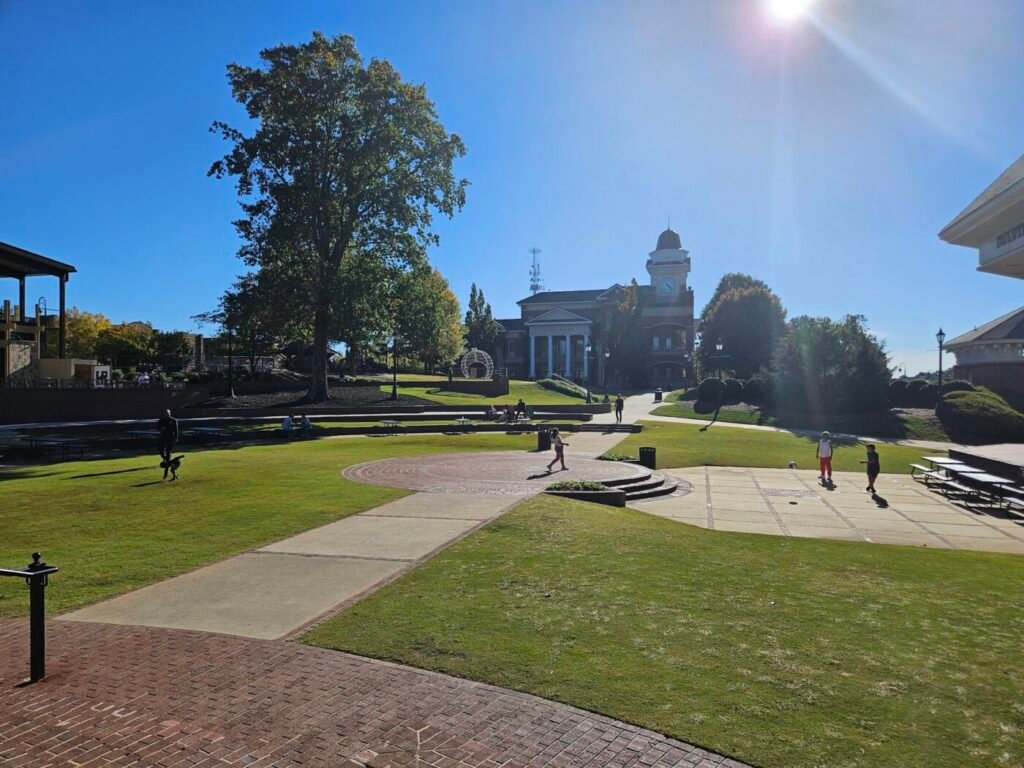
In the northern stretch of Gwinnett County, two cities often appear together on relocation lists, weekend guides, and real estate searches: Duluth and Suwanee. Both are thriving suburbs just outside North Fulton, both offer walkable town centers, and both attract families drawn to the quality of life in this part of metro Atlanta.
Yet despite their proximity, the two cities feel noticeably different. Their histories, demographics, downtown environments, and cultural rhythms create two distinct versions of suburban life.
For residents across Johns Creek, Alpharetta, and South Forsyth, the comparison is a useful way to understand how Gwinnett’s northern suburbs have evolved.
Duluth: A Historic Town Reinvented
Duluth is one of the older communities in Gwinnett County, with origins dating back to the late 19th century. For much of its history it functioned as a small railroad town, and that legacy still shapes its layout today.
In the past two decades the city invested heavily in revitalizing its historic downtown. The result is a compact district centered around Duluth Town Green, where a small amphitheater, public lawn, and restaurants cluster together within walking distance.
Unlike some newer suburban developments, Duluth’s downtown has a slightly irregular street pattern and a mix of building styles that reflect its gradual growth over time. Restaurants, breweries, and small businesses fill former storefronts and newer infill spaces alike.
The atmosphere often feels relaxed and slightly eclectic. Live music, food festivals, and outdoor movie nights regularly bring residents to the Town Green, creating the sense of a traditional small-town gathering place.
Duluth also stands out culturally. The city sits near one of the most diverse corridors in metro Atlanta, with large Korean, Chinese, and other Asian communities nearby along Pleasant Hill Road. That influence is visible in the city’s restaurants, markets, and everyday street life.
For many visitors from Johns Creek or Alpharetta, Duluth offers something slightly different: a suburban downtown with a multicultural energy and a touch of historic character.
Suwanee: A Master-Planned Community
About ten minutes north, Suwanee presents a different model of suburban development.
While the city also has historic origins (read below), much of its modern identity has been shaped by careful planning and steady investment over the past 20 years. Suwanee Town Center Park sits at the heart of the city’s social life, surrounded by restaurants, shops, offices, and apartments.
The park itself is expansive and carefully designed, with open lawns, a stage for concerts, fountains for children, and pedestrian-friendly streets connecting the surrounding blocks.
The overall impression is orderly and polished. Streetscapes feel deliberate, buildings follow consistent architectural themes, and public spaces are carefully maintained.
Suwanee has repeatedly been ranked among the best places to live in Georgia and nationally by several publications, in part because of this planning philosophy. The city places a strong emphasis on parks, greenways, and community programming.
Events at Town Center Park are frequent and well attended, ranging from concerts and movie nights to seasonal festivals. The environment tends to feel family-oriented and community-focused.
Where Duluth feels layered and historic, Suwanee often feels intentional and newly built.
Downtown Atmosphere
The contrast between the two cities is perhaps most noticeable in their downtown districts.
Duluth’s Town Green is smaller and more intimate. The streets around it include older buildings, varied architecture, and a mix of long-standing restaurants and newer additions. Visitors often wander between small businesses, breweries, and casual eateries.
Suwanee Town Center Park, by comparison, feels larger and more open. The surrounding development was planned in stages, resulting in a cohesive layout with wide sidewalks, coordinated storefronts, and clear sightlines across the park.
Both areas host frequent events, but the overall mood differs. Duluth’s gatherings often feel like neighborhood festivals, while Suwanee’s events sometimes resemble large community productions.
For residents in North Fulton who enjoy exploring nearby towns, the two destinations offer complementary experiences.
Food Scenes
Dining is another area where the cities diverge.
Duluth’s proximity to Pleasant Hill Road gives it access to one of the most vibrant international food corridors in the Atlanta region. Korean barbecue restaurants, Asian bakeries, and specialty markets have made the area a destination for food enthusiasts.
Suwanee’s restaurant scene tends to lean more toward contemporary American dining, cafés, and family-friendly restaurants clustered around Town Center. The city has also seen a steady rise in upscale casual eateries and dessert spots that cater to its growing population.
For food exploration, Duluth often wins on diversity. For a polished evening out near a park or plaza, Suwanee offers an appealing setting.
Housing and Growth
Both cities have experienced steady population growth, reflecting broader trends across northern Gwinnett County.
Duluth includes a wider mix of older neighborhoods and newer developments. Housing ranges from established subdivisions to townhomes and apartments near downtown.
Suwanee, meanwhile, features a larger number of master-planned communities and newer residential areas. Many neighborhoods were built with parks, sidewalks, and amenities designed from the start.
Both cities benefit from proximity to major employment centers in North Fulton and Gwinnett, including offices along the I-85 corridor and the technology hub around Alpharetta.
Parks and Outdoor Life
Outdoor space is a major priority in both communities.
Suwanee has built an extensive park system connected by greenways, including the Suwanee Creek Greenway, which stretches for miles through wooded areas and neighborhoods.
Duluth also maintains a growing network of parks and trails, and its riverfront location near the Chattahoochee adds additional recreational opportunities nearby.
For residents who enjoy walking, cycling, or spending time outdoors, both cities offer strong options.
Two Successful Models
In many ways, Duluth and Suwanee represent two successful approaches to suburban development.
Duluth blends historic origins with cultural diversity and incremental redevelopment. Its downtown feels organic and slightly unpredictable, shaped by decades of change.
Suwanee represents a more modern suburban vision, built around intentional planning, expansive public spaces, and a strong emphasis on parks and community programming.
Both have become destinations not only for Gwinnett residents but also for visitors from nearby North Fulton communities such as Johns Creek and Alpharetta.
For families deciding where to live—or for locals simply looking for a new place to spend an evening—Duluth and Suwanee offer two distinct styles of suburban life within just a few miles of each other.
A Much Older History Beneath Modern Suwanee
Although modern Suwanee often feels like a carefully planned suburban city centered around parks and a polished town center, the area’s history stretches back much further than its contemporary image might suggest.
Long before today’s downtown existed, a large Native American village stood about three miles southwest of the current Town Center, near the place where Suwanee Creek flows into the Chattahoochee River. For centuries, a substantial settlement flourished on both sides of the river. Early accounts associate the village with Shawnee inhabitants, and later historical records indicate that Cherokee and Creek communities also lived in the area. The site appeared on maps connected to land ceded to the United States by the Cherokee in 1817 and by the Creek in 1818, and it was often referred to as Suwanee Old Town.
The origin of the name “Suwanee” itself is closely tied to this Native American heritage. Some historians suggest the word may mean “echo,” while others believe it derives from a Creek word referring to the Shawnee people. Another explanation is that early settlers simply adapted their pronunciation of “Shawnee.” Regardless of the exact origin, the name reflects the area’s long connection to Native American history.
The federal government formally recognized Suwanee as a community when a post office was established in 1838. Like many Southern towns, Suwanee’s early development was closely linked to transportation. Railroads played a particularly important role. In 1869 a right-of-way was sold for the Georgia Airline Railroad, and by 1871 the Southern Railroad and its depot ran through the area. The village gradually grew around this depot.
Additional rail lines further strengthened Suwanee’s role as a small regional hub. In 1881 the Richmond & Danville Railroad opened the Lawrenceville–Suwanee narrow-gauge line, allowing passengers to transfer in Suwanee and continue toward Atlanta. By 1880 the town had 39 dwellings and about 216 residents, along with a hotel, general store, and other small businesses.
Maps from the early twentieth century show a modest but active rural economy. A 1923 Sanborn fire insurance map recorded twelve stores, two auto repair garages, blacksmith shops, a feed mill, a cotton gin, and even a coffin factory. Cotton farming supported much of the local economy, and the first cotton gin in the town was built in the early 1870s.
Despite this early activity, Suwanee remained a small agricultural community for much of the twentieth century. The town was officially incorporated in 1949, covering just over three square miles. Real growth did not begin until the 1970s, when the expansion of the regional highway system—including Interstate 85—brought new development and easier connections to Atlanta.
Since then the city has expanded significantly. What was once a rural town of just 615 residents in 1970 has grown into a community of more than 19,000 people today, covering roughly 10.8 square miles.
The modern parks, greenways, and walkable town center that define Suwanee today sit on land with a much longer and more layered history than many visitors realize.
Read Also:
About the Author


Best in Class – Johns Creek
Best in Class - Johns Creek is dedicated to supporting your child's learning goals with a team of passionate educators. They actively teach their...
Notice an update, correction, or detail we should include? Tell the editor. Seen something new around you? Send us a local tip.

Most Popular

 Siemens’ Alpharetta Rail Operation Is Hiring From $20 an Hour to $95,000 a YearBusiness & Development
 Barnes & Noble Is Opening Bookstores Again — and the Sun Belt Is Helping Drive the ComebackBusiness & Development