Fall Is the Right Time to Repair Many North Atlanta Lawns
September marks the best time to repair lawns in North Atlanta. Homeowners with tall fescue can benefit from fall seeding, preparing yards to thrive before winter sets in.
Get major local stories and development updates.
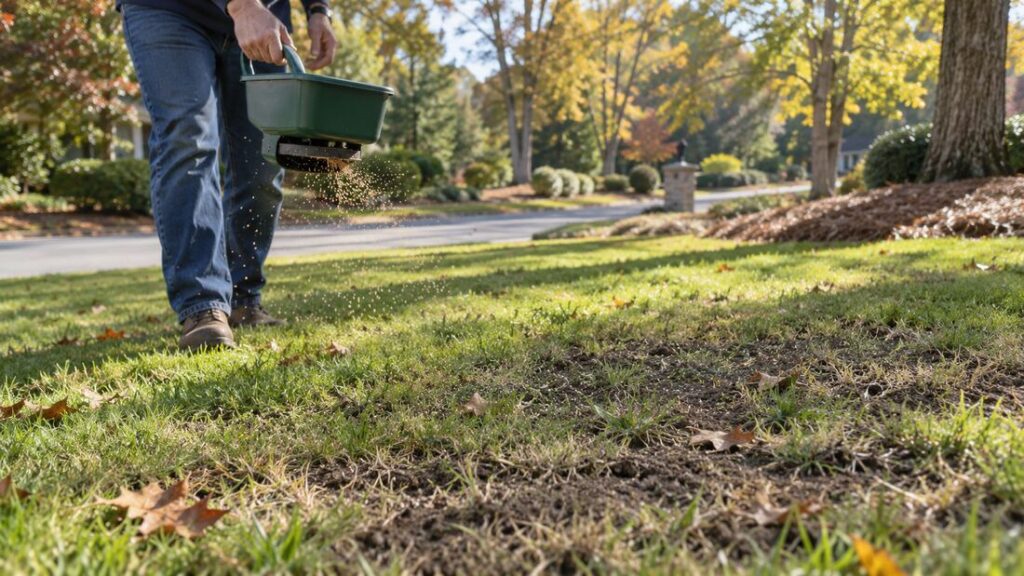
September is when many North Atlanta lawns reveal exactly how hard summer was on them. The thin strip beside the driveway, the bare place where children and dogs turn toward the backyard, the fescue that never quite returned after weeks of heat: for homeowners with cool-season turf, this is the moment to repair it.
Across Johns Creek, Alpharetta, Milton and South Forsyth, early fall brings the more forgiving conditions tall fescue needs to germinate and begin putting down roots. The work is not complicated, but the calendar matters. A lawn seeded now has time to establish before winter, while waiting until the season is well along can leave young grass too small to handle cold weather and leaf cover.
First, know what is already growing
Not every brown or thin lawn should be treated the same way. Tall fescue is common in shaded North Atlanta yards and is the grass homeowners can successfully seed or overseed in fall. Bermuda and zoysia are warm-season grasses. They are headed toward dormancy now, so permanent repair or new planting for those lawns belongs in late spring and early summer, when the soil has warmed again.
That distinction can save a great deal of money at the garden center. A bag of seed may make sense for a struggling fescue lawn, but it will not turn a tired Bermuda lawn into a new permanent stand before winter. Homeowners who want temporary winter color have a separate choice to make, but it is not the same project as repairing the underlying lawn.
Good contact beats more seed
The simplest preparation is often the most useful. Mow the existing fescue a little shorter than usual, clear away leaves and loose debris, and rake thin areas enough to expose soil between the remaining blades. On compacted ground, core aeration can help seed reach the soil and give water and air a path downward. Seed scattered over a layer of thatch is far more likely to disappear than to grow.
A soil test is worth doing before adding fertilizer, especially in yards that have been treated repeatedly without much improvement. The result can tell a homeowner whether the lawn needs a nutrient correction or whether the larger problem is shade, drainage, compacted soil or the wrong grass for the place.
Protect the first few weeks
New seed needs steady surface moisture until it germinates and begins to fill in. That usually means light watering often enough to keep the top layer of soil from drying out, then a gradual move to deeper, less frequent watering as roots develop. Avoid washing seed into low spots, and keep heavy foot traffic, play equipment and aggressive mowing off the new areas while they are still delicate.
There is no need to transform every lawn into a golf course. A careful pass over the thinnest places, done during this small fall window, can make a yard feel healthier by Thanksgiving and give it a much stronger start next spring.
More worth reading from around here.
About the Author


In North Atlanta

Dervish Plans 200-Seat Turkish Restaurant in Johns Creek

Dumpling Master Opens at Peachtree Corners Town Center

ANDRITZ Is Hiring Engineers and Project Leaders in Alpharetta

South Forsyth Roads and Development Take Center Stage at Forsyth County Meeting
20-Acre Buford Highway Tract Hits Market at $5.08 Million
Old Milton Parkway Widening Will Reshape Avalon Corridor Through 2029
IN NORTH ATLANTA