The Death of the Suburban Discount. Why Living Outside Atlanta Is Now More Expensive Than the City
The rising cost of living in North Atlanta suburbs like Alpharetta and Johns Creek is overtaking prices in the city. Limited land, strong local economies, and walkable centers are reshaping housing affordability and market demand.
Get major local stories and development updates.
For decades, the logic around Atlanta was simple. The farther you moved from the city, the more house you could afford. North Fulton and South Forsyth were built on that assumption—more space, newer homes, better schools, all at a relative discount to intown living.
That logic is breaking. And in 2026, it may be gone for good.
A growing body of data now points to a reversal that would have seemed unlikely even five years ago: the outer edges of metro Atlanta—particularly the North Atlanta corridor—are on track to become more expensive than the city itself.
What’s happening across Alpharetta, Johns Creek, Milton, and South Forsyth is not just a competitive housing market. It’s a structural shift in how the region works.
A Region That No Longer Revolves Around Atlanta
The traditional model assumed that jobs were concentrated in downtown or Midtown, and that suburbs existed to support that core. Commute distance dictated home prices.
That’s no longer the case.
The North Atlanta corridor has evolved into what many now describe as a self-sustaining economic zone. Alpharetta alone hosts hundreds of technology and fintech companies, drawing a highly paid workforce that no longer needs to commute south to find opportunity. Johns Creek is following a similar path, with large-scale redevelopment projects reshaping what was once a purely residential landscape.
The result is a region where proximity to downtown Atlanta matters less than proximity to jobs, amenities, and lifestyle centers within the suburbs themselves.
In practical terms, living in Alpharetta or Johns Creek is no longer a compromise. For many buyers, it’s the goal.
The Rise of the “Suburban Core”
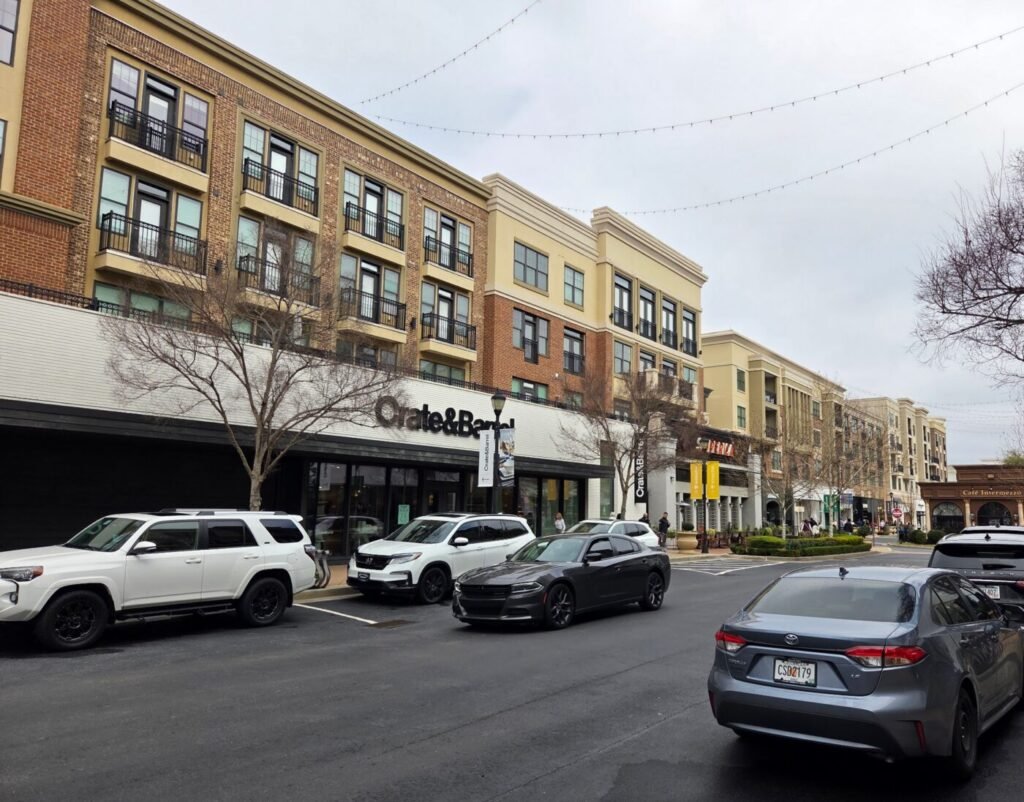
Walk through Avalon on a weekday evening, or Halcyon on a Saturday morning, and the shift is easy to see. These are not traditional suburban retail centers. They function more like compact downtowns—places where residents can live, work, and spend an entire day without getting into a car.
That model is expanding.
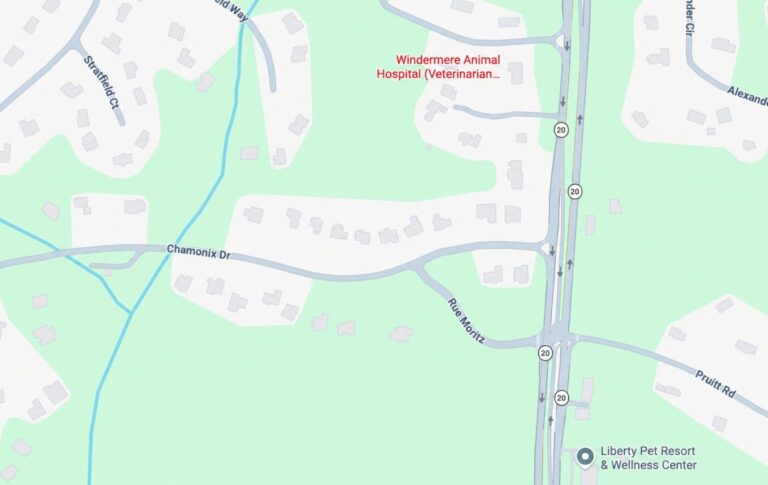
In Johns Creek, the Medley development is set to transform a former corporate campus into a dense, walkable hub with housing, retail, and public space. In Alpharetta, the Alpha Loop continues to redefine how people move through the city, connecting neighborhoods, offices, and retail in a way that carries real economic value.
Homes within walking distance of these kinds of amenities now command a measurable premium—often 10 to 15 percent higher than comparable properties farther away.
In other words, the new “location advantage” is no longer downtown versus suburbs. It’s walkable node versus everywhere else.

Land Is Running Out—And That Changes Everything
There’s another force driving prices upward, and it’s less visible but just as important: the region is running out of space.
Within roughly a 45-minute commute of North Atlanta’s job centers, buildable land has become scarce. The easy expansion phase is over. New development is increasingly complex, expensive, and constrained.
That scarcity is pushing prices higher, even as interest rates remain elevated. Mortgage rates hovering in the mid-6 percent range have cooled some demand, but not enough to offset the supply shortage.
At the same time, many homeowners are choosing not to sell at all. Those who locked in 3 percent or 4 percent mortgages earlier in the decade have little incentive to move into a higher-rate environment. The result is a market with fewer listings, steady demand, and a floor under pricing that is difficult to break.
The New Geography of Affordability
As prices in Alpharetta and Johns Creek hold firm, the search for affordability is shifting outward.
Duluth and Suwanee have become entry points for buyers who are priced out of North Fulton, offering relatively lower home prices while still providing access to major employment corridors. Farther out, places like Winder are absorbing families looking for homes under $500,000—something that has become increasingly rare in the core suburbs.
But that shift comes with trade-offs.
Longer commutes, higher fuel costs, and infrastructure that has not kept pace with growth are reshaping what “affordable” really means. The old strategy—drive farther to save money—no longer guarantees meaningful savings, especially as transportation costs rise.
Forsyth County and the Tax Advantage
One area continues to draw significant attention: South Forsyth.
Lower property taxes remain a major pull, with annual differences that can reach thousands of dollars compared to similar homes in Fulton or Gwinnett. That gap is enough to influence relocation decisions, particularly for higher-income buyers and retirees.
But the growth comes with pressure.
Traffic along Georgia 400 and key corridors like Highway 211 has intensified, and large-scale developments are adding demand to roads that were never designed for this level of density. The trade-off between cost savings and daily convenience is becoming more visible with each passing year.

What This Means for Buyers and Renters
For buyers, the shift is forcing a rethink of expectations. The idea of a “starter home” under $500,000 in North Fulton or South Forsyth is increasingly out of reach. Competition remains strongest for updated, move-in-ready homes near walkable amenities.
For renters, the situation may become even tighter.
While rents have stabilized in some areas, the pipeline for new apartment construction has slowed sharply. That sets the stage for another round of rent increases as supply tightens over the next 12 to 24 months.
The gap between renting and owning—already significant in places like Alpharetta—is likely to widen further.
A Permanent Shift, Not a Temporary Cycle
What’s unfolding in North Atlanta is not a short-term spike or a pandemic-era anomaly. It’s a redefinition of the region.
The suburbs are no longer orbiting Atlanta. In many ways, they’ve become the center of gravity themselves—economically, culturally, and increasingly, financially.
That’s why the “suburban discount” isn’t just shrinking. It’s disappearing.
And for residents across Alpharetta, Johns Creek, Roswell, Milton, Duluth, and South Forsyth, that change is already shaping where people live, how they move, and what they can afford next.
More worth reading from around here.
About the Author


In North Atlanta

North Atlanta Added 11,000 Residents, but the Growth Is Concentrated in Three Cities

What North Atlanta Should Know Today. Friday, Sept. 11, 2026
North Atlanta Courthouse Wedding Price Check: A Legal Marriage Can Start at $16

North Atlanta unemployment fell in July — but employment slipped in several communities

Why Sardines Are Disappearing From Some North Atlanta Shelves

The South Has Become America’s Buyer’s Market. The Bargains Come With Questions
IN NORTH ATLANTA