Why So Many Neighborhoods in Johns Creek and Alpharetta Are Called “Plantation”
Get major local stories and development updates.
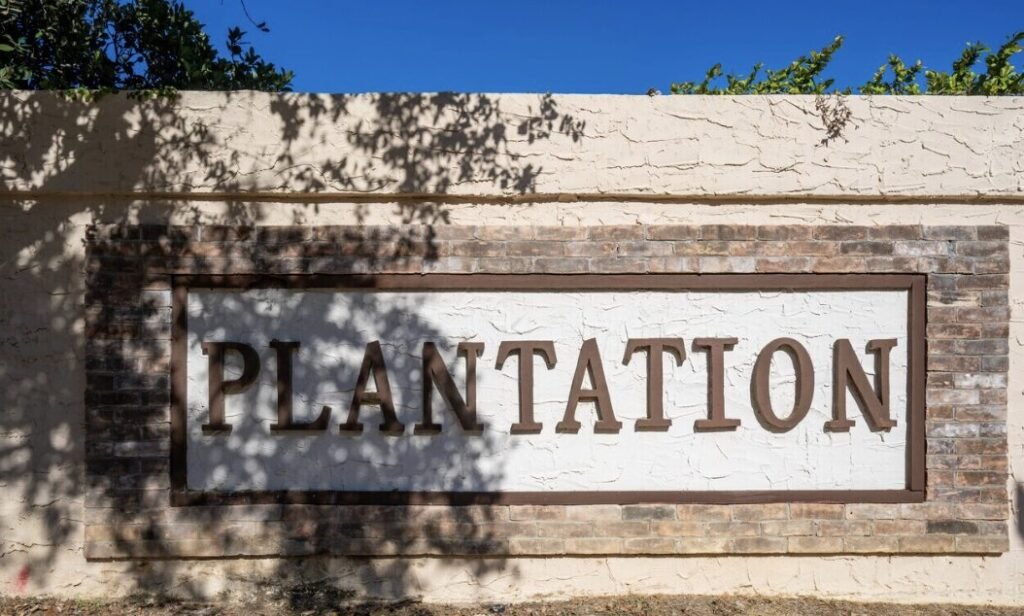
Drive through North Fulton and one pattern quickly becomes noticeable in neighborhood names. Subdivisions such as River Plantation, Jones Bridge Plantation, Berkeley Plantation, and Plantation at Brookwood appear again and again on street signs, real estate listings, and community entrances.
For many residents, the word is simply part of the landscape. Yet the reason it appears so frequently in suburban neighborhood names has more to do with late-20th-century real estate marketing than with the region’s early history.
A Development Boom in the 1970s and 1980s
Most of the communities carrying the “Plantation” name in North Fulton were developed between the 1970s and early 1990s, a period when the northern suburbs of Atlanta began expanding rapidly.
During those decades, farmland and wooded tracts were subdivided for residential neighborhoods, builders were competing to attract upwardly mobile families moving north from Atlanta, and developers relied heavily on branding and lifestyle imagery to distinguish one subdivision from another
The word “Plantation” became part of that marketing language.
At the time, the name suggested large homes and spacious lot, tree-lined streets and landscaped entrance and overall, a sense of established Southern tradition. In other words, it was meant to evoke prestige and heritage, even when the neighborhood itself was entirely new.
The Name Was Often Symbolic, Not Historical
Despite the name, most of these subdivisions were not built on historic plantation estates. Much of the land in what is now Johns Creek, Alpharetta, and Roswell was historically composed of small farms, timber land, and scattered rural homesteads rather than large plantation operations like those found farther south in Georgia.
Developers in the suburban era simply used the term as a branding device, similar to other common neighborhood naming trends of the time:
- “Estates”
- “Manor”
- “Country Club”
- “Village”
The goal was to create a name that sounded elegant, traditional, and residential.
Large Planned Neighborhoods Needed Memorable Names
Another reason the naming style became widespread is the scale of suburban development during that period. Many North Fulton neighborhoods built in the 1980s were large master-planned communities with hundreds of homes, swim and tennis amenities, HOA governance and landscaped entrances and signage.
Developers often wanted a single strong name that could brand the entire community. The word “Plantation” conveyed the idea of a self-contained residential enclave, which appealed to buyers at the time.
The Names Remain Part of the Local Landscape
Today, the term remains embedded in the region’s geography simply because neighborhood names rarely change once communities are established. Residents may live in these neighborhoods for decades, and the names become part of property records, postal addresses and school zoning references.
A Window Into the Era When North Fulton Was Built
The recurring “Plantation” names offer a small glimpse into the time when much of modern North Fulton was taking shape.
What is now a region of established suburban cities was once a patchwork of rural land. As developers transformed those landscapes into large residential communities, the names they chose became permanent markers of the era’s real estate marketing style and suburban aspirations.
Were There Historic Plantations in North Fulton?
Historical records suggest that large plantation estates were not common in what is now North Fulton County, particularly in the areas that later became Johns Creek and Alpharetta.
During the early 1800s, much of the region was still part of Cherokee Nation territory. After the forced removal of the Cherokee in the 1830s, the land was redistributed through Georgia’s land lottery system and gradually settled by small farmers.
Unlike the coastal regions of Georgia or the large cotton counties farther south, the landscape of North Fulton developed primarily as a patchwork of modest farms, timber land, and rural homesteads. Agricultural activity existed, but the terrain and soil conditions were less suited to the large-scale plantation agriculture that defined other parts of the state.
Census records from the mid-19th century indicate that enslaved people were present in the area, but typically in smaller numbers attached to individual farms rather than large plantation complexes.
Read Also:
About the Author


Best in Class – Johns Creek
Best in Class - Johns Creek is dedicated to supporting your child's learning goals with a team of passionate educators. They actively teach their...
Notice an update, correction, or detail we should include? Tell the editor. Seen something new around you? Send us a local tip.

Most Popular

 Siemens’ Alpharetta Rail Operation Is Hiring From $20 an Hour to $95,000 a YearBusiness & Development
 Barnes & Noble Is Opening Bookstores Again — and the Sun Belt Is Helping Drive the ComebackBusiness & Development