Is Soccer Taking Over North Atlanta? The Numbers Say Something Is Changing
Soccer is surging as a leading youth sport in North Atlanta, gaining ground on baseball with growing participation and new training opportunities. The region’s diverse population and expanding soccer infrastructure reflect a notable shift in local sports culture.
Major local stories and useful updates, once a week.
 Exclusive sponsor
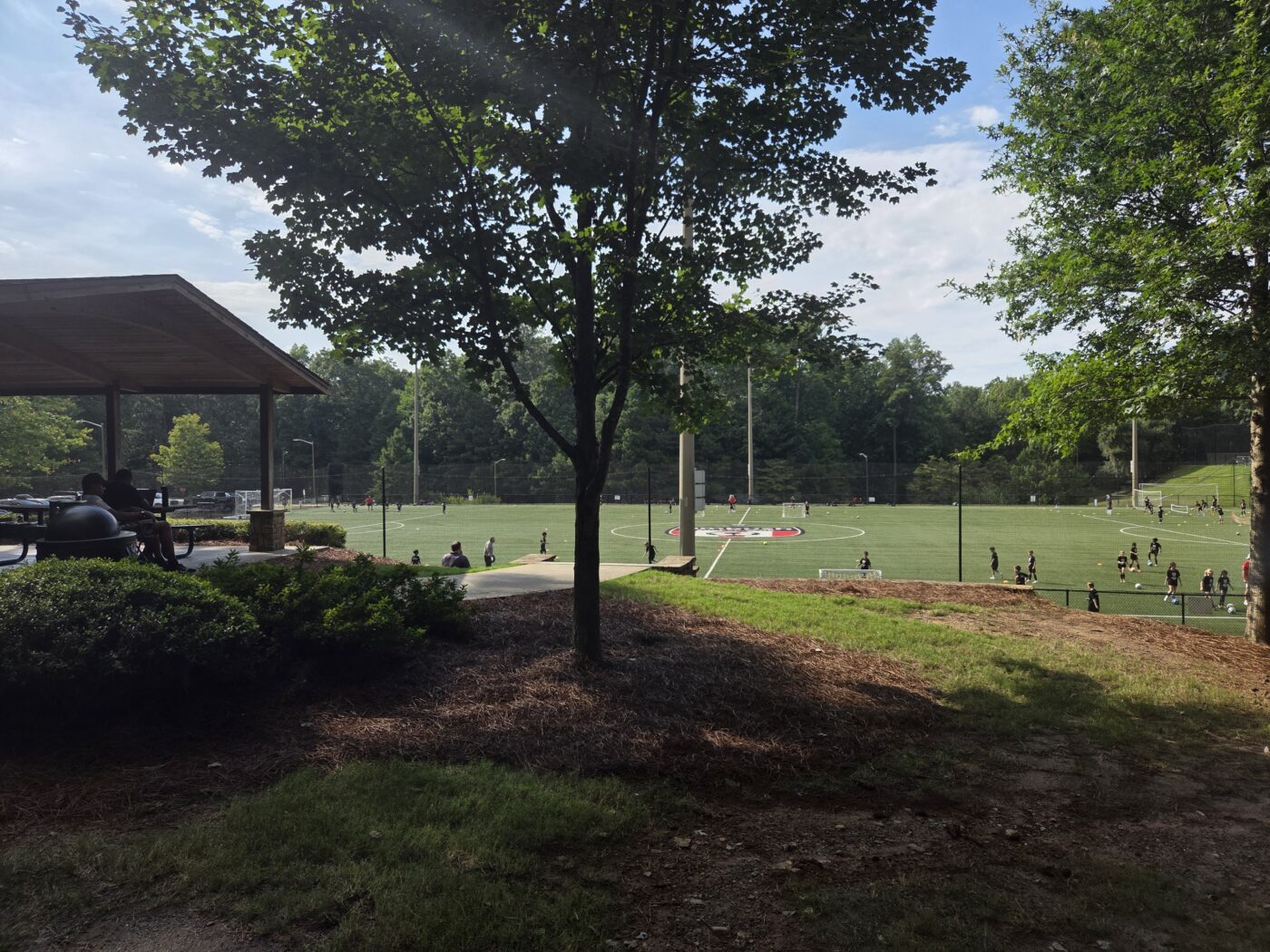
Across North Atlanta, soccer training is becoming hard to miss. Fields fill with team practices, small-group drills and private coaching, while indoor centers keep players active year-round.
The trend is real. Soccer is growing nationally and gaining ground in Georgia, especially in the diverse, family-centered suburbs north of Atlanta. Baseball remains deeply rooted here, but soccer is no longer simply another option. It has become one of the area’s leading youth sports—and, in some measures, is moving ahead.
A national crossover has already happened
The clearest evidence comes from American high schools. During the 2023-24 school year, baseball still held a narrow advantage among boys, with 471,701 participants nationally compared with 467,483 in soccer. One year later, the order reversed: boys’ soccer reached 484,908 participants, while baseball stood at 472,598.
That meant soccer had moved ahead by more than 12,000 participants. The latest National Federation of State High School Associations report says boys’ soccer added roughly another 3,000 participants during the 2025-26 school year. Baseball remains one of the country’s largest high-school sports, but it no longer holds an automatic advantage over soccer among boys.
The comparison becomes even more favorable to soccer when girls are included. Nearly 393,000 girls played high-school soccer in 2024-25, making it the third-largest girls’ sport nationally. Baseball and softball remain culturally and organizationally distinct, while soccer operates as essentially the same game for boys and girls, supported by parallel recreational, club, school and elite pathways.
Participation beyond high school is moving in the same direction. The Sports & Fitness Industry Association estimated that 16.8 million Americans played outdoor soccer in 2025, up 15.8% in a single year, while indoor soccer reached 6.6 million participants. By June 2026, approximately 25.5 million Americans reported playing indoor or outdoor soccer, up from 6.7% of the population in early 2023 to 8.2%.
Georgia is part of the shift
Georgia’s soccer growth began well before this summer’s World Cup. A recent examination of state participation found that boys’ high-school soccer grew 14% between 2013 and 2023, while girls’ soccer grew 7%. Baseball participation declined by about 1% in absolute numbers during that period.
Once Georgia’s rising student population was taken into account, the difference was more pronounced. Boys’ soccer still recorded modest growth as a share of students, while baseball and football each fell by approximately 12%.
North Atlanta is particularly suited to that growth. Nearly 35% of Johns Creek residents and about 28% of Alpharetta residents were born outside the United States, according to the latest Census estimates. Soccer arrives with many families as a familiar part of childhood, whether their connections are to Europe, Latin America, Africa, the Middle East or Asia.
The professional culture surrounding the sport is also unusually strong here. Atlanta United averaged 43,992 spectators at its home matches in 2025, easily the highest attendance in Major League Soccer and well ahead of Seattle and Charlotte. Georgia is now home to the newly opened Arthur M. Blank U.S. Soccer National Training Center in Fayette County, a 200-acre complex with 17 outdoor playing surfaces and facilities serving all 27 national teams. Atlanta will add a National Women’s Soccer League franchise in 2028.
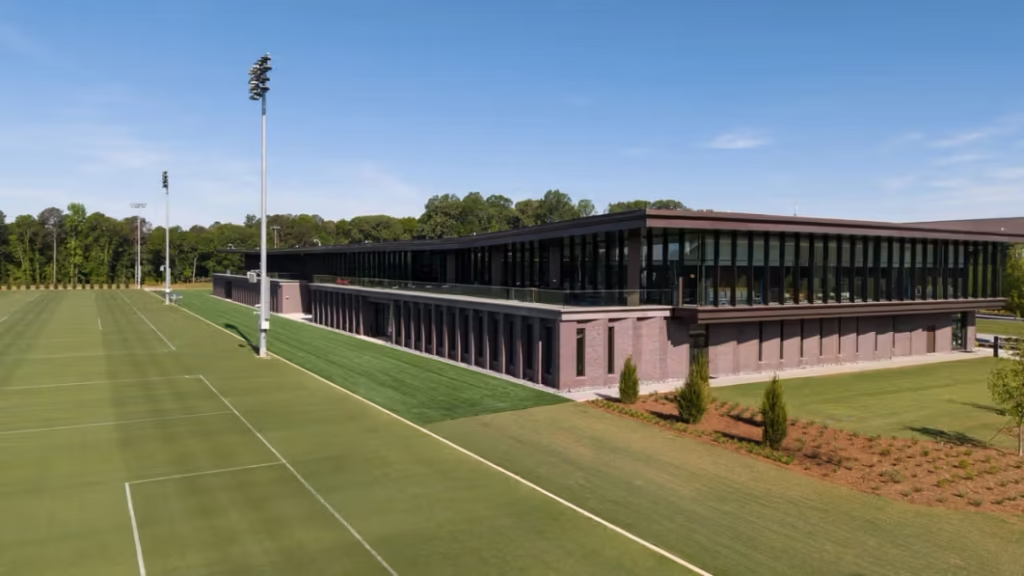
Those investments are south and west of North Atlanta, but their cultural reach does not stop at the county line. Young players now grow up within driving distance of the national federation’s headquarters, an MLS club with the country’s largest crowds and a coming women’s professional team.
The local training economy is becoming visible
The stronger evidence may be found in the daily use of North Atlanta’s parks. Johns Creek’s 2026 field calendar shows soccer occupying Cauley Creek’s turf fields through much of the week, often from 5 to 8 p.m., with weekend activity extending across Cauley Creek and Shakerag. Cauley Creek includes two lighted turf fields, two grass athletic fields and two futsal courts, creating several ways to run games and specialized training simultaneously.
In South Forsyth, United Futbol Academy operates recreational and competitive programs across Fowler Park, Matt Community Park, Central Park, the Polo Fields and the South Forsyth Soccer Complex. The organization says some Forsyth academy and select age groups draw more than 80 to 100 players to evaluations. Its recreational program begins at age 2 and continues through age 18.
Johns Creek has another expanding pathway through Georgia Express FC, which trains at Cauley Creek and Shakerag. Its fall recreational program charges between $150 and $275, depending on age, with a separate uniform cost. The club says teams fill quickly and offers competitive evaluations for players seeking professional coaching and year-round development.
Then there is the private market. TOCA’s Johns Creek center offers soccer classes beginning at age 1, along with private instruction, camps and training clinics for older competitive players. Group training memberships can cost $199 for four monthly sessions or $329 for eight. The existence of that market says something important: families are no longer treating the team practice alone as sufficient. Soccer has developed the same surrounding economy of private instruction, specialized development and year-round repetition that has long been familiar in baseball.
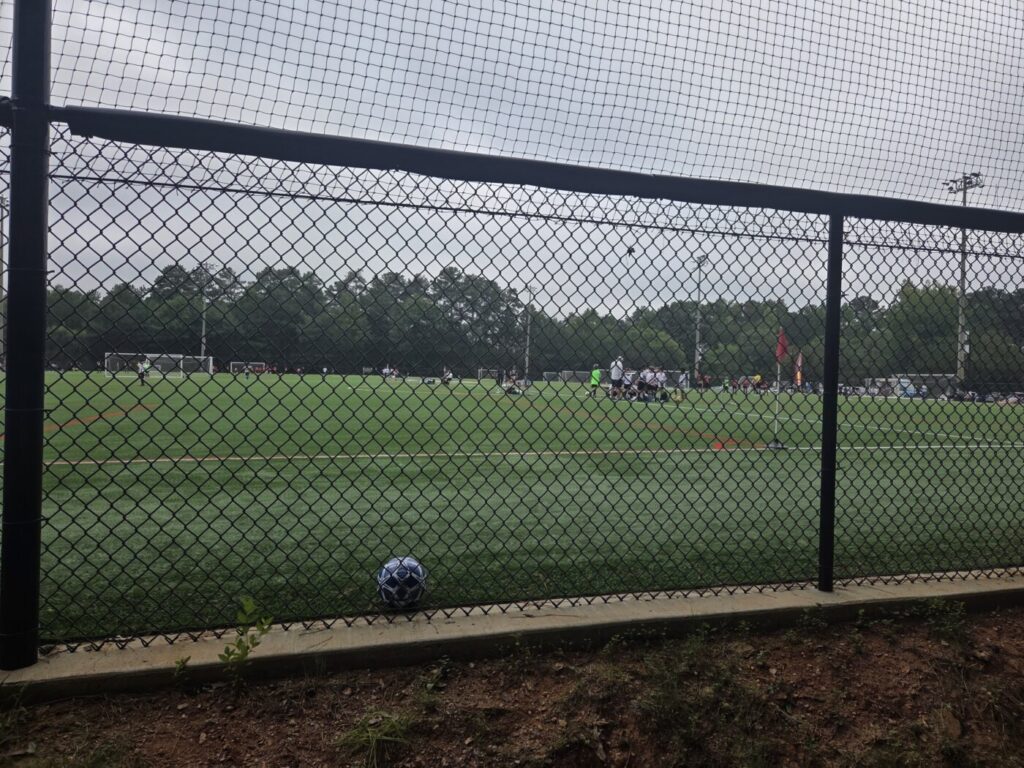
That growth has a cost. The average American sports family spent $1,016 on one child’s primary sport in 2024, a 46% increase from 2019. Club fees, travel, camps and individual instruction are turning soccer into a substantial household expense, particularly once a player leaves the recreational level.
Baseball is still very much here
North Atlanta’s baseball network remains extensive. Johns Creek Youth Baseball continues to operate divisions from preschool through age 15, with fall registration fees ranging from $125 to $200 for most age groups. Bombers Baseball in Alpharetta says it serves more than 220 families through 20 travel teams and a 12,000-square-foot indoor facility. Milton Pro Players Park offers two turf baseball fields and three batting cages, while Newtown Park maintains three baseball and softball fields beside its three general athletic turf fields.
Baseball is not collapsing nationally, either. The Sports & Fitness Industry Association included it among the team sports recording notable participation gains during the first half of 2026. The more accurate story is that baseball is growing within a broader youth-sports market while soccer is growing faster and reaching families that may not previously have entered the traditional American baseball system.
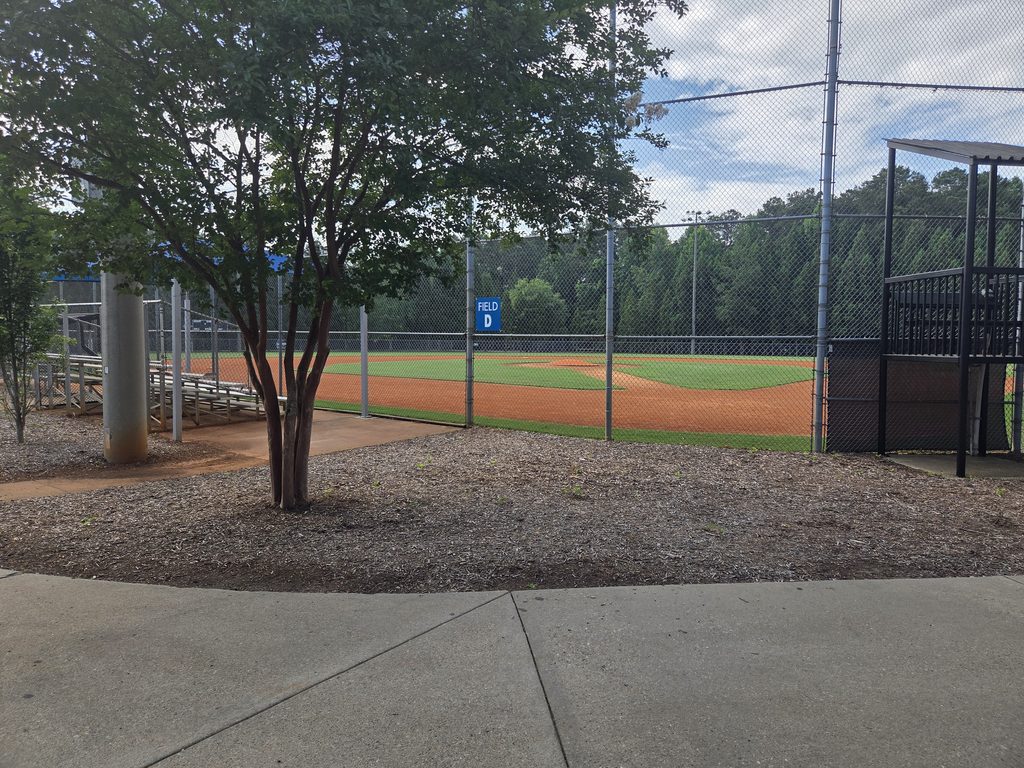
The two sports are also competing for the same finite resources: children’s time, family money, available fields and weeknight hours. Both increasingly encourage year-round development, even though their traditional school seasons do not fully overlap. A child who once might have moved casually between several sports can now encounter pressure to choose a primary one at an early age.
A new coequal sport
So, is soccer taking over North Atlanta? Not completely. Baseball still has deep institutions, strong participation and a large private-training economy. Its diamonds are not being abandoned, and its travel teams are not disappearing.
But the balance has changed. Soccer has passed baseball among high-school boys nationally, attracts nearly as many girls as boys, fits North Atlanta’s international population and now enjoys a professional infrastructure around Atlanta that few American regions can match. The busy fields and growing number of training sessions are the local expression of that larger movement.
North Atlanta is not watching baseball vanish. It is watching soccer become a coequal suburban sport—one capable of commanding the same family calendars, private coaching budgets and childhood ambitions once associated most strongly with the baseball diamond.
If this felt close to home, these stories may be worth your time too.
About the Author


Community Voice
A snapshot of reader views, not a scientific survey.
Explore Community Voice →In North Atlanta
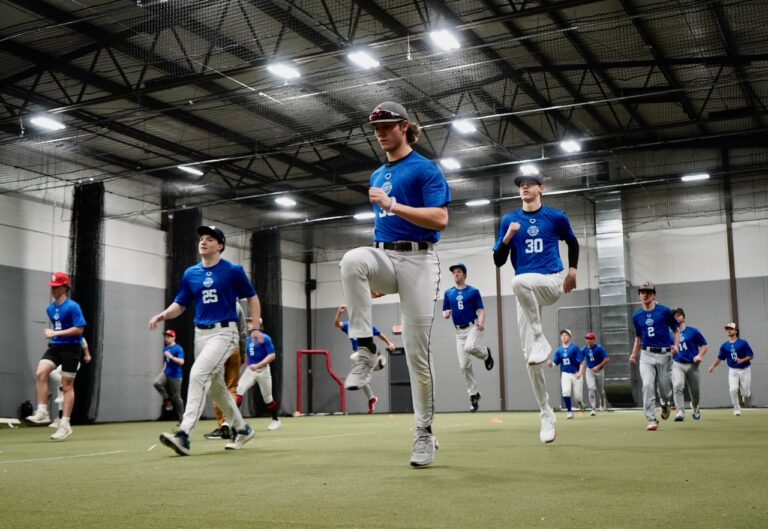
Israel Baseball’s First Atlanta Camp Connects Young Players With a Wider Jewish Community
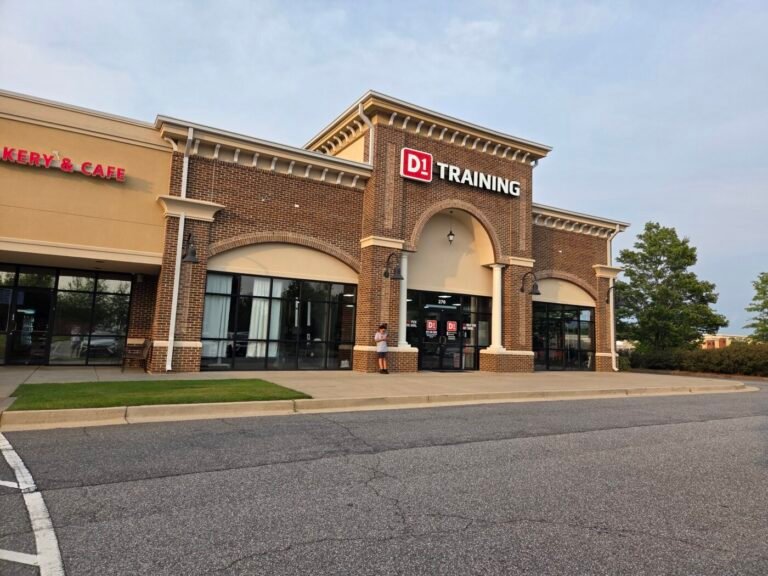
D1 South Forsyth Brings College-Style Training to Peachtree Parkway
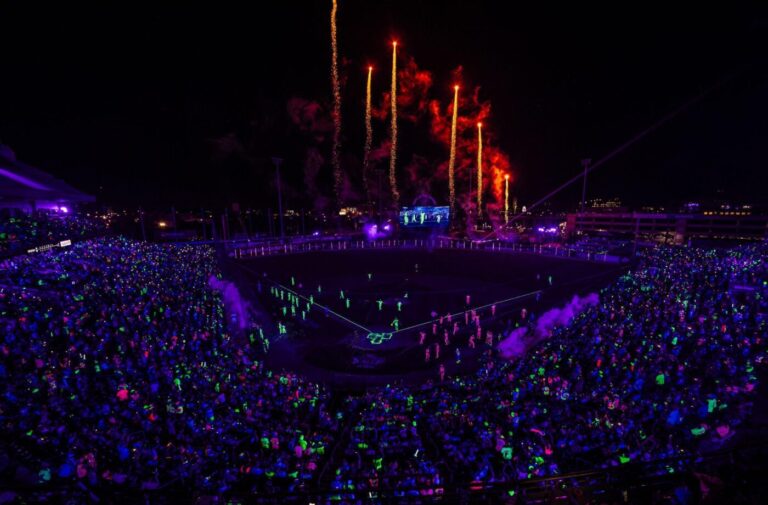
Cosmic Baseball Is Coming to Gwinnett in 2027; Ticket Lottery Opens
Play It Again Sports Sets Sept. 3 Opening in Cumming
From Bhangra to Bharatanatyam, Indian Dance Is Thriving Across North Atlanta
Georgia College Visits From North Atlanta: When to Make It a Day Trip—and When to Stay Overnight
IN NORTH ATLANTA