 Exclusive sponsor
Sugar Hill Plans 25 Affordable Cottages Near Downtown. Who Could Buy One?
Sugar Hill is developing 25 affordable, detached cottages near downtown to help moderate-income residents own homes close to city amenities. The small homes will be arranged around a shared courtyard and differ from typical apartment-style affordable housing.
Major local stories and useful updates, once a week.
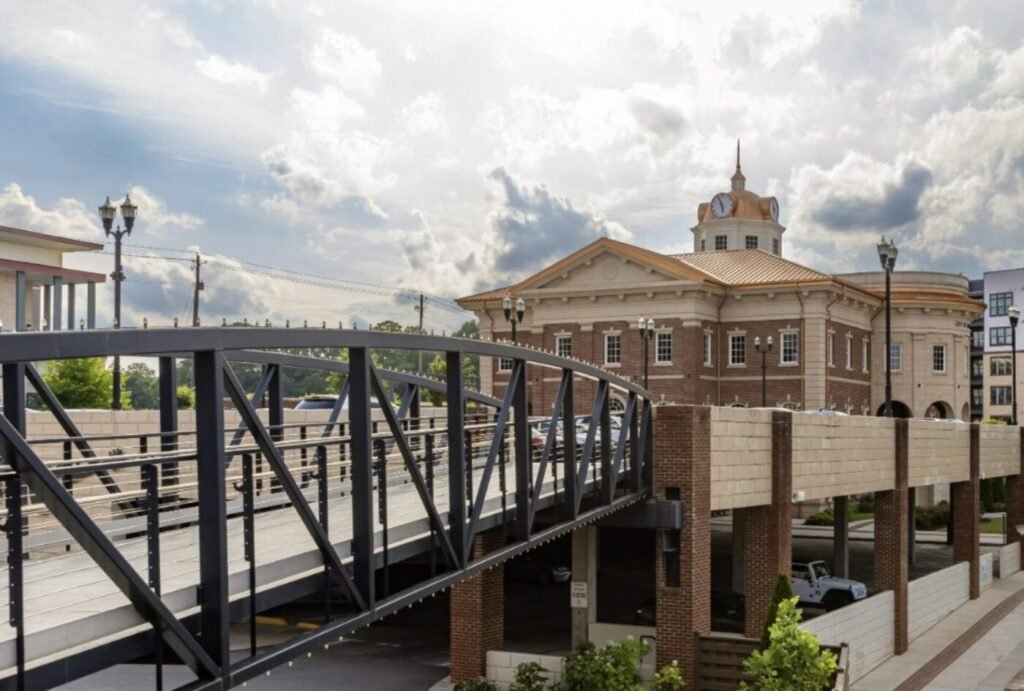
Sugar Hill has spent years building the civic attractions of a modern suburban downtown: City Hall, the Eagle Theatre, The Bowl, restaurants, apartments, public plazas and a growing trail network. Its next project addresses a less glamorous but increasingly urgent question: Can people with ordinary incomes still afford to own a home nearby?
The Roosevelt Collection is planned as 25 detached cottages on approximately 2.29 acres at 1181 Level Creek Road and 4939 Roosevelt Circle, near Sugar Hill’s central business district. The city owns the property and describes the development as its first direct venture into affordable housing—and potentially the first of several such projects.
Unlike many subsidized housing proposals, the Roosevelt Collection is not designed as an apartment complex. City planning documents describe small, fee-simple, owner-occupied houses arranged around shared open space, giving selected buyers the opportunity to own both the home and its lot.
That makes the project different from many affordable-housing developments. Rather than building lower-cost apartments, Sugar Hill is trying to create an affordable path to homeownership close to its downtown.
Small Homes Arranged Around a Shared Courtyard
The current plan calls for Craftsman-style cottages ranging from roughly 700 to 1,400 square feet, though the site plan shows many of the homes falling between approximately 900 and 1,200 square feet. Building footprints would generally be about 20 feet by 30 feet, excluding porches, decks and other exterior features.
The houses would be considerably smaller than many newer detached homes in northeast Gwinnett, but they would not be designed as temporary or institutional housing. Renderings show varied cottage, bungalow and Arts and Crafts influences, with front porches, fiber-cement siding and a mix of neutral and earth-tone exteriors. The city approved the design review in February by a 3-2 council vote.
The neighborhood would include a central courtyard measuring approximately 180 feet by 40 feet, with space envisioned for garden plots and seating. Plans also show a connection to the Sugar Hill Greenway, a mail kiosk, shared parking and additional landscaping. Each residence is expected to receive two parking spaces, supplemented by guest spaces.
At about 11 homes per acre, the development would be denser than a conventional subdivision but would retain the appearance of individual houses. That cottage-court arrangement allows the city to place more attainable homes on limited land without building a large apartment or condominium structure.
Who Will Be Eligible?
The final buyer qualifications, sales prices and application process have not been publicly announced. Those details will likely emerge as Sugar Hill and Gwinnett County complete the financing and development agreements.
The project is being supported through federal HOME Investment Partnerships Program and Community Development Block Grant funding administered through Gwinnett County. HOME money generally must benefit households earning no more than 80 percent of the area median income, adjusted for household size. CDBG-funded activities must also meet federal community-development objectives, most commonly by benefiting people with low or moderate incomes.
Current 80-percent income limits used by Gwinnett Housing provide a useful indication of the households such programs are intended to serve. For 2026, the limit is $66,000 for one person, $75,400 for two people, $84,850 for three and $94,250 for a four-person household. Those figures do not yet constitute the Roosevelt Collection’s official eligibility rules, but they show that affordable-housing programs are not limited to households living in poverty. They can include teachers, public employees, health care workers, service workers and young families earning steady incomes but struggling to buy in the current market.
The city may also need to establish rules governing future resale. HOME-assisted ownership projects typically use resale restrictions or subsidy-recapture provisions so a publicly supported home does not immediately return to unrestricted market pricing. The exact structure chosen for the Roosevelt Collection has not been disclosed.
Why Sugar Hill Is Entering the Housing Business
Sugar Hill remains less expensive than several North Fulton communities, but it is no longer an inexpensive entry point into suburban homeownership.
The city’s median owner-occupied home value reached $413,400 in the latest Census Bureau estimates. Homeowners with a mortgage faced median monthly costs of $2,314, while median gross rent reached $1,862. Nearly 80 percent of occupied homes are owner-occupied, leaving a comparatively limited rental market for households that cannot purchase.
The Roosevelt Collection is therefore aimed at a gap increasingly visible across Suwanee, Sugar Hill, Buford and the Peachtree Industrial Boulevard corridor: households that earn too much for many traditional assistance programs but not enough to purchase the homes being produced by the private market.
Location also matters. Affordable developments are often pushed toward the edges of communities, far from civic facilities and neighborhood amenities. The Roosevelt Collection would instead sit close to downtown Sugar Hill, with access to public spaces, entertainment, trails and nearby schools.
Twenty-Five Homes Will Not Solve the Larger Problem
The project’s greatest limitation is its size.
Sugar Hill has approximately 8,750 households. Twenty-five homes represent less than one-third of 1 percent of that total and will accommodate only a small fraction of the people who may qualify.
But the project may be more significant as a demonstration than as a numerical solution. It gives the city an opportunity to test whether compact detached housing can be built attractively, integrated into an established area and kept affordable without relying on a conventional large-scale apartment model.
The city has already suggested that the Roosevelt Collection could be the beginning of a broader effort. Future developments could apply the same model to other small city-owned properties or underused parcels, creating pockets of attainable ownership rather than concentrating hundreds of units in one place.
The development is still moving through procurement, and the construction schedule, final budget, sales prices and buyer-selection process remain unsettled. Sugar Hill initially received too few responses to its request for development partners and subsequently divided or reissued parts of the work. The city continued seeking proposals this spring for the site and housing construction.
If this felt close to home, these stories may be worth your time too.
About the Author


In North Atlanta
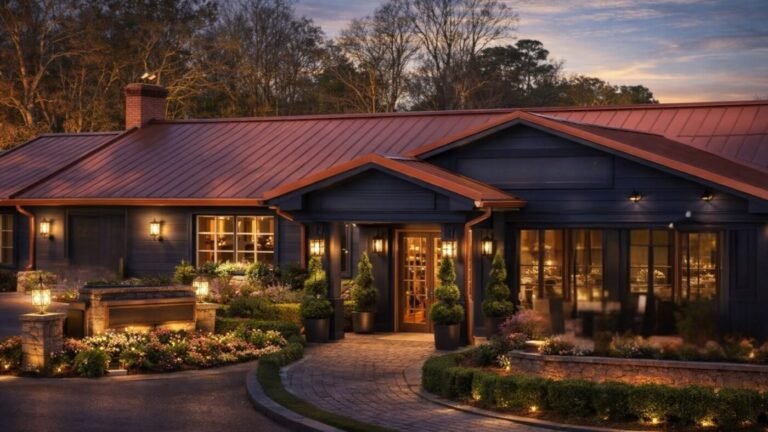
The Sanctum Nears Opening in Downtown Sugar Hill
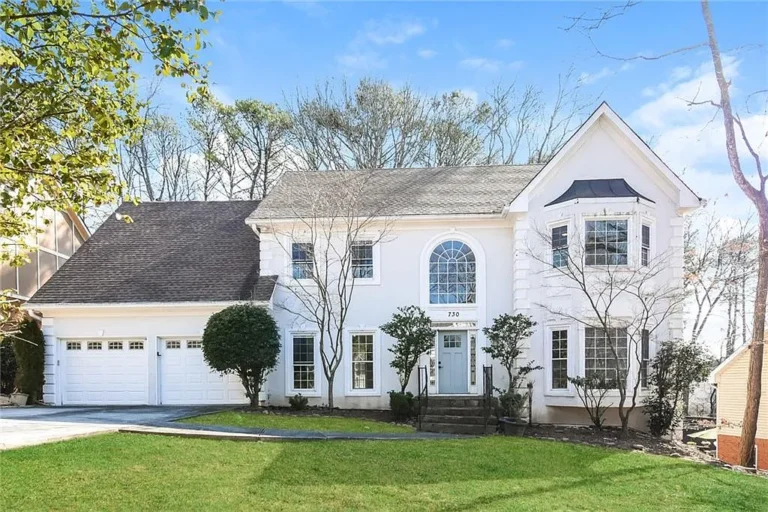
North Atlanta’s Housing Divide: Homeownership Ranges From 48% to 80%
What North Atlanta Should Know Today. Sunday, Aug. 16, 2026
Cumming Approves 89-Home Community Between Sanders Road and Market Place Boulevard
The Death of the Suburban Discount. Why Living Outside Atlanta Is Now More Expensive Than the City
Atlanta Keeps Growing, But One Key Driver Has Faded
IN NORTH ATLANTA