 Exclusive sponsor
A Stronger Roof Could Lower Insurance Bills in Texas. What About Georgia?
Texas is pushing insurers to recognize FORTIFIED roofs for insurance discounts amid rising premiums. Georgia offers limited credits but no broad program. The move highlights questions about rewarding resilient roofs before damage occurs.
Major local stories and useful updates, once a week.
Gov. Greg Abbott has directed the Texas Department of Insurance to require insurers to account for a home’s FORTIFIED roof status when setting rates. He also wants insurers prohibited from refusing new or renewed coverage solely because of a home’s age—or the age of an individual component such as its roof.
The order follows a 79% increase in Texas homeowners’ insurance premiums over six years. The state’s average annual premium reached $3,506 in 2025, up from $1,961 in 2019. Wind and hail have accounted for approximately 62% of Texas homeowners’ insurance losses since 2019.
The proposal raises a question that reaches well beyond the Texas coast: If insurers charge more as storms become costlier, should homeowners receive meaningful savings when they make their homes less likely to suffer damage?
What makes a roof FORTIFIED?
A FORTIFIED roof is not simply a new roof or a more expensive shingle.
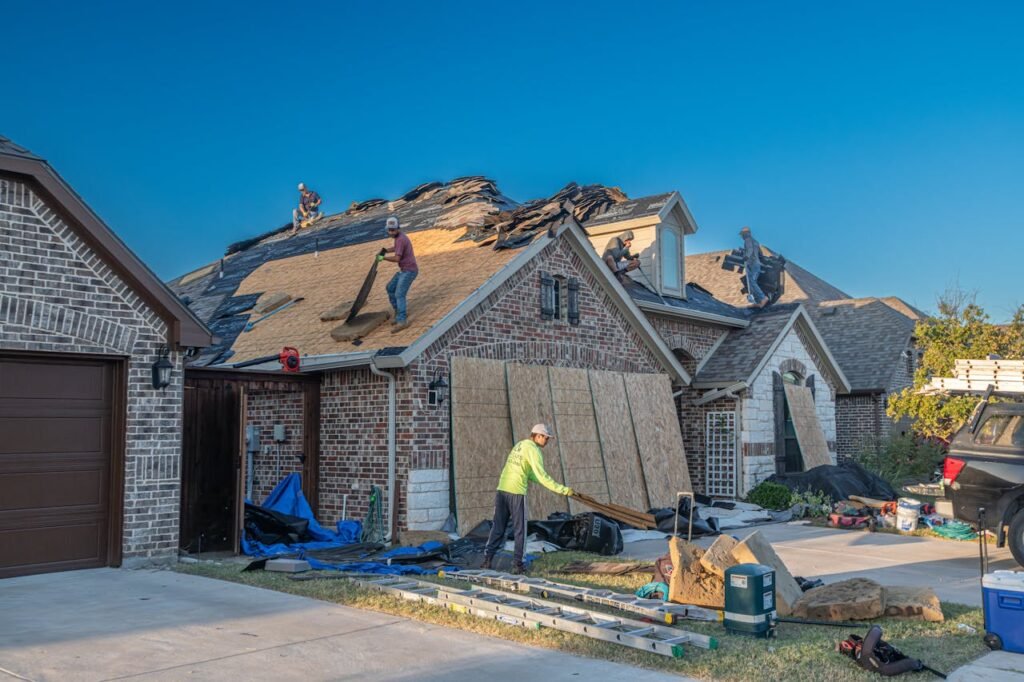
The voluntary construction standard developed by the Insurance Institute for Business & Home Safety addresses the points where roofs commonly fail during high winds and hail. It can include stronger roof-deck attachments, sealed decking that keeps rain out when shingles are lost, reinforced roof edges, wind- and rain-resistant attic vents and impact-resistant shingles in hail-prone areas.
The work must be documented during construction and verified by a trained evaluator. A finished roof receives a designation that generally remains valid for five years. Without that independent certification, a homeowner may have stronger materials but not the documentation required for a FORTIFIED-specific discount.
FORTIFIED program requirements.
Texas is not yet promising homeowners a particular percentage reduction. Abbott ordered the insurance department to identify what it can accomplish administratively and what would require legislation, with recommendations due Sept. 14. The eventual savings could therefore depend on how the regulator translates the order into rate rules—and whether lawmakers provide additional authority.
Alabama shows what a full program can look like
Texas is looking toward Alabama, where stronger construction is supported by grants and mandatory insurance discounts.
Alabama homeowners can receive grants of up to $10,000 toward qualifying resilient-roof work. A FORTIFIED Roof can produce a discount of roughly 25% to 35% on the wind portion of a policy, while higher Silver and Gold designations can earn larger reductions.
That distinction matters. A 30% wind discount does not mean the homeowner’s entire insurance bill falls by 30%. The final savings depend on how much of the premium reflects wind exposure. Even so, the reduction can reach hundreds of dollars inland and considerably more along the coast.
The Alabama model creates both sides of the incentive: assistance with the upfront construction cost and an insurance reward after the work is completed. Texas has not yet built that complete system.
Georgia offers a much narrower benefit
Georgia homeowners generally pay less than those in Texas. A standardized 2026 comparison based on $300,000 in dwelling coverage estimated an average annual premium of $2,041 in Georgia, compared with $3,899 in Texas. Individual bills can differ sharply based on location, replacement cost, roof condition, claims history, deductible and coverage.
Georgia nevertheless faces the same underlying pressures. Independent insurance agents reported that average homeowners’ premiums rose about 9% annually from 2019 through 2023 as insurers placed greater emphasis on roof age, condition and previous claims. That matters in North Atlanta, where wind, hail and falling trees can produce expensive roof losses even without the direct hurricane exposure of the Gulf Coast.
Georgia does recognize FORTIFIED construction, but its clearest published discount applies through the Georgia Underwriting Association, the market intended for properties that cannot obtain regular coverage. Its mitigation program provides credits of 5% for Bronze, 7.5% for Silver and 10% for Gold—and only against the wind portion of the policy.
That is far short of a statewide Alabama-style program offering grants and substantial mandatory discounts across the private market. Some Georgia insurers may reward a new roof or particular protective features, but homeowners must ask their own carrier what qualifies and how much the improvement would actually reduce the full premium.
Georgia has acted when roof-age rules went too far. In 2023, the state insurance commissioner ordered Farmers Insurance to rescind tens of thousands of nonrenewal notices after the company attempted to drop existing customers with roofs more than 15 years old. The commissioner said an insurer could change its standards for new customers but could not apply new underwriting guidelines to nonrenew existing policyholders.
Texas is now proposing something broader: preventing roof or property age alone from determining whether either a new or existing policy is offered.
The insurance savings must justify the investment
A resilient roof can reduce the chance that a few missing shingles become extensive water damage throughout a house. That benefit remains real even when the insurance discount is modest.
But the financial argument becomes much stronger when homeowners know the size of the reward before hiring a contractor. A vague possibility of lower premiums may not justify additional construction, evaluation and recertification costs. A guaranteed discount, combined with a grant or tax incentive, can change that calculation.
Texas is testing whether home resilience can become part of the cost-of-living solution rather than merely advice offered before the next storm. Georgia has pieces of the same idea, but not yet a comparable statewide policy.
If the Texas experiment produces measurable reductions without driving insurers away or shifting costs to other homeowners, the question for Georgia will become difficult to avoid: Why wait until after a roof fails to pay for the damage when the state could help make that roof stronger first?
If you’ve been following growth and change around here, these stories are worth a look too.
Community Voice
A snapshot of reader views, not a scientific survey.
Explore Community Voice →About the Author


In North Atlanta
Georgia’s Gas Tax Break Could Save About $5 on a 15-Gallon Fill-Up

Georgia’s Credit Card Debt Is Growing Faster Than Anywhere Else in America
Brookhaven’s Proposed 40% Tax-Rate Jump Is Not a 40% Increase in the Total Tax Bill

What North Atlanta’s College Bills Teach Before Class Begins

As HOA Foreclosures Rise, Georgia Is Changing the Rules for North Atlanta Homeowners

Forsyth Property Assessments Are Arriving. Here’s What Homeowners Should Check
IN NORTH ATLANTA