 Exclusive sponsor
From Jot Em Down to Shakerag: North Atlanta’s Most Curious Street Names
Major local stories and useful updates, once a week.
On a typical drive through Johns Creek or Alpharetta, it’s easy to treat street names as background noise—something glanced at for navigation and quickly forgotten. But look a little closer, and those signs begin to read like fragments of a much older story, one that stretches from Cherokee trading paths to cotton farms, ferry crossings, and eventually, master-planned subdivisions.
A Map Written Before the Suburbs
Long before traffic lights and office parks, the roads of North Fulton and South Forsyth followed entirely different logic. Old Alabama Road, for example, wasn’t simply named for direction—it traced a major Native American trail that later became a military and postal route connecting the Southeast.
What now feels like a local connector once carried travelers, politicians, and goods across states. In many ways, it was the interstate of its time. The modern road still follows that path, even as the world around it has changed completely.
Nearby, names like Medlock Bridge and McGinnis Ferry preserve another layer of history. These were not symbolic names but literal ones—points where families operated ferries across the Chattahoochee River, turning isolated farmland into early centers of trade and movement.
Alpharetta: A Name with Competing Stories
Even the name Alpharetta carries uncertainty. One theory ties it to a 19th-century song about a fictional Native American girl named Alfarata. Another suggests a more academic origin, combining the Greek “alpha” (first) with “retta” (town), implying a sense of ambition among early settlers.
Before any of that, the area was simply a camp ground—a place where travelers stopped near natural springs on their way between the mountains and the early rail lines of Atlanta. The polished downtown that exists today sits directly on top of that much rougher beginning.
The Humor and Hardship of Early Names
Some names in the region feel almost too strange to be real—until you realize how practical, and often humorous, their origins were.
Take Lickskillet. The name likely referred to a place where travelers arrived so late to a communal meal that all that remained was whatever could be scraped—or “licked”—from the skillet.
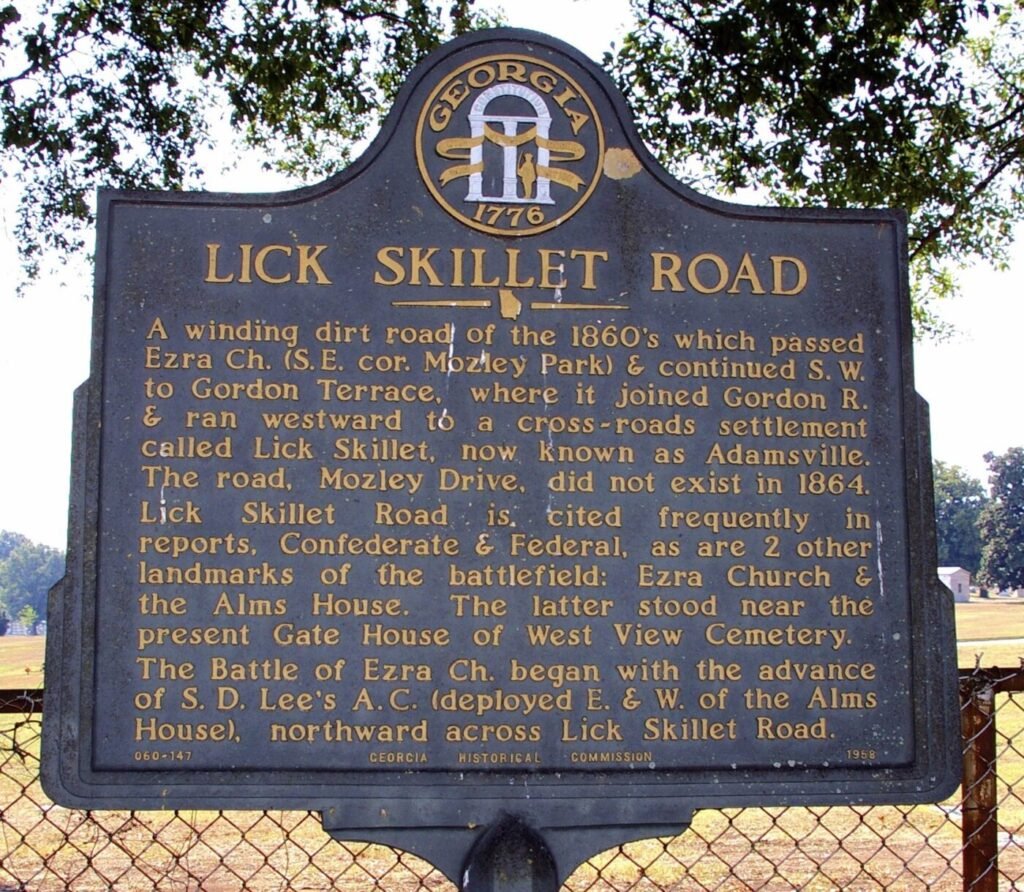
Then there’s Hardscrabble, still a road in Roswell today. It wasn’t meant to be charming. It described a life of difficult farming, where the land was unforgiving and survival required constant effort.
Shakerag and the Power of Local Legend
Few names capture the imagination quite like Shakerag, now associated with parks and schools in Johns Creek. Its origin is debated, and that’s part of its appeal.
One story suggests residents once used a “shaking rag” to signal hidden moonshiners in the woods. Another says the name came from laundry—rags hanging from trees in poorer settlements.
Jot Em Down: A Road Built on Trust
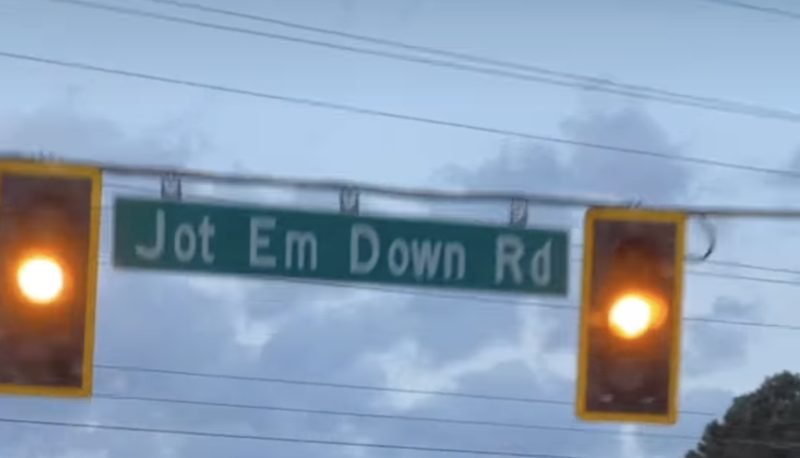
In South Forsyth, Jot Em Down Road might sound like a joke, but it reflects a real economic system. Local stores once allowed farmers to take goods on credit, promising to “jot ’em down” in a ledger until harvest season.
The phrase became the name of a store, then a road, and eventually part of the cultural identity of the area. It’s a reminder of a time when commerce depended less on contracts and more on relationships.
A modern sensitivity around the name
For many residents, Jot Em Down is simply a piece of rural history tied to a store credit system and community trust. But some residents have pointed out that the phrase can sound uncomfortably close to language historically associated with racial stereotypes or caricatures of Southern speech. In that context, it can feel less like a neutral historical reference and more like something that echoes a past where language was often used to diminish or mock.
In addition, there is a broader conversation happening across the country about place names: who they reflect, whose stories they center, and whether they unintentionally exclude others. Even when a name like Jot Em Down has a documented, non-racial origin, its tone and phrasing can still land differently in a more diverse, modern community.
When Nature Named the Place
Not every name came from people. Some came directly from the landscape.
Frogtown, Ducktown, and Eagle’s Beak all reflect moments where nature defined a place more strongly than any human plan. A chorus of frogs, a flock of unusually friendly ducks, or the shape of a river bend—these became permanent markers on the map.
The Shift to Suburban Branding
As the region moved from farmland to subdivisions, naming shifted from describing reality to shaping identity. Instead of reflecting who lived there or what happened on the land, names began to suggest a lifestyle, a mood, or even a sense of aspiration.
It’s a striking contrast to older names like Shakerag or Hardscrabble. Those earlier names came from lived experience; these newer ones come from imagination, often chosen to give a neighborhood a playful, family-friendly identity.
In former golf course communities, across Alpharetta, Johns Creek, and South Forsyth, you’ll often see streets named after figures like Palmer, Hogan, or Tiger—an immediate nod to the land’s previous use and a subtle signal of prestige. In areas designed to feel more upscale or serene, developers lean into nautical imagery, with names like Mariner’s Court, Windward Parkway, or Americas Cup Cove, even though the closest open water may be far from view.
Then there are neighborhoods that take a more rugged or nostalgic direction. Some subdivisions use Old West or frontier-inspired names—Stagecoach Lane, Cattle Drive, Colt, or Remington—creating a sense of heritage that feels more cinematic than historical. These choices are less about accuracy and more about storytelling, offering residents a ready-made identity tied to a certain version of the American past.
What ties all of these together is intention. Unlike earlier road names that emerged organically, these are curated. They are meant to feel cohesive, memorable, and marketable. In many cases, the name becomes part of the product itself—a quiet but constant piece of branding that shapes how a place is perceived long before someone ever visits.
The Peachtree Effect
Few names dominate the region like Peachtree, yet its origin likely has nothing to do with peaches at all. Historians believe it evolved from “Pitch Tree,” referring to pine trees used for resin production.
Over time, the name softened into something more pleasant, aligning with Georgia’s identity. Today, it’s repeated so often that it can confuse even longtime residents.
A Living History in Plain Sight
What makes these names compelling is not just their origin, but their survival. Roads that once carried wagons and horses now carry commuters and delivery trucks. Yet the names remain, quietly preserving the layers beneath modern life.
A drive through Johns Creek, Alpharetta, or South Forsyth isn’t just a trip between destinations. It’s a movement through time—past Cherokee trails, pioneer settlements, farming communities, and the rapid rise of suburbia.
Once you start noticing, it’s hard not to smile. Every sign has a reason, even if the story behind it has long been forgotten.
Seen a street name that makes you stop and think?
If you’ve come across a street name that feels unusual, funny, or just worth explaining, we’d like to hear about it. It could be something with a story behind it, or simply a name that stands out in your daily routine.
You can share it with us here:
https://northatlantastar.com/share-local-tips-north-atlanta/
Keep exploring with a few more useful reads from around North Atlanta.
Community Voice
A snapshot of reader views, not a scientific survey.
Explore Community Voice →About the Author


In North Atlanta
Kroger vs Publix vs Aldi vs Walmart Neighborhood Market: Which Grocery Store Saves You the Most in North Atlanta?
Preschools and Daycares in Alpharetta and Johns Creek: What Parents Should Know
Longtime Alpharetta Boutique Expands to Medley in Johns Creek
Here’s Medley’s Latest Opening Lineup—and What to Expect at Each Business
Medley Reveals Opening Lineup, Three-Day Celebration in Johns Creek

Persi Bite Brings Fast-Casual Persian Food to Johns Creek
IN NORTH ATLANTA