Apalachee High School Shooter Sentenced to Life Without Parole
Colt Gray received a life sentence without parole for the 2024 Apalachee High School shooting that resulted in four deaths and multiple injuries. The case also prompted changes in Georgia's school safety laws.
Get major local stories and development updates.
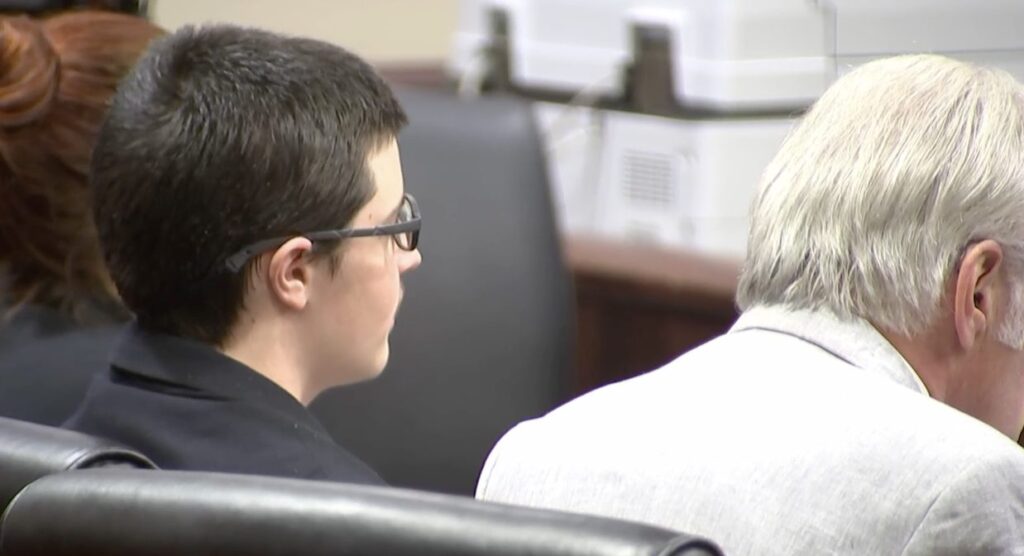
A Barrow County judge has sentenced Colt Gray to life in prison without the possibility of parole for the 2024 attack at Apalachee High School, closing the central criminal case arising from the deadliest school shooting in Georgia history.
Superior Court Judge Nicholas Primm imposed the sentence Tuesday, July 28, after three days of testimony, evidence and statements from survivors and relatives of those killed. Gray, now 16, pleaded guilty Friday to all 55 charges against him, including murder and aggravated assault. The plea was entered without an agreement with prosecutors, leaving Primm to choose between life with the possibility of parole and life without it. Gray could not receive the death penalty because he was 14 when the crimes were committed. Reuters
Primm acknowledged that Gray had endured a deeply troubled childhood and had been failed by his parents. But the judge concluded that those circumstances did not excuse an attack that prosecutors described as carefully planned and driven by a desire for notoriety.
“You do not seem to be tormented by what you did,” Primm told him. “You aren’t racked with guilt. You’re proud of yourself.”
Four lives lost at Apalachee
Gray was a 14-year-old freshman when he carried an AR-style rifle into Apalachee High School in Winder on the morning of Sept. 4, 2024. He killed students Mason Schermerhorn and Christian Angulo, both 14, along with math teachers Cristina Irimie, 53, and Richard “Ricky” Aspinwall, 39. Aspinwall was also an assistant football coach.
Nine other people were injured, including eight students and one teacher. Seven of them suffered gunshot wounds. Teachers activated recently installed panic-alert badges, and school resource officers confronted Gray within minutes. He surrendered and was taken into custody at 10:26 a.m., according to the Georgia Bureau of Investigation.
The sentencing hearing returned attention to the people who have lived with the consequences since that morning. Breanna Schermerhorn described her son Mason as someone who tried to make other students feel safe and befriended children who had once bullied him. Shayna Aspinwall, whose two young daughters lost their father, described the aftermath as a life sentence of grief and trauma for the families left behind.
A case marked by warnings and missed opportunities
The attack became especially painful for Georgia because authorities had encountered warning signs more than a year earlier. In May 2023, the FBI received anonymous reports of online threats to carry out a school shooting at an unidentified place and time. The messages included photographs of firearms.
The FBI traced the activity to Georgia and referred the matter to the Jackson County Sheriff’s Office. Deputies interviewed Gray, then 13, and his father. Gray denied making the threats, and investigators said they lacked probable cause for an arrest or further enforcement action. Schools in the area were advised to continue monitoring him. FBI Atlanta
Evidence presented during the later court proceedings painted a far more disturbing picture. Prosecutors said Gray studied previous mass shooters, maintained writings and images connected to them and carefully considered how an attack might bring him attention within an online subculture that glorified mass killings. Jail telephone calls introduced at sentencing showed him asking about online reaction to the shooting and discussing possible media coverage.
The defense presented evidence of neglect, parental drug use, frequent moves, anxiety and depression. Attorneys argued that Gray’s youth and treatment while in custody left open the possibility that he could change. Primm rejected that argument, finding that the planning behind the attack and Gray’s conduct afterward supported the state’s request for the maximum sentence.
His father’s prosecution made legal history
The criminal case expanded beyond the shooter almost immediately. Colin Gray, the teenager’s father, was accused of allowing his son to possess the rifle despite his deteriorating behavior and earlier investigation involving online threats.
A Barrow County jury convicted Colin Gray in March on charges including second-degree murder, involuntary manslaughter, child cruelty and reckless conduct. The prosecution represented an unusually far-reaching effort to hold a parent criminally responsible for providing a child access to a weapon later used in a mass shooting. His sentencing is scheduled for Thursday.
The shooting changed Georgia school-safety law
Apalachee also reshaped Georgia’s approach to school threats. In 2025, lawmakers approved House Bill 268, known in part as Ricky and Alyssa’s Law in memory of Aspinwall and Alyssa Alhadeff, who was killed in the 2018 Parkland school shooting.
The law requires faster communication between police and schools when a child makes a threat, quicker transfer of student records between districts and additional coordination of school mental-health services. It also strengthened panic-alert and anonymous reporting systems. The measure took effect July 1, 2025, alongside new state funding for campus security and student mental-health programs. Georgia Senate Press Office
Those changes now reach public schools across North Fulton, South Forsyth and Gwinnett County. They grew from a central question left by Apalachee: how warnings held by families, police agencies and schools can be brought together before a troubled student becomes a threat to an entire community.
The sentence ensures Gray will never leave prison. For the families who entered the courtroom carrying nearly two years of grief, however, the conclusion of his case cannot restore what was lost in the halls of Apalachee High School.
About the Author


In North Atlanta

South Forsyth Roads and Development Take Center Stage at Forsyth County Meeting
What North Atlanta Should Know Today
Roswell Pulls Back Property Tax Proposal, but Higher Rate Remains on Table

Suwanee’s November Tax Vote Could Save Eligible Homeowners About $74 a Year

Gwinnett Tech Leaders Say the Four-Year Degree Is No Longer the Automatic First Choice

Is the SAT Still Worth Taking? Georgia’s Admissions Rules Have Changed
IN NORTH ATLANTA