Inside Georgia’s $30 Billion EV Bet: The State Rewriting America’s Auto Map
Georgia has become a key center for electric vehicle and battery manufacturing with over $27 billion in investment, driven by major automakers and state programs.
Get major local stories and development updates.
Georgia is no longer simply a pass-through state for cars moving along I-75 and I-85. It is increasingly where those cars are designed, assembled, and powered.
Over the past several years, the state has secured more than $27 billion in private investment tied to electric vehicles and battery manufacturing, placing it at the center of a national industrial shift that is redrawing the map of American automotive production. What has emerged is not a single factory story, but a coordinated buildout—one that stretches from coastal megasites to corporate offices in metro Atlanta.
The Anchor Projects Driving the Shift
The scale of Georgia’s ambitions becomes clear in Bryan County, near Savannah, where Hyundai Motor Group is building what it calls a “metaplant.” The $7.59 billion facility is designed to produce up to 300,000 electric vehicles a year, alongside battery cells made through a joint venture with LG Energy Solution. The first vehicles—expected to include models like the IONIQ 5—mark a turning point: a fully integrated EV ecosystem on a single site.
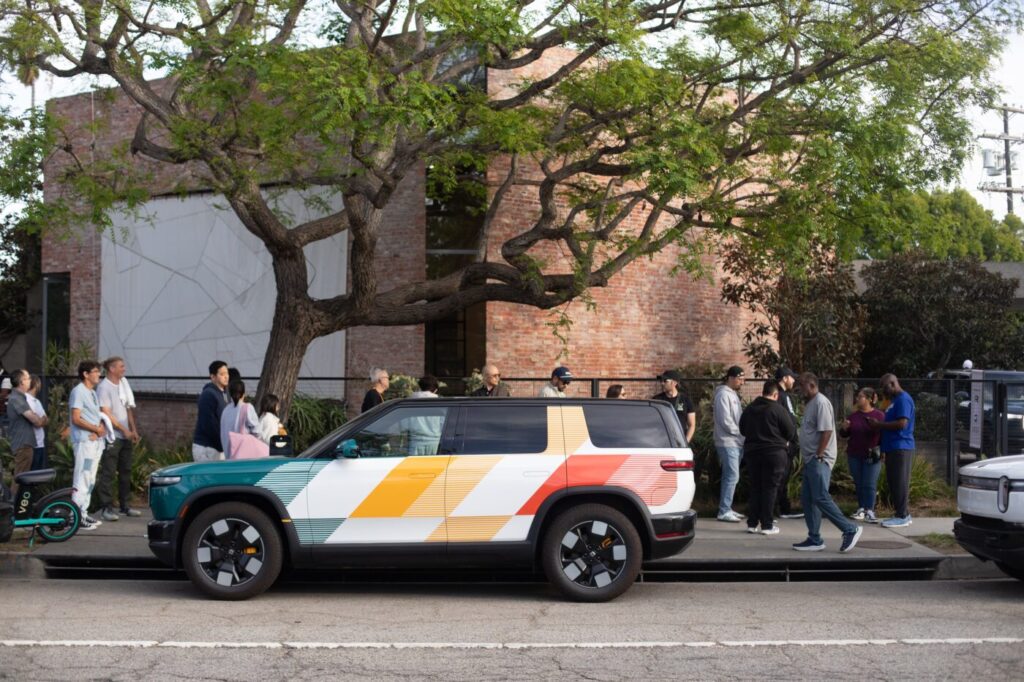
Further north, Rivian Automotive is preparing a $5 billion manufacturing campus near Social Circle. When complete, the site is expected to produce up to 400,000 vehicles annually, with a workforce projected to reach 7,500. Even before construction ramps up, Rivian has signaled its long-term commitment by establishing an East Coast headquarters along the Atlanta BeltLine, adding hundreds of white-collar roles to the region.
Legacy manufacturers are also repositioning. Kia has invested $200 million to retrofit its West Point facility for electric production, with the EV9 SUV now rolling off the line. Meanwhile, SK Battery America has built out a $2.6 billion battery complex in Commerce, supplying lithium-ion cells for vehicles such as the Ford F-150 Lightning and Volkswagen ID.4.
Taken together, these projects form a dense industrial corridor that rivals traditional auto hubs in the Midwest—both in scale and in technological integration.

Policy, Incentives, and Timing
Georgia’s rise did not happen by accident. State leaders spent years refining a playbook built around site readiness, workforce training, and aggressive incentives.
Programs like the Quality Jobs Tax Credit and Investment Tax Credit helped offset the capital costs of multibillion-dollar facilities. The state’s Quick Start workforce program—often cited as one of the most effective in the country—allowed companies to train employees before plants even opened.
Then came the federal catalyst. The Inflation Reduction Act of 2022, with its $7,500 consumer tax credit tied to North American assembly, accelerated decisions by global automakers to localize production. Since its passage, more than $28 billion in clean energy projects have been announced across Georgia in less than three years.
The result is a layered strategy: state-level groundwork amplified by federal incentives, creating a feedback loop of investment and expansion.
A Supply Chain That Follows the Factories
Where major plants go, suppliers follow. Around the Hyundai metaplant alone, more than $2.5 billion in additional supplier investments have been announced across multiple counties.
Companies like Hyundai Mobis are building power systems facilities, while firms such as Hwashin and Daechang Seat Corp are investing in chassis components and seating systems. These are not standalone operations; they are part of a tightly synchronized “just-in-time” manufacturing ecosystem.
The ripple effects extend into logistics and real estate. Third-party operators such as DHL, UPS, and GXO Logistics are expanding warehouse and distribution capacity to support the flow of parts between suppliers and assembly lines.
Workforce, Education, and the Talent Pipeline
The biggest constraint may not be capital, but labor.
To meet demand, Georgia has aligned its universities and technical colleges with the needs of the EV sector. Georgia Institute of Technology plays a central role in battery research and manufacturing innovation, while technical colleges have introduced accelerated programs tied directly to employers like Rivian.
Even the K-12 system is evolving, with early-stage career pathways aimed at preparing students for EV-related roles before graduation.
This coordinated pipeline reflects a long-term bet: that the EV transition will require not just factories, but a steady supply of engineers, technicians, and skilled operators.
The Risks Beneath the Momentum
For all the optimism, the transition is not without friction.
In early 2026, SK Battery America cut nearly 1,000 jobs at its Georgia facility, citing softer-than-expected EV demand and shifting production plans by automakers.
The broader market remains uncertain. High vehicle prices and interest rates have slowed adoption in parts of North America, raising questions about whether production capacity will outpace demand.
Infrastructure presents another challenge. While charging networks are expanding, gaps remain—particularly in rural areas. Large-scale plants also place significant strain on local resources, including water and energy supply, prompting concerns in communities near major sites.
Political risk lingers as well. Future changes in federal incentives or state policy could alter the economics that underpin current investments.
A New Industrial Identity
Even with those uncertainties, the trajectory is difficult to ignore.
Georgia now leads the nation in announced EV and battery investments and is on pace to rival Michigan in battery production capacity by the end of the decade. By 2030, the state could be producing hundreds of thousands of electric vehicles annually, supported by an ecosystem that spans manufacturing, logistics, research, and corporate strategy.
What makes the shift notable is not just its scale, but its structure. Instead of inheriting legacy factories, Georgia is building a modern auto industry from the ground up—integrated, electrified, and closely tied to global supply chains.
The state that once specialized in moving goods is now increasingly focused on making them. And in the process, it is positioning itself as one of the defining industrial stories of the next decade.
If you’ve been following growth and change around here, these stories are worth a look too.
About the Author


In North Atlanta
Forsyth Added Jobs. Its Wage Growth Ranked Last Among Georgia’s Large Counties

Walmart Is Bringing 1,000 Jobs to Rural Georgia — Inside a Warehouse Built Around Automation
What North Atlanta Should Know Today
Suwanee’s Winton Machine Heads to Washington With $400,000 on the Line

North Atlanta’s NHL Race Is No Longer Just Alpharetta vs. South Forsyth

What North Atlanta Should Know Today. Friday, Sept. 11, 2026
IN NORTH ATLANTA