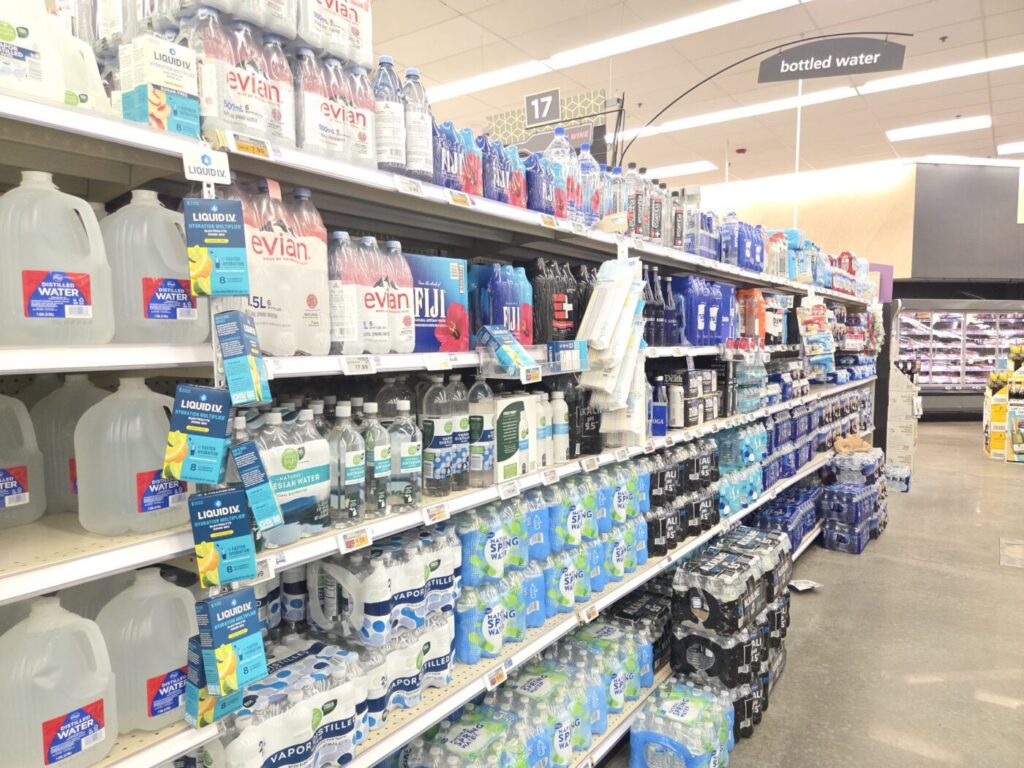
The Hidden Journey Behind Georgia’s Bottled Spring Water
Bottled spring water in North Atlanta comes from deep underground aquifers filtered through ancient rock formations. The industry blends natural resources with large-scale production and distribution across Georgia.
Get major local stories and development updates.
In homes across Johns Creek, Alpharetta, Milton, and South Forsyth, bottled spring water has become part of daily life. Cases are stacked in garages. Five-gallon jugs sit beside kitchen counters. Delivery trucks move through suburban neighborhoods before sunrise. Yet very few residents stop to consider where this water actually begins — or the industrial and geological system that carries it from mountain aquifers to grocery store shelves in North Atlanta.
Georgia’s bottled water industry sits on top of an unusually valuable natural resource network. Deep beneath parts of the state, rainwater slowly filters through ancient quartzite and granite formations, creating naturally purified spring water that can remain underground for decades before emerging at protected springs.
That underground process helps explain why Georgia has become home to both small premium spring brands and massive industrial bottling operations supplying much of the Southeast.
From Appalachian Rainfall to North Atlanta Kitchens
Unlike municipal drinking water sourced from reservoirs like Lake Lanier, spring water moves through underground rock systems over long periods of time. According to the research, some Georgia spring water may spend thirty years or more filtering through underground geological formations before reaching the surface.
In western Georgia near Hamilton, brands like Callaway Blue draw water through Hollis quartzite formations — among the hardest natural rocks found in the region. The process naturally removes many contaminants while preserving a lighter mineral profile.
Farther north near Blue Ridge, other companies rely on deep granite aquifers. Fontis Water, which serves parts of Gwinnett and North Fulton, sources water from springs hundreds of feet underground, protected by dense rock layers that shield the water from surface runoff and industrial contamination.
For suburban consumers in North Atlanta, that geological story has become part of the appeal. The bottle is not just hydration anymore. It is marketed as “mountain water,” “deep spring water,” or “untouched aquifer water” — language increasingly tied to wellness culture, premium food habits, and distrust of processed systems.
The Massive Industry Most Residents Never See
The visible part of the bottled water business in North Atlanta is usually the delivery truck.
In places like Suwanee and Duluth, large distributors operate extensive delivery networks serving offices, gyms, medical clinics, apartment complexes, and suburban households. Crystal Springs expanded heavily into metro Atlanta after acquiring Cohutta Water years ago, helping establish a stronger regional distribution system throughout Gwinnett and Forsyth counties.
Behind that suburban convenience sits a surprisingly large industrial economy.
Nationally, bottled water supports nearly 236,000 direct jobs and generates roughly $13 billion in annual wages. Georgia plays an important role because of its transportation network, access to aquifers, interstate logistics, and proximity to large Southeast population centers.
Large bottlers such as Niagara Bottling have invested tens of millions of dollars into Georgia facilities. A major Newnan operation alone represented a $52 million investment and created dozens of manufacturing and logistics jobs.
Even smaller regional spring companies create employment ecosystems that extend well beyond the spring itself — including route drivers, warehouse workers, maintenance mechanics, quality control technicians, customer service teams, and transportation contractors.
For suburban North Atlanta residents, the industry often appears invisible because much of the production happens hours away in rural Georgia. Yet many of the routes, warehouses, and commercial customers are concentrated along the rapidly growing GA-400 and I-85 corridors.
Why Some Residents Still Prefer Bottled Water
North Atlanta’s municipal water systems are considered among the strongest in Georgia. Gwinnett County’s advanced treatment infrastructure, for example, can process more than 200 million gallons of water daily using sophisticated filtration and ozonation technologies.
Still, bottled water consumption continues to rise.
Part of the reason is taste. Part is convenience. But another factor is psychological. Many consumers perceive spring water as more “natural,” especially when compared to chemically treated municipal systems.
That perception has become more important as concerns about PFAS contamination and industrial pollutants have entered national conversations around water quality. The report notes growing scrutiny surrounding chemical contamination issues in parts of Georgia, particularly in industrial regions farther northwest.
Even when suburban municipal systems remain highly rated, the broader public conversation around contaminants has strengthened the appeal of water brands emphasizing protected springs and wilderness sourcing.
The Environmental Contradiction
The industry’s growth also creates an obvious contradiction.
Consumers increasingly want “pure” water connected to nature and sustainability. But bottled water remains heavily dependent on plastic packaging and fuel-intensive transportation systems.
The report notes that manufacturing PET bottles requires significant energy, while the transportation of water itself remains highly resource-intensive because of its weight.
That tension is becoming more visible across affluent suburban communities where environmental awareness is growing. In places like Roswell and Peachtree Corners, reusable bottle culture and filtered home systems have expanded rapidly alongside continued bottled water demand.
The result is a curious suburban duality: many households now own expensive reverse-osmosis filters while simultaneously keeping bottled spring water stocked for guests, convenience, emergencies, or perceived health benefits.
Water as Infrastructure — Not Just a Beverage
The bottled water industry becomes especially important during emergencies.
During boil-water advisories, major pipe failures, or municipal disruptions in metro Atlanta, bottled water distribution systems effectively become emergency infrastructure. Fire stations, community centers, and distribution hubs can suddenly shift into crisis-response roles.
As North Fulton, Gwinnett, and South Forsyth continue adding population at extraordinary rates, water reliability is becoming a larger regional conversation — not only about drinking water quality, but also about logistics, infrastructure resilience, groundwater stewardship, and long-term sustainability.
For most North Atlanta residents, a bottle of water still feels like one of the simplest purchases in daily life.
But beneath that convenience sits an enormous hidden system of geology, transportation, regulation, labor, and environmental management stretching from remote mountain springs to suburban kitchens across Georgia.
A few more local reads, before you go.
About the Author


In North Atlanta

5 Coffee Trucks and Mobile Cafés Worth Finding Around North Atlanta

What North Atlanta Should Know Today. Friday, Sept. 11, 2026
North Atlanta Courthouse Wedding Price Check: A Legal Marriage Can Start at $16

North Atlanta unemployment fell in July — but employment slipped in several communities

Is Soccer Taking Over North Atlanta? The Numbers Say Something Is Changing
Why Sardines Are Disappearing From Some North Atlanta Shelves
IN NORTH ATLANTA