 Exclusive sponsor
Georgia’s Richest Families and How They Shape the State
Georgia’s wealthiest families hold considerable sway in industries like fast food, media, manufacturing, and construction. Their economic and philanthropic efforts shape many aspects of life and development across the state.

Major local stories and useful updates, once a week.
In Georgia, wealth is not concentrated only in banks, hedge funds, or Silicon Valley-style startups. Much of the state’s economic power still sits inside long-running family dynasties tied to fast food, media, manufacturing, construction materials, and pest control. Families like the Cathys, Coxes, Winchesters, Rollinses, and Richardses collectively influence thousands of jobs, major real estate projects, universities, philanthropy networks, media narratives, and even parts of Georgia’s political and civic culture.
Many Georgians interact with these family businesses almost daily — eating at Chick-fil-A, reading the Atlanta Journal-Constitution, seeing Quikrete products at Home Depot, hiring Orkin, or living in neighborhoods powered by infrastructure connected to Southwire.
But these families are more than business owners. In many ways, they function as parallel civic institutions across Georgia.
The Cathy Family: Chick-fil-A and the Rise of a Georgia Empire
The richest family currently tied to Georgia is the Cathy family, owners of Chick-fil-A. Public estimates placed the family’s wealth at roughly $33.6 billion in early 2025.
Founded by S. Truett Cathy, the company grew from a small Hapeville restaurant into one of America’s most profitable fast-food chains while remaining privately held and family controlled. Today, the company’s headquarters remains in metro Atlanta.
The family’s influence extends well beyond restaurants.
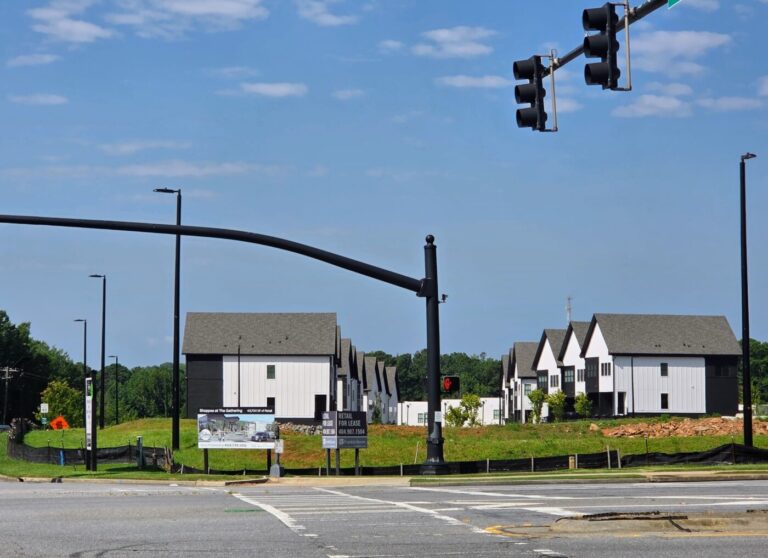
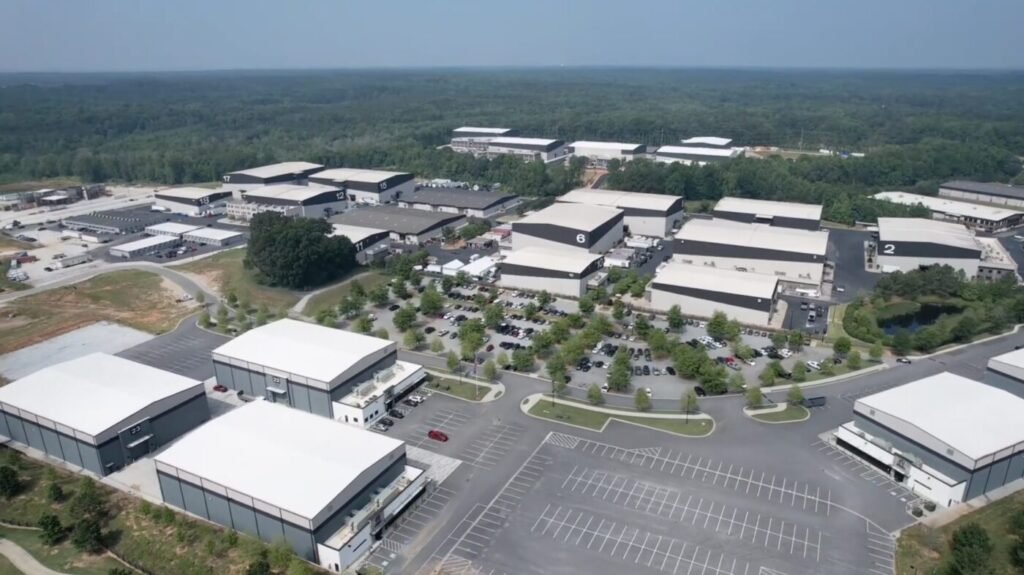
In Fayetteville, the Cathy-backed Trilith development became one of Georgia’s most ambitious mixed-use projects tied to the state’s film economy. Anchored by Trilith Studios — now the largest production facility in Georgia outside Hollywood — the project helped transform the area into a major hub for film, television, housing, and entertainment-related business growth. Georgia industry and regional development reports tied to the project estimated hundreds of millions of dollars in economic activity, major long-term tax revenue potential, and a growing employment base connected to the broader entertainment ecosystem.
The family also operates large philanthropic efforts through the WinShape Foundation, which funds foster care programs, camps, scholarships, and community initiatives across Georgia.
During the 2010s, Chick-fil-A became involved in a national political controversy after public comments by then-company president Dan Cathy opposing same-sex marriage, along with scrutiny over company donations to some Christian organizations criticized by LGBTQ advocacy groups. The debate quickly expanded beyond Georgia, leading to protests, boycotts, political disputes over new restaurant openings in some cities and airports, and widespread national media attention. Supporters defended the company on religious freedom grounds, while critics argued the donations and comments were harmful to LGBTQ communities. As a result, Chick-fil-A evolved from a fast-food chain into one of the most politically and culturally debated consumer brands in America during that period.
Today, Chick-fil-A is generally viewed as far less politically confrontational than it was during the peak controversies of the 2010s. The company reduced or changed several high-profile charitable partnerships that had drawn criticism, while leadership shifted public attention back toward food, customer service, scholarships, and community programs. Although some activists and critics still associate the brand with earlier culture-war debates, the controversy has cooled significantly in recent years, and Chick-fil-A’s rapid business growth suggests that for many customers the company is now seen primarily as a mainstream restaurant chain rather than a political symbol.
The Cox Family: Media, Communications, and Atlanta Influence
The Cox Enterprises dynasty represents a different kind of power.
The Cox family’s estimated wealth stood near $26.8 billion in recent rankings. Their empire spans communications, automotive services, broadband, media, and investments. The company employs nearly 50,000 people globally and remains headquartered in Atlanta.
Unlike many wealthy families, the Coxes exert enormous influence not only through business but through information itself. Through ownership of the Atlanta Journal-Constitution, the family maintains a powerful role inside Georgia’s media ecosystem. That creates a rare overlap between corporate influence and public narrative shaping.

The family’s civic involvement is also deeply embedded in Atlanta’s development history. Jim Kennedy played a major role in early support for the Atlanta BeltLine and conservation projects around Georgia.
Through the James M. Cox Foundation, the family funds environmental programs, education initiatives, and healthcare efforts across the state.
Critics occasionally question whether one family should hold so much simultaneous influence over business, media, civic planning, and public policy conversations in metro Atlanta. The concern centers largely on the reach of Cox Enterprises and the Cox family’s ownership of the Atlanta Journal-Constitution. Over the years, Atlanta urban-planning debates — including discussions surrounding the Atlanta BeltLine, transportation expansion, environmental conservation, and downtown redevelopment — have sometimes featured overlapping influence from Cox-backed civic organizations, editorial voices connected to the AJC, and business leadership circles in which Cox executives hold prominent roles. Supporters argue this reflects long-term civic commitment and responsible local stewardship by an Atlanta-rooted family business. Critics argue it can blur the line between journalism, corporate influence, philanthropy, and political agenda-setting in one of the South’s largest metropolitan areas.
The Winchester Family: The Quiet Construction Billionaires
Compared with the Cathys or Coxes, the Winchester family remains remarkably low-profile despite becoming one of Georgia’s wealthiest dynasties.
The family built its fortune through Quikrete, the concrete and construction-materials giant headquartered in metro Atlanta. Forbes estimated the family’s wealth near $18 billion in 2026.
The family rarely attracts public attention, but Quikrete’s influence quietly expanded through the company’s massive acquisition of Summit Materials in 2025. The deal strengthened Atlanta’s role as a major command center for a national construction-materials network.
Locally, Quikrete is perhaps most visible through its long-running relationship with the Atlanta Braves, including jersey sponsorships and branding partnerships.
Yet compared with other wealthy Georgia families, the Winchesters remain unusually opaque. Public information about local philanthropy, employment footprint, or political involvement is relatively limited.
The Rollins Family: Orkin, Emory, and Atlanta Institutions
The Rollins family built its fortune through Rollins Inc., parent company of Orkin.
The family’s estimated wealth sits above $14 billion. While Rollins is publicly traded, the family still maintains major ownership and influence over the company.
Few Georgia families have shaped Atlanta institutions as visibly through philanthropy.
The family funded major expansions and endowments at Emory University, including the renowned Rollins School of Public Health.
The family also donated tens of millions to Atlanta schools including The Lovett School.
That duality — philanthropy on one side, regulatory battles on the other — reflects a broader reality of many large family-controlled enterprises.
Rollins Inc. has also faced periods of regulatory scrutiny that highlighted the pressures surrounding large, family-influenced public companies. In 2026, the Federal Trade Commission moved against the company over noncompete agreements affecting more than 18,000 workers across brands including Orkin. Regulators argued the agreements could unfairly limit employee mobility and competition in the pest-control industry. Earlier, in 2022, the U.S. Securities and Exchange Commission announced an $8 million settlement with Rollins tied to allegations involving accounting and earnings-reporting practices. The company neither admitted nor denied the SEC findings. Together, the cases underscored how even long-established Atlanta corporate dynasties remain subject to increasing federal oversight on labor practices, governance, and financial reporting.
The Richards Family and Southwire’s Manufacturing Power
Outside metro Atlanta, one of Georgia’s most influential family businesses sits in Carrollton.
The Richards family built Southwire into one of America’s largest wire and cable manufacturers. Forbes recently valued the still-family-owned company at more than $13 billion.
Unlike some Atlanta dynasties, Southwire’s influence is deeply tied to local manufacturing communities and workforce development.
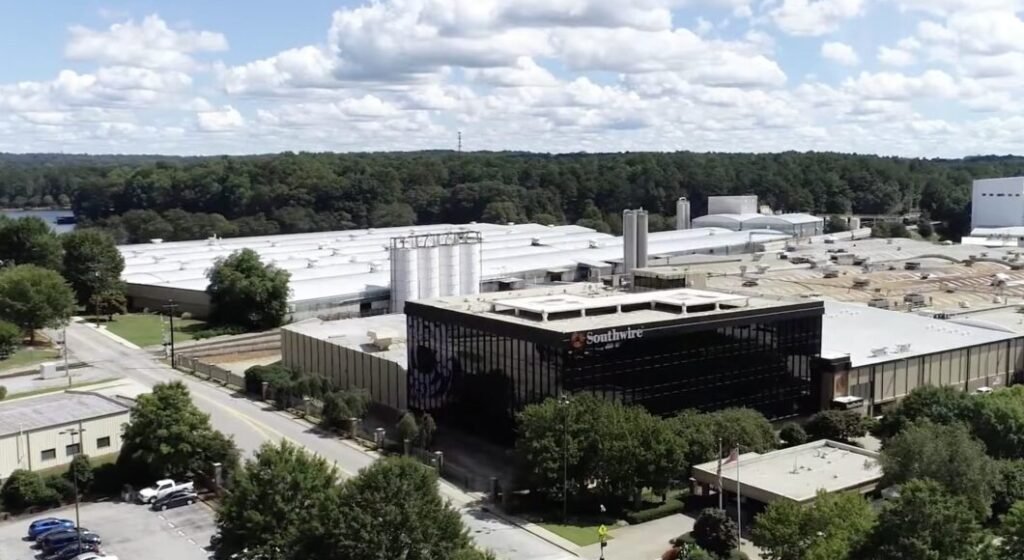
Its most notable local initiative may be the 12 for Life program, created with Carroll County Schools. Students work while completing their education, and the program claims thousands of graduates alongside dramatic improvements in local graduation rates.
Southwire has also invested heavily in Carrollton manufacturing facilities while remaining rooted in west Georgia rather than relocating operations elsewhere.
Compared with the more politically visible Cathy family or the media influence of the Cox family, the Richards family’s impact is more industrial and community-centered.
Why These Families Matter to Georgia
Together, these families reveal how much of Georgia’s economy still revolves around privately controlled dynasties rather than dispersed shareholder ownership. Their influence stretches across some of the state’s most important industries and institutions — from Atlanta’s skyline and suburban development patterns to media, film production, manufacturing, higher education, philanthropy, transportation debates, and workforce development initiatives.
In many ways, these businesses helped shape modern Georgia itself. The Cathys became intertwined with the rise of Georgia’s fast-food and entertainment economy. The Cox family remains deeply embedded in Atlanta’s media and civic infrastructure. The Rollins family left a lasting imprint on universities and healthcare institutions. The Richards family helped sustain manufacturing employment and education partnerships in west Georgia, while the Winchesters quietly expanded one of the country’s largest construction-materials empires from metro Atlanta.
In some communities, these families function almost like unofficial public institutions. Their decisions can influence schools, roads, local employment, charitable funding, real-estate development, and even the broader identity of growing suburbs and cities across the state.
At the same time, their concentration of wealth and influence continues to raise broader questions about transparency, civic power, labor practices, and the relationship between philanthropy and corporate influence. Georgia’s richest families are not simply business owners. In many respects, they are part of the state’s governing and cultural landscape itself.
If you’ve been following growth and change around here, these stories are worth a look too.
Community Voice
A snapshot of reader views, not a scientific survey.
Explore Community Voice →About the Author


In North Atlanta
What North Atlanta Should Know Today

Is Socialism Coming to North Atlanta? The Answer Is More Complicated

What Meta’s Latest Layoffs Could Mean—And Not Mean—for North Atlanta

Orchid Grove Receives Fresh Demolition Permits Near Duluth
Who Decides What You Can Put on a Georgia License Plate?
Delta Community opens Roswell branch on West Crossville Road
IN NORTH ATLANTA