Arizona’s $7 Billion Chip Project Just Became a $12 Billion Project
Amkor Technology is increasing its Peoria semiconductor campus investment to $12 billion, driven by growing AI and computing needs. The expansion will create thousands of jobs and add large-scale advanced chip packaging capacity in Arizona.
Get the week’s jobs, development, housing and growth stories from across the Sun Belt in one email.
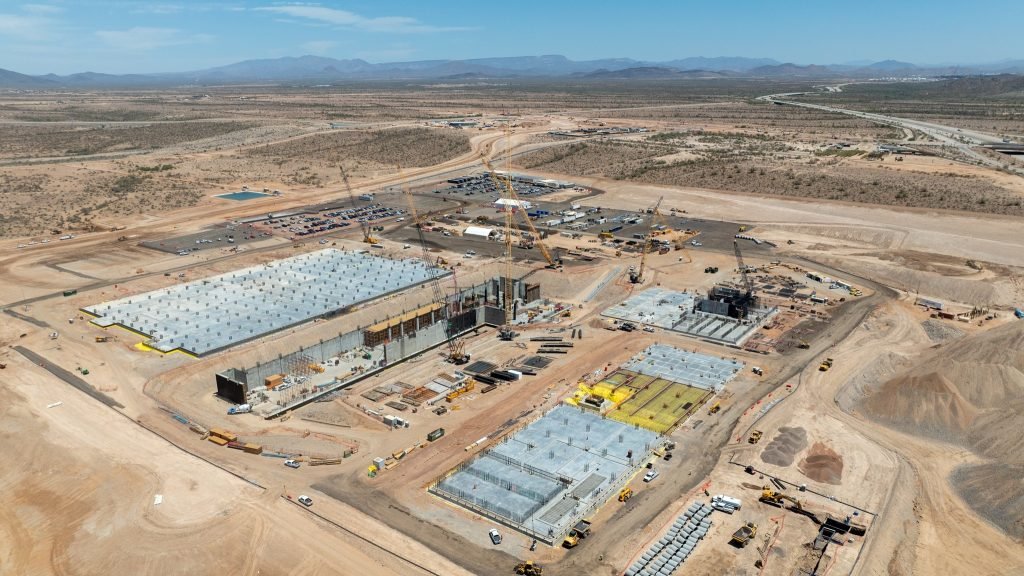
A semiconductor factory under construction outside Phoenix just got $5 billion bigger.
Amkor Technology is expanding its advanced chip packaging and testing campus in Peoria from a planned $7 billion investment to about $12 billion. The reason is unusually simple: customers have already committed to more capacity than the first phase was designed to provide.
The expansion announced Sept. 8 will add 60,000 square meters of cleanroom space, bringing the campus to about 93,000 square meters, roughly 1 million square feet. Together, the two phases are expected to employ more than 3,500 people in Arizona.
 Exclusive sponsor
It is another remarkable jump for a project that began as a $2 billion proposal in 2023.
From $2 billion to $12 billion
When Amkor first announced the Peoria campus three years ago, it expected to invest about $2 billion and create roughly 2,000 jobs.
By the time construction began in October 2025, the planned investment had climbed to $7 billion, with as many as 3,000 jobs. The first manufacturing facility is expected to begin production in early 2028.
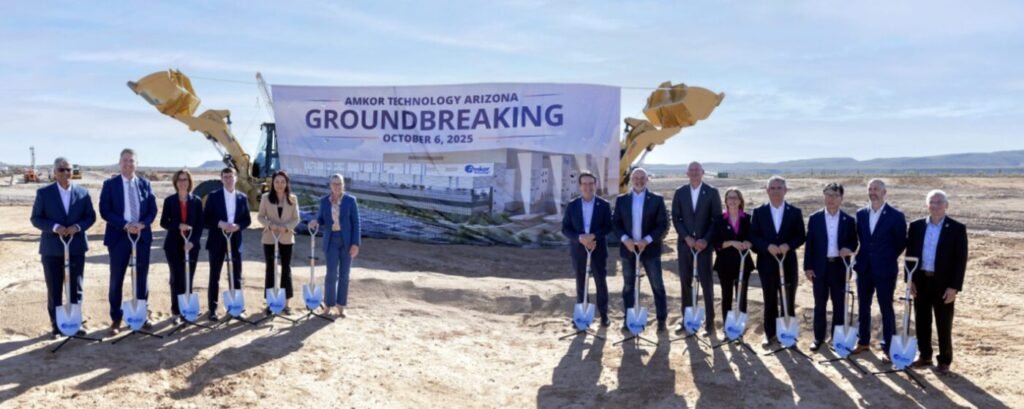
Now the investment has reached $12 billion before that first production line has opened.
Phase 2 construction is scheduled to begin in late 2027 and finish by the end of 2029. The campus has also grown to about 170 acres, leaving room for further expansion if demand continues.
The part of chipmaking most people never see
Amkor is not building the silicon wafers themselves. Its job begins after those chips are manufactured.
Advanced packaging combines, connects and tests increasingly complex semiconductor components so they can work together inside AI systems, data centers, vehicles, phones and other electronics.
That step has become more important as chipmakers increasingly combine multiple specialized pieces of silicon rather than relying on a single conventional processor.
Amkor’s Peoria operation is designed to become the first U.S. outsourced facility performing advanced packaging at high volume. The company is also working closely with TSMC, whose enormous Arizona manufacturing complex produces the chips that can then be packaged and tested nearby.
The result could be something the United States has spent years trying to rebuild: more of the semiconductor production process happening in one domestic region instead of sending chips overseas for later stages of manufacturing.
AI is pushing the expansion
The timing reflects the extraordinary demand surrounding artificial intelligence and high-performance computing.
Amkor reported record second-quarter revenue this summer, including record sales from its computing business. The company has also expanded its partnership with Nvidia to provide advanced packaging and testing for next-generation AI infrastructure.
That demand is now showing up physically in Arizona. Phase 1 was planned with 33,000 square meters of cleanroom capacity. Customer commitments have already exceeded it.
Instead of waiting for the first factory to open, Amkor is building the next one.
Arizona’s semiconductor cluster keeps getting larger
Phoenix has spent years developing into one of the country’s most important semiconductor centers.
TSMC is building leading-edge chip factories in north Phoenix. Intel has a major presence in Chandler. Suppliers, equipment makers and specialized manufacturers have followed. Amkor fills another piece of that chain.
The federal government previously awarded the company up to $407 million through the CHIPS program to support its Arizona expansion. The project also qualifies for federal semiconductor manufacturing tax incentives and has received state and local support.
The employment numbers have risen along with the investment. Amkor now expects more than 3,500 Arizona workers across the completed campus. Earlier plans projected average annual salaries around $90,000.
But the most striking number remains the investment itself. In 2023, this was a $2 billion project. Two years later, it became $7 billion. Now it is $12 billion, and the first phase is still under construction.
For years, America’s semiconductor push focused on getting advanced chips made in the United States again. Arizona is now showing what comes next: those chips also need somewhere to go after they leave the factory.
If you’ve been following growth and change around here, these stories are worth a look too.
Across the Sun Belt
Tesla’s $10.1 Billion Solar Factory Plan Could Bring Nearly 10,000 Jobs to Texas

A $5.8 Billion Steel Mill Is Coming to Louisiana. The Average Job Is Expected to Pay $95,000
From Copper to Fiber: Tennessee Plant Begins $100 Million Expansion
Scout Motors Suppliers Plan 200 Jobs and $82 Million in South Carolina Expansions
A $400 Million South Carolina Factory Expansion Will Create 105 Jobs

Georgia’s Battery Belt Is Changing, but It Is Not Disappearing
About the Desk

Community Voice
A snapshot of reader views, not a scientific survey.
Explore Community Voice →