 Exclusive sponsor
Forsyth County’s Low Sales Tax Model May Not Last Forever as Growth Pressures Build
Forsyth County has kept sales taxes at 7% to fund infrastructure amid rapid growth. New transportation demands may lead to a higher sales tax to meet future needs.

Major local stories and useful updates, once a week.
For years, Forsyth County has managed a difficult suburban balancing act that many fast-growing metro Atlanta counties envy.
The county kept property taxes comparatively low while still funding hundreds of millions of dollars in roads, parks, schools, water infrastructure and public safety expansion tied to one of Georgia’s biggest population booms.
Much of that strategy relied on sales taxes.
Today, Forsyth County’s combined sales tax rate stands at 7%, matching the minimum structure required under Georgia law for many counties using local option taxes. The rate combines Georgia’s 4% state sales tax with 3% in local sales taxes.
That 7% applies to most retail purchases made inside the county, including restaurant meals, clothing, electronics, furniture and general consumer goods.
Georgia exempts most unprepared grocery food items from the state’s 4% sales tax, but local sales taxes still apply to groceries in many counties, including Forsyth. Prescription medications are also generally exempt from state sales taxes.
Now, county leaders are increasingly confronting another question: whether Forsyth’s current tax structure can continue supporting the county’s rapid suburban expansion without eventually increasing the sales tax rate further.
Hundreds of Millions in Growth Projects
Forsyth County voters approved SPLOST IX in November 2024, a six-year Special Purpose Local Option Sales Tax program projected to generate roughly $354 million for capital projects.
The money is expected to fund road improvements, public safety equipment, parks and other infrastructure projects tied to continued growth across South Forsyth.
County officials have long favored SPLOST programs because they allow Forsyth to build infrastructure without issuing large amounts of long-term debt that could later pressure property taxes upward.
The scale of current projects illustrates how expensive growth has become.
In March 2026, commissioners approved approximately $80 million in contracts tied to a Lake Lanier water intake project at Tidwell Park designed to improve long-term water redundancy and system independence.
Forsyth County Schools are simultaneously continuing expansion projects through ESPLOST funding, including school additions, technology upgrades, buses and safety improvements intended to help absorb enrollment growth without major redistricting disruptions.
Why Transportation Could Push Taxes Higher
Transportation may become the next major pressure point.
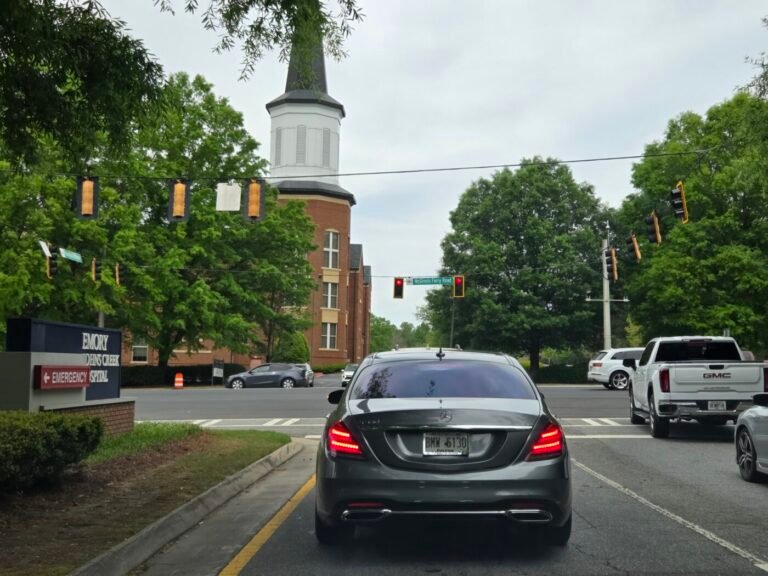
As residential and commercial growth continues along the GA-400 corridor, congestion has intensified around McGinnis Ferry Road, Bethelview Road, State Route 369 and other heavily traveled corridors connecting South Forsyth to North Fulton job centers.
County officials already debated transportation impact fees on new commercial development for nearly a year before ultimately reducing portions of the proposed fee structure after pushback from business groups concerned about development costs.
That leaves sales taxes as one of the county’s largest remaining funding tools for future road expansion.
One option that continues drawing discussion is a Transportation Special Purpose Local Option Sales Tax, known as TSPLOST.
Under Georgia law, counties can add up to another 1% sales tax dedicated specifically to transportation infrastructure projects such as road widening, intersections and pedestrian improvements.
If Forsyth County eventually adopts TSPLOST, the county’s combined sales tax rate would rise from 7% to 8%.
That would place Forsyth more in line with several other urbanizing metro Atlanta counties already operating at higher combined sales tax levels.
The Hidden Advantage Behind Forsyth’s Tax Strategy
One reason Forsyth leaders historically favored sales taxes over higher property taxes is because a significant share of the burden is paid by non-residents.
During the SPLOST VIII cycle, county audit figures showed roughly one-third of sales tax revenue came from visitors, commuters and shoppers from outside the county.
In practical terms, that means people driving into Forsyth County to shop, dine or conduct business help subsidize roads, parks and public infrastructure used by local residents.
That “tax exporting” effect becomes especially attractive in affluent suburban counties with rapidly expanding retail and commercial corridors.
But higher sales taxes also carry visible effects for consumers.
An increase from 7% to 8% would add another dollar in tax on every $100 spent on taxable retail purchases. For larger household purchases — furniture, appliances, electronics or home improvement materials — the difference becomes more noticeable.
Supporters of transportation sales taxes often argue those increases are still preferable to large jumps in annual property taxes. Critics counter that layering additional local sales taxes onto nearly every retail purchase gradually raises the everyday cost of suburban life.
For a county still growing at one of the fastest rates in Georgia, that debate is likely only beginning.
If this caught your attention, these stories may too.
Community Voice
A snapshot of reader views, not a scientific survey.
Explore Community Voice →About the Author


In North Atlanta
What Suburban Budgets Reveal About North Atlanta’s Next Phase of Growth
Creative Enterprises Opens Expanded Forsyth Campus With Capacity to Serve 200 Adults
Brookhaven’s Proposed 40% Tax-Rate Jump Is Not a 40% Increase in the Total Tax Bill
Jones Bridge Road Widening Delayed Until Spring 2027
Who Fixes North Atlanta’s Potholes? It Depends on Who Owns the Road
What North Atlanta Should Know Today. Friday, Aug. 28, 2026
IN NORTH ATLANTA