Metro Atlanta Is Growing. Why Are So Many Families Struggling to Get Ahead?
A new regional coalition is targeting the costs of housing, work and commuting. Here's what Opportunity Rising means for North Atlanta families.

Major local stories and useful updates, once a week.
Metro Atlanta added about 54,000 residents over the past year. Yet for many families, finding a home they can afford or a good job within a reasonable drive remains a struggle.
The Atlanta Regional Commission and three major partners have launched a coalition called Opportunity Rising to tackle those problems together. It brings the regional planning agency alongside United Way of Greater Atlanta, the City of Atlanta’s Neighborhood Reinvestment Initiative and the Arthur M. Blank Family Foundation.
For residents wondering whether the announcement means a new rental subsidy or job-training application is available, the answer is not yet. The effort is meant to coordinate existing programs and future spending, not replace them with a single new service.
Housing is the region’s biggest concern
The launch came as the commission released its latest Metro Atlanta Speaks survey, based on responses from 4,136 adults across 11 counties in August.
Housing affordability was the problem most often named as the region’s biggest challenge, at 30%, ahead of traffic at 22% and the economy at 16%. A separate question showed an even stronger financial burden: 51% of respondents said housing costs were a major obstacle to getting ahead.
Other barriers followed close behind. Thirty-five percent pointed to a lack of job opportunities, while 28% cited transportation costs. Nearly one in three residents said there were very few suitable jobs, or none, within a reasonable commute.
And more than a third, 35%, said they were financially worse off than a year earlier, up from 29% in 2025.
“Metro Atlanta is a major global economic center, with a strong economy and a high quality of life. Yet, too many residents face barriers that make it harder to get ahead,” commission CEO Anna Roach said in the coalition announcement.
What does it mean for North Atlanta?
Although Atlanta city government is one of the leading partners, this is a regional effort. The commission’s 11-county area includes Forsyth, Fulton and Gwinnett, along with Cherokee and other neighboring counties.
That makes the question relevant to working families in Cumming, Alpharetta, Johns Creek, Duluth and beyond. A job opening can be out of reach if housing near it is unaffordable or the daily commute costs too much. A family’s income can rise without leaving much room for savings after rent, childcare and transportation.
Opportunity Rising says it will concentrate on sharing data, removing policy barriers, coordinating public and private investment, and bringing residents who face these problems into the decision-making process.
The commission plans to hire a chief prosperity officer to direct the work, and regional leaders expect to introduce a public dashboard tracking progress by the middle of 2027. Those steps could make it easier to measure whether the coalition changes anything for families on the ground. WABE reported the planned dashboard after the launch.
What has not been established is how much new money the coalition itself will bring to North Atlanta, which neighborhoods will receive specific investments, or when residents might see changes.
For a region that continues to grow, that is the central test: whether the next wave of development brings families more opportunities to stay, work and build a stable life, rather than simply more places to live at prices they cannot afford.
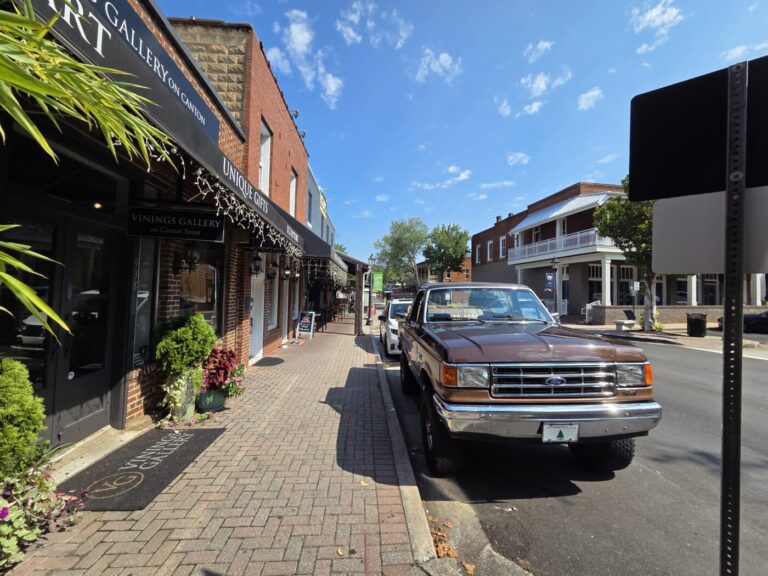
Illustrative photograph: Marianna Smiley / Unsplash.
Community Voice
A snapshot of reader views, not a scientific survey.
Explore Community Voice →About the Author

In North Atlanta

Are We Still Part of Atlanta—Or Becoming Our Own Metro?

Metro Atlanta Weekly Earnings Jump 7.6% as Job Count Slips
North Fulton Is Getting Older. Can the Next Generation Still Afford to Live Here?

What North Atlanta Should Know Today

Metro Atlanta’s Job Market Is Splitting as Health Care Grows and Office Sectors Retreat

Is Socialism Coming to North Atlanta? The Answer Is More Complicated
IN NORTH ATLANTA